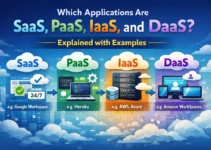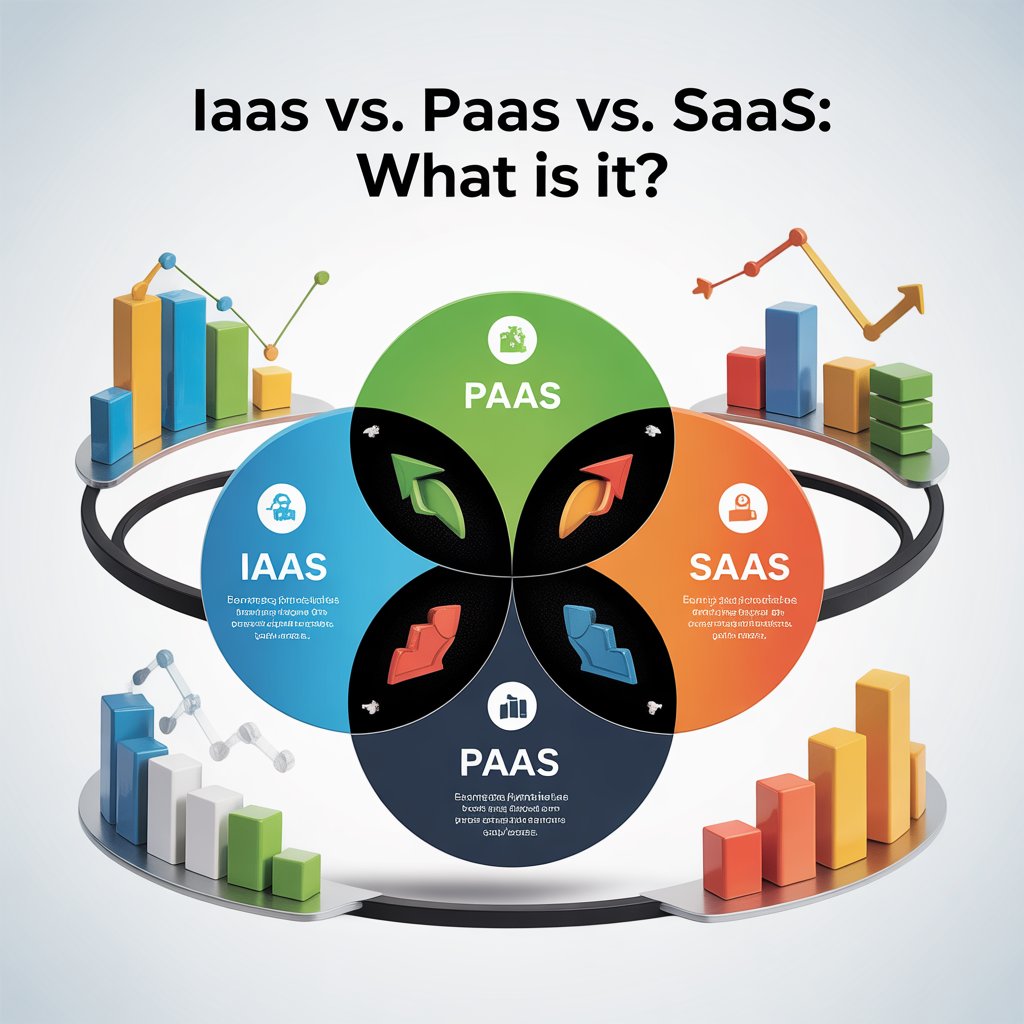
IaaS vs PaaS vs SaaS: What Is It?
Introduction
Cloud computing powers today’s digital growth, but many still ask: IaaS vs PaaS vs SaaS. These core models—Infrastructure, Platform, and Software as a Service—offer different levels of control, scalability, and convenience. Understanding IaaS vs PaaS vs SaaS helps businesses choose the right cloud strategy for efficiency and innovation.
By exploring IaaS vs PaaS vs SaaS, organizations can align the best model with their goals and future-proof success.
What Is IaaS?
Infrastructure as a Service (IaaS) provides virtual resources like servers, storage, and networking whenever you need them, all through the cloud. Instead of investing in costly on-site hardware, businesses can scale infrastructure seamlessly and pay only for what they consume.
• Best For: Scalability and control
• Use Cases: Hosting, backup, disaster recovery, big data
• Examples: AWS EC2, GCP Compute, Azure VM
What Is PaaS?
Platform as a Service (PaaS) offers a full setup for creating and launching applications. It allows developers to concentrate on writing code and being creative without having to worry about servers, storage, or networking.
• Best For: Developers and fast deployment
• Use Cases: App dev, API integration, testing
• Examples: GCP App Engine, AWS Beanstalk, Heroku
What Is SaaS?
Software as a Service (SaaS) delivers ready-to-use, cloud-hosted applications accessible from anywhere with an internet connection. Users enjoy simple access and automatic updates without needing to worry about installation or maintenance.
• Best For: End-users and ready-to-use tools
• Use Cases: Email, CRM, collaboration, productivity
• Examples: GWS (Google Workspace), Salesforce, Dropbox, Zoom
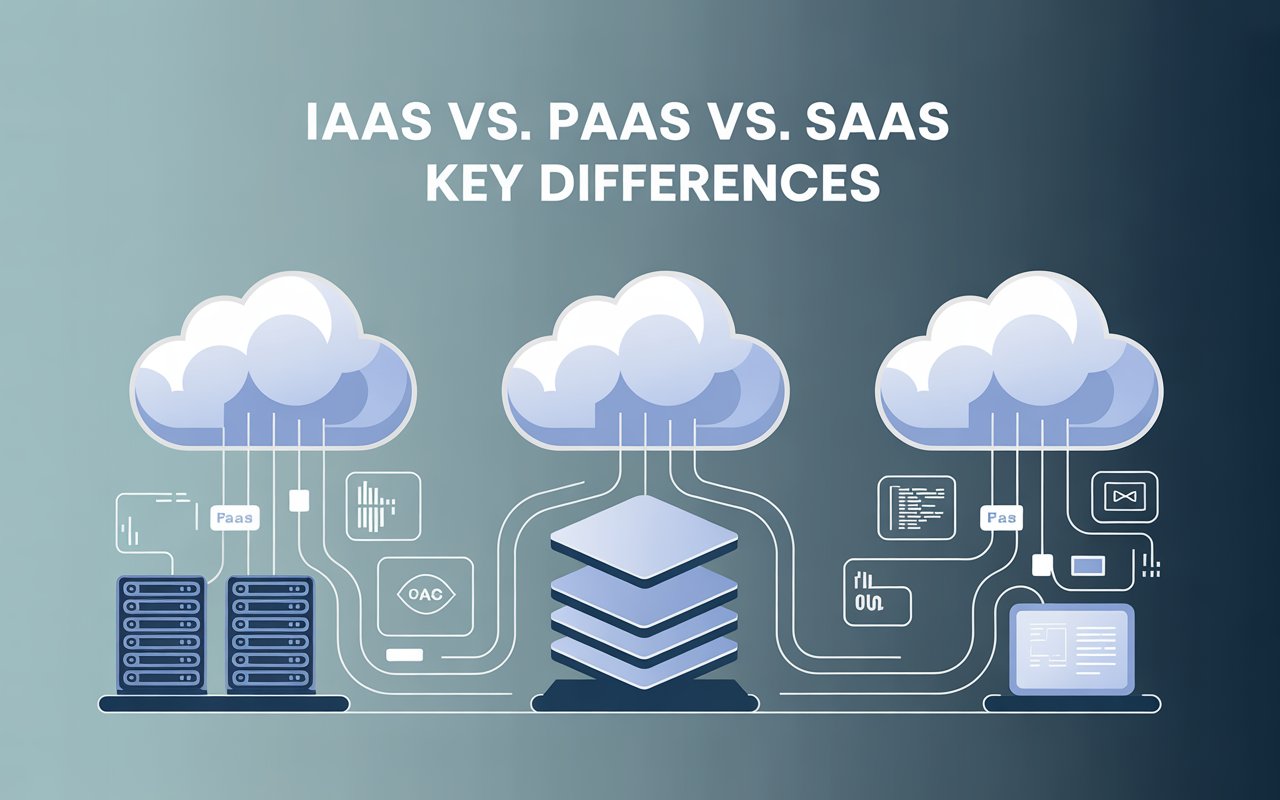
IaaS vs. PaaS vs. SaaS: Key Differences
| Feature | IaaS (Infrastructure) | PaaS (Platform) | SaaS (Software) |
|---|---|---|---|
| Definition | Virtualized infrastructure & resources | Dev & deployment environment | Ready-to-use applications |
| User Control | High – full infra control | Medium—app-level focus | Low—vendor-managed |
| Use Cases | Hosting, storage, big data | App dev, testing, APIs | Email, CRM, collaboration |
| Examples | AWS EC2, Azure VM, GCP Compute | Google App Engine, Heroku, Beanstalk | Salesforce, Zoom, Dropbox |
User Control: High, Medium, Low
Use Cases: Hosting, storage, data App dev, testing CRM, productivity, email
Examples: AWS EC2, GCP Compute App Engine, Beanstalk Salesforce, Zoom, GWS
How to Choose the Right Cloud Service Model
IaaS vs PaaS vs SaaS: What Is It?
Choosing the right cloud model relies on how big your organization is, what your goals are, and what technical requirements you have. Each service has its own special advantages, and the best option usually depends on how much control, scalability, and ease of use you want:
IaaS (Infrastructure as a Service)
What it is: Virtualized IT resources like servers, storage, and networking.
Reasons for selecting: Best if your organization needs maximum control, custom setups, and scalability to handle complex workloads or sensitive data.
PaaS (Platform as a Service)
What it is: A cloud-based platform for building, testing, and deploying applications.
Reasons for selecting: It is ideal for development teams who want to focus on coding and innovation without managing hardware or infrastructure.
SaaS (Software as a Service)
What it is: Ready-to-use applications delivered via the internet.
Reasons for selecting: Perfect for businesses that value convenience, cost savings, and quick access to collaboration or productivity tools.
By aligning the right model with your business objectives, you can optimize performance, reduce costs, and ensure your cloud strategy remains adaptable in an evolving digital landscape.
IaaS vs PaaS vs SaaS: What Is It?
Conclusion
Grasping the differences between IaaS, PaaS, and SaaS is crucial for businesses embracing the cloud. IaaS ensures flexibility and control, PaaS simplifies development, and SaaS delivers accessible, ready-to-use solutions. By aligning the right model with organizational goals, companies can drive cost efficiency, scalability, and long-term success in an ever-changing digital landscape.
Frequently Asked Questions
What is the main difference between IaaS, PaaS, and SaaS?
IaaS gives you the infrastructure you need, PaaS offers a platform for development, and SaaS provides cloud applications that are ready to use.
Which cloud service model is best for startups?
Startups usually pick PaaS for quick app development or SaaS for affordable, pre-made tools.
Can I use IaaS, PaaS, and SaaS together?
Yes, many organizations combine all three—using IaaS for infrastructure, PaaS for app dev, and SaaS for daily productivity.