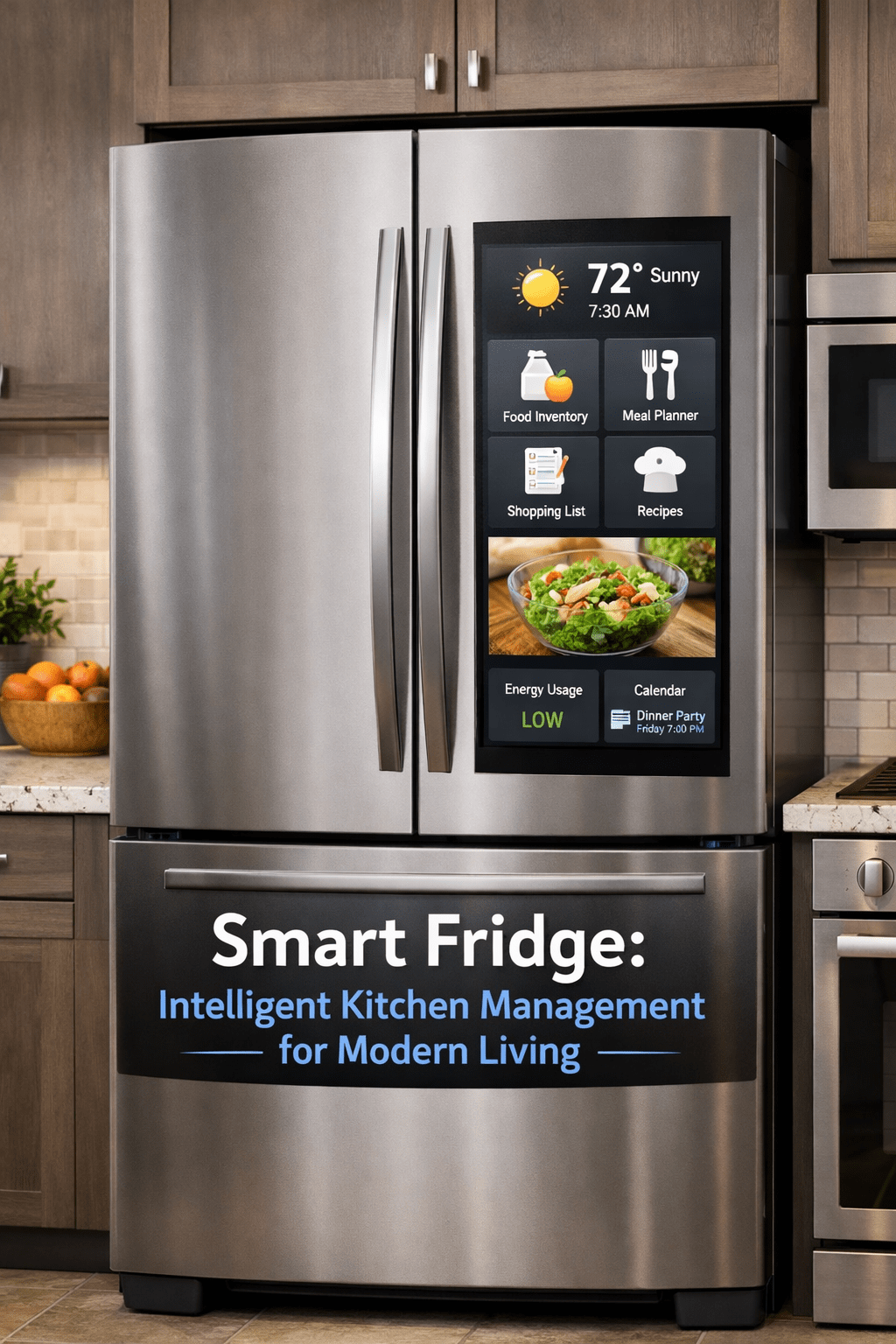
Smart Fridge: Intelligent Kitchen Management for Modern Living
Introduction
A Smart Fridge system combines connected refrigeration with advanced food inventory tracking, AI‑assisted meal planning, and automated grocery management. This integrated kitchen solution monitors internal contents, suggests recipes based on current ingredients, and alerts users to expiring items, all through smart sensors and AI vision systems. A Smart Fridge setup can also generate shopping lists and integrate with delivery services to order groceries automatically.
Today’s Smart Fridge technology is not just about cooling food—it’s about enabling efficient, data‑driven kitchen workflows that reduce waste, save time, and enhance dietary planning.
AI Overview: Smart Fridges
Smart fridges leverage AI to optimize kitchen management by combining real-time inventory tracking, expiration alerts, and intelligent meal planning. AI analyzes available ingredients to suggest recipes, generates automated grocery lists, and predicts consumption patterns to reduce food waste. Energy-efficient modes adjust cooling based on usage, and integration with voice assistants and touchscreen hubs enables remote monitoring and family communication. Overall, AI transforms the fridge into an intelligent kitchen assistant that enhances convenience, promotes healthier eating, and streamlines grocery and meal management.
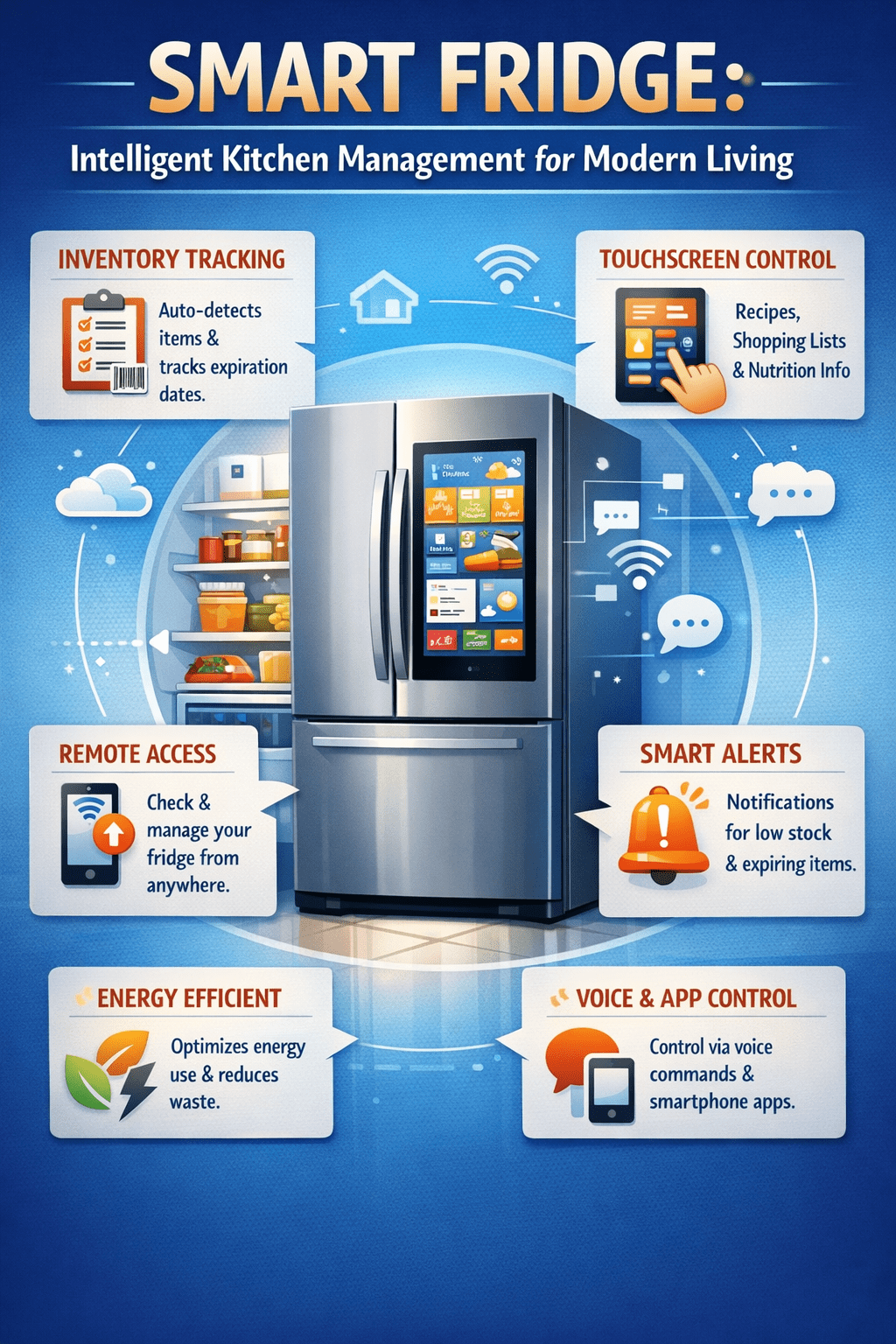
Smart Fridge: Intelligent Kitchen Management for Modern Living
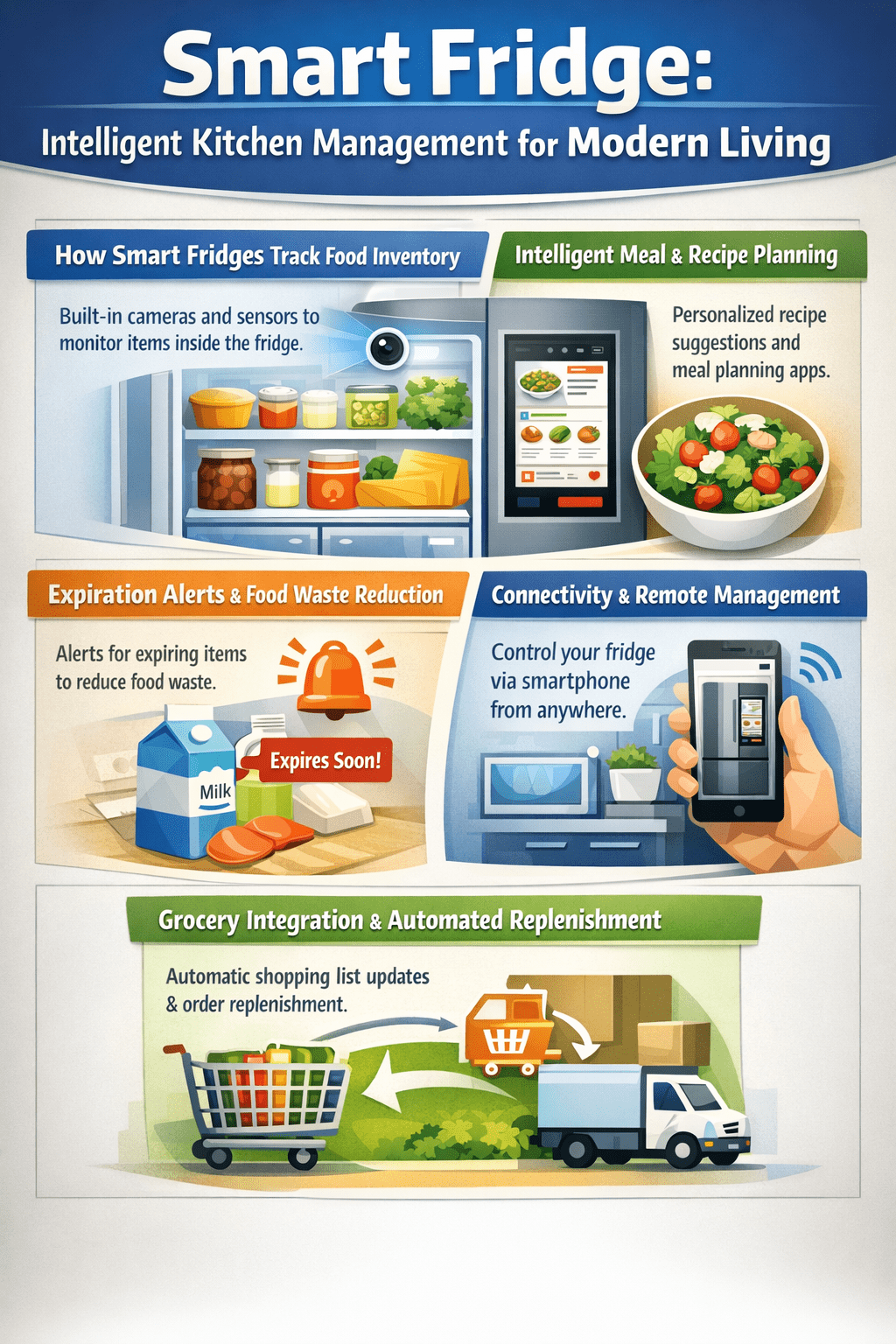
How Smart Fridges Track Food Inventory
Smart fridges use internal cameras, sensors, and connectivity to continuously monitor what’s inside.
When items are added or removed, AI vision and sensor data update the inventory list in real time.
This detailed tracking helps households avoid duplicate purchases and ensures visibility of all stored foods.
Intelligent Meal and Recipe Planning
AI features in smart fridge systems analyze inventory data to suggest meals tailored to available ingredients.
This reduces meal decision fatigue and supports healthier eating patterns by using what’s already stored.
For example, if vegetables are near expiration, the system may propose a stir‑fry recipe along with a shopping list for missing components.
Expiration Alerts and Food Waste Reduction
One key benefit of smart fridge and meal systems is expiration notifications.
Sensors track food age and condition, notifying users before items spoil.
This proactive alerting helps households reduce food waste, cut grocery costs, and avoid last‑minute meal emergencies.
Connectivity and Remote Management
Smart fridges connect via Wi‑Fi to companion mobile apps, enabling remote food management.
Users can check inventory, adjust settings, and plan meals even while away from home.
Some models integrate with voice assistants like Alexa or Google Assistant for hands‑free control, further simplifying kitchen workflows.
Grocery Integration and Automated Replenishment
Advanced smart fridge and meal systems can link with grocery platforms to streamline shopping.
For example, Samsung smart refrigerator models with Instacart connectivity can detect low supplies and suggest orders directly through the fridge interface.
This seamless integration turns inventory alerts into actionable shopping tasks, enhancing convenience.
Real‑World Scenarios and Limitations
In practical use, smart fridge features provide visible benefits in inventory awareness, meal planning, and waste reduction.
However, limitations persist: camera‑based recognition may miss items in opaque containers or door bins, and some users report interface or connectivity issues with certain models.
Households should weigh convenience against cost, necessary subscription services, and long‑term software support.
Smart Fridge: Intelligent Kitchen Management for Modern Living
Smart Fridge Price Comparison (USD & GBP)
| Smart Fridge Model/Series | Typical USA Price (USD) | Typical UK Price (GBP) |
| Samsung Family Hub Basic | $1,799 – $2,199 | £1,599 – £2,099 |
| Samsung Family Hub Premium | $2,499 – $3,199 | £2,299 – £2,999 |
| LG Smart InstaView | $1,899 – $2,499 | £1,699 – £2,399 |
| LG Smart ThinQ with Door‑in‑Door | $1,699 – $2,299 | £1,499 – £2,099 |
| Bosch 800 Series Smart | $2,099 – $2,799 | £1,899 – £2,599 |
| Whirlpool Smart French Door | $1,599–$2,099 | £1,399 – £1,899 |
Conclusion
Smart fridge and meal systems represent a practical evolution in kitchen technology, marrying inventory awareness with intelligent meal guidance and grocery automation. These solutions help households reduce waste, save time, and plan meals with data‑driven insights. As AI vision, connectivity, and integration with shopping platforms improve, smart fridges will play an increasingly central role in efficient, modern home management. Consider your lifestyle needs, connectivity preferences, and ecosystem compatibility when evaluating these systems as part of your kitchen setup.
Recommendation
For households seeking smarter kitchen management, start with a model that offers robust inventory tracking and app integration. Use connected meal planning features to reduce waste and streamline shopping. Pair the fridge with nutrition‑focused apps to tailor meals to health goals. Regularly update software to benefit from improved AI vision and recipe suggestions. These steps help you leverage smart fridge and meal systems effectively without overreliance on a single technology.
FAQs
What makes a fridge “smart”?
Smart fridges include sensors, cameras, and connectivity to monitor contents, suggest meals, and manage inventory.
Can smart fridges help reduce food waste?
Yes. They alert users to expiring items and recommend recipes to use foods before they spoil.
Do smart fridges replace meal planning apps?
They augment meal planning by leveraging real‑time inventory data to suggest recipes or shopping lists.