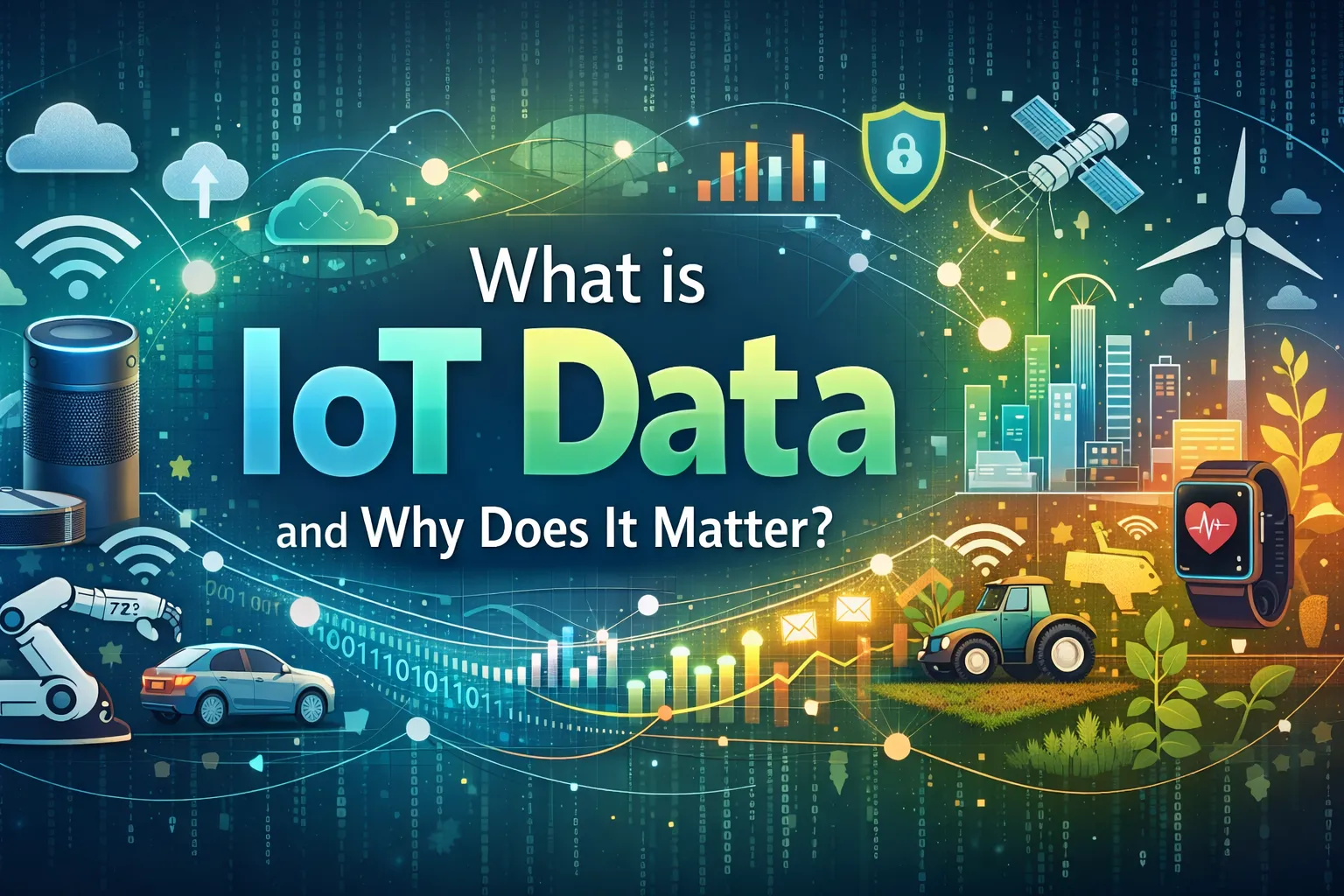
What Is IoT Data, and Why Does It Matter?
Introduction
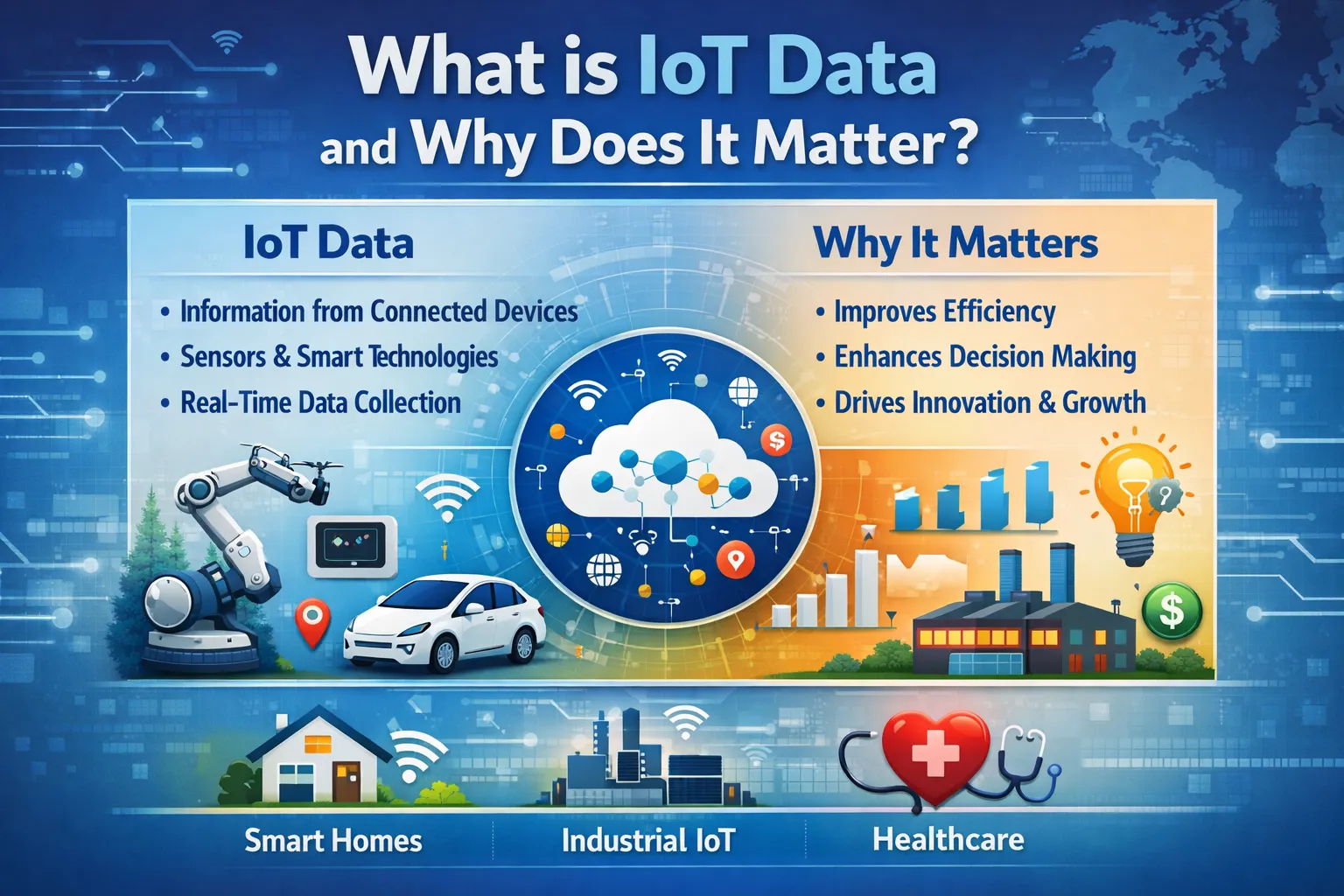
The Internet of Things Data has transformed the way devices communicate, collect, and share information. IoT Data refers to the information generated by connected devices, sensors, and systems that communicate over networks to monitor, analyze, and automate processes. This data is not only vast in volume but also rich in insights, making it a critical resource for businesses, industries, and governments alike.
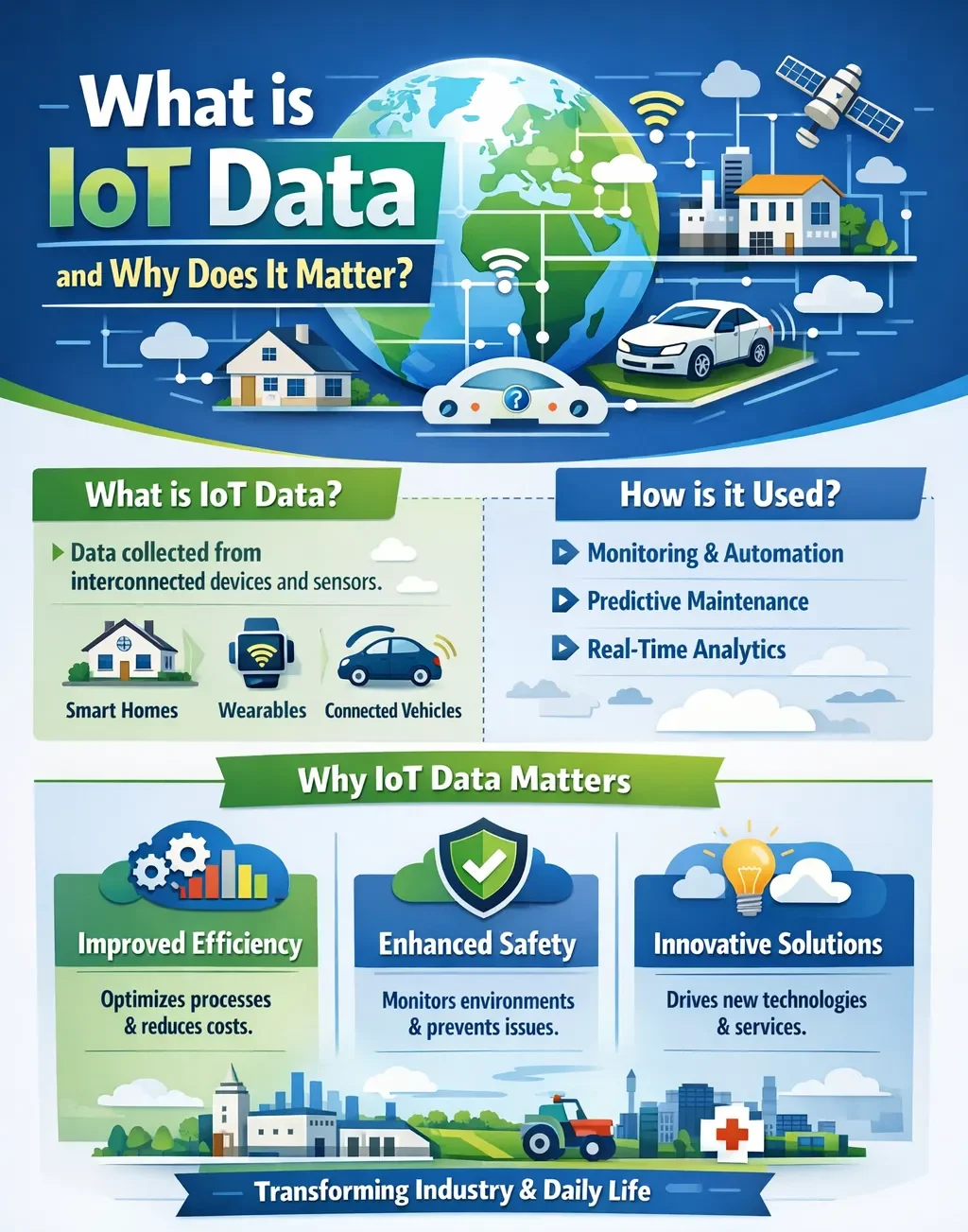
IoT Data matters because it fuels smarter decision-making, predictive analytics, and real-time operational improvements. Organizations leveraging this data can optimize efficiency, reduce costs, enhance customer experiences, and gain insights that were previously unattainable. Understanding the fundamentals of IoT Data and its applications is essential for anyone looking to harness its full potential.
Understanding IoT Data Fundamentals
Defining IoT Data and Its Unique Characteristics
IoT data is distinct from traditional data because it is generated continuously, often in real-time, and comes from a wide variety of connected devices. Unlike conventional datasets, IoT data is highly dynamic, unstructured, and sometimes noisy. Its key characteristics include:
- Continuous generation: Devices constantly send updates, producing a steady stream of data.
- High variability: Different devices produce data in varying formats, including numeric, audio, and visual.
- Time sensitivity: Many applications require immediate analysis for decision-making.
- Volume and velocity: Large amounts of data are generated rapidly, demanding efficient storage and processing solutions.
Types of Data Generated by Connected Devices
Connected devices generate multiple types of data, including:
- Sensor data: Measures environmental and physical parameters such as temperature, humidity, motion, and light.
- Device status data: Includes operational performance metrics, error logs, and battery levels.
- User interaction data: Tracks user behavior, preferences, and usage patterns for personalized experiences.
Real-Time vs Stored Data Collection Methods
IoT data can be collected in two primary ways:
- Real-time data: Captured instantly and analyzed immediately. Essential for applications such as autonomous vehicles, healthcare monitoring, and industrial automation
- Stored data: Collected over time and stored for historical analysis. Useful for trend identification, predictive analytics, and strategic planning.
Volume and Velocity of IoT Data Streams
IoT data streams are often massive and fast-moving. The volume represents the sheer quantity of data produced, while velocity refers to the speed at which it arrives and needs to be processed. Businesses must adopt advanced data storage, processing, and analytics solutions to manage these challenges effectively.
What Is IoT Data, and Why Does It Matter?
Sources and Generation of IoT Data
Smart Sensors and Their Data Output Capabilities
Smart sensors are the foundation of IoT data collection. These devices measure physical parameters and convert them into digital signals that can be analyzed in real-time. Advanced sensors can detect subtle environmental changes, monitor industrial machinery, and even track human health metrics.
Connected Devices across Industries and Homes
IoT devices are ubiquitous across sectors:
- Industrial IoT (IIoT): Sensors monitor machinery, robotic arms, and supply chain logistics.
- Consumer IoT: Smart home devices, wearables, and personal assistants enhance convenience and lifestyle.
- Commercial IoT: Retail inventory trackers, building automation, and logistics systems improve operational efficiency.
Environmental Monitoring Systems
IoT-enabled environmental monitoring systems track air quality, water conditions, and weather patterns. Governments and organizations rely on this data to respond to environmental hazards, reduce pollution, and promote sustainability.
Key Benefits of IoT Data Analytics
Enhanced Operational Efficiency and Cost Reduction
IoT analytics identifies inefficiencies, reduces downtime, and minimizes resource wastage. By analyzing real-time data, organizations can streamline operations and cut operational costs while maintaining productivity.
Predictive Maintenance Preventing Costly Breakdowns
IoT sensors monitor equipment in real-time, detecting anomalies before they lead to failures. Predictive maintenance prevents unexpected breakdowns, reduces repair costs, and extends the lifespan of machinery.
Improved Customer Experiences Through Personalization
By analyzing IoT data, businesses can understand consumer behavior, preferences, and usage patterns. This allows them to deliver personalized services, targeted offers, and tailored products, enhancing overall customer satisfaction.
Data-Driven Decision Making for Business Growth
Access to accurate IoT data enables businesses to make informed decisions, identify new revenue opportunities, and respond proactively to market trends. Companies can transform data into actionable insights that drive innovation and growth.
Critical Applications Transforming Industries
Smart Manufacturing Optimizing Production Lines
IoT enables automated monitoring and control of production processes. This reduces waste, ensures consistent product quality, and improves overall manufacturing efficiency. Predictive analytics further helps maintain optimal production schedules.
Healthcare Monitoring: Saving Lives Through Early Detection
Wearable IoT devices and remote health monitoring systems track vital signs and alert medical professionals to potential health issues. Early detection allows for timely interventions, improving patient outcomes and reducing hospital costs.
Smart Cities Reducing Energy Consumption and Traffic
IoT-driven urban infrastructure, such as smart traffic management, intelligent street lighting, and energy-efficient buildings, reduces congestion, saves energy, and improves urban living standards.
Essential Data Management and Security Considerations
Protecting Sensitive Information from Cyber Threats
IoT devices are vulnerable to cyberattacks. Implementing strong encryption, multi-factor authentication, and regular security audits is essential to safeguard sensitive data from unauthorized access.
Ensuring Data Quality and Accuracy for Reliable Insights
Reliable insights require high-quality, accurate data. Regular data cleaning, validation, and monitoring ensure the integrity of IoT datasets, preventing errors and misleading conclusions.
Compliance with Privacy Regulations and Standards
Organizations must comply with data privacy regulations such as GDPR, HIPAA, and CCPA to avoid legal penalties and maintain user trust. Privacy-focused IoT implementations help balance innovation with compliance.
Scalable Storage Solutions for Massive Data Volumes
IoT generates enormous amounts of data, necessitating scalable storage solutions. Cloud storage, distributed databases, and hybrid storage architectures provide flexibility and cost-effective management of growing datasets.
Edge Computing Reducing Latency and Bandwidth Costs
Edge computing processes data closer to the source rather than sending it to centralized servers. This reduces latency, conserves bandwidth, and enables faster, more efficient decision-making in time-sensitive applications.
What Is IoT Data, and Why Does It Matter?
Conclusion
IoT data is reshaping industries, homes, and cities by providing actionable insights and enabling smarter operations. From enhancing efficiency and reducing costs to improving healthcare and urban infrastructure, IoT data is at the heart of modern innovation. Understanding its characteristics, sources, and applications—and managing it securely—allows organizations to unlock its full potential for strategic growth and long-term success.
FAQs
What is IoT data?
IoT data is information generated by connected devices and sensors, capturing real-time and historical measurements for monitoring, analysis, and automation.
Why is IoT data important for businesses?
It enables smarter decision-making, improves operational efficiency, supports predictive maintenance, and enhances customer experiences.
How is IoT data collected?
IoT data is gathered from smart sensors and connected devices, either in real-time for instant insights or stored for historical analysis and trend tracking.