
What Is Blockchain Technology: How Does It Work?
Introduction
With growing interest in digital innovation, many are asking about Blockchain Technology.This groundbreaking system is best known for supporting cryptocurrencies, but its applications extend far beyond finance. From securing transactions to ensuring transparency in supply chains, understanding Blockchain Technology has become essential in today’s tech-driven world.
By exploring its structure, benefits, and real-world uses, we can answer the question, “What is Blockchain Technology?“ and see why it is reshaping industries globally.
What Is Blockchain Technology?
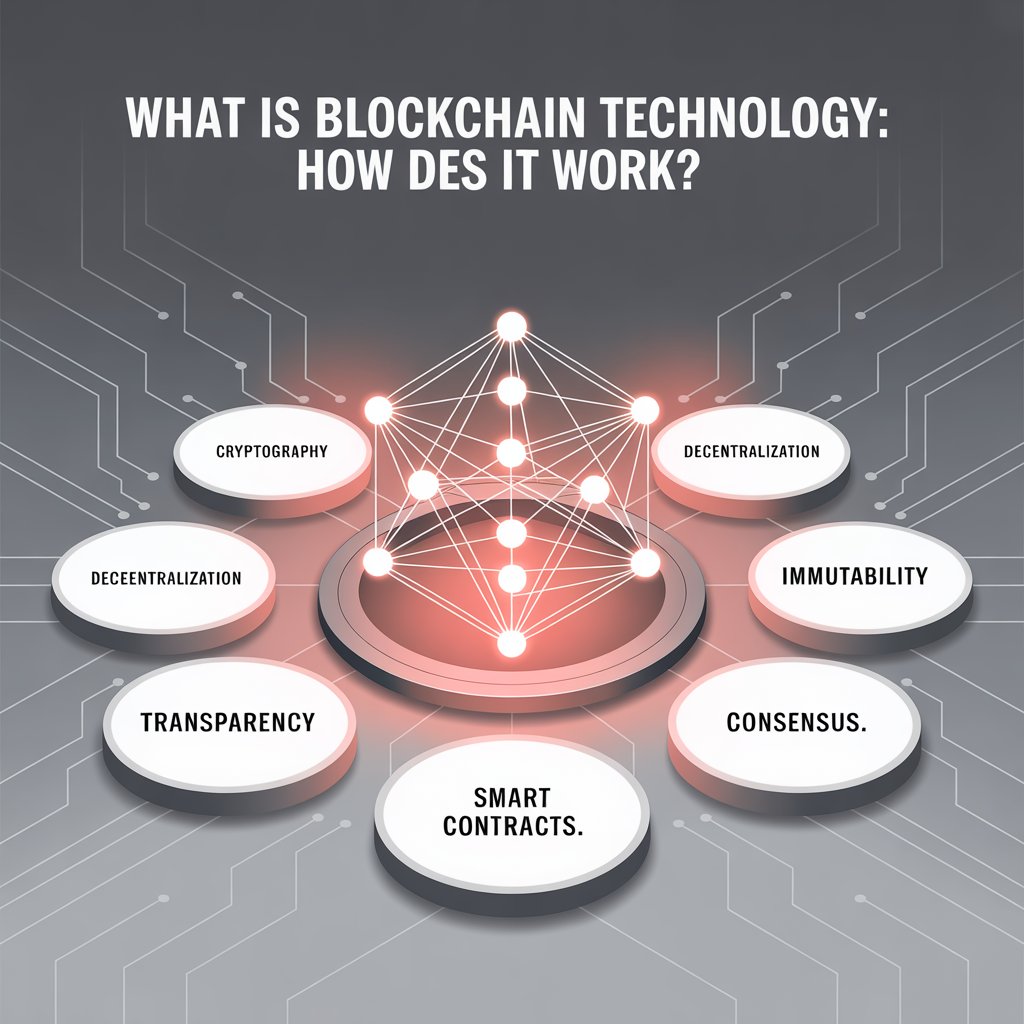
Blockchain is a distributed ledger that stores information in connected blocks. Each block includes verified data, a timestamp, and a cryptographic hash. Once added, blocks become permanent records that no one can alter. This structure makes blockchain tamper-proof and highly reliable.
How Transactions Become Blocks
- A user makes a payment or requests data transfer.
- The request spreads across multiple computers (nodes) in the network.
- Nodes validate the transaction using encryption.
- The transaction joins other confirmed records inside a block.
- That block links to the chain, making a permanent, secure entry.
Why Consensus Matters
Consensus mechanisms ensure all nodes agree before adding new blocks. Systems like Proof of Work and Proof of Stake keep the network honest and protect against fraud. This shared agreement allows strangers to trust the same digital record without needing a central authority.
Security Through Cryptography
Blockchain relies on public and private keys. Public keys act like account numbers, while private keys allow owners to access their funds. Cryptography locks every transaction, ensuring only the rightful owner controls their digital assets.
Everyday Uses in the UK & USA
- Finance: Banks and fintech firms use blockchain to cut fees and speed up international payments.
- Retail: Shoppers in the UK value blockchain-traced products that prove authenticity.
- Healthcare: In the USA, hospitals explore blockchain for secure patient data.
- Smart Contracts: Businesses automate agreements, reducing costs and errors.
Benefits and Challenges
Benefits: Transparency, faster transfers, decentralization, and high security.
Challenges: Energy use in some systems, evolving regulations, and limited compatibility between networks.

What Is Blockchain Technology: How Does It Work?
Conclusion
Understanding blockchain: how does it work? shows why it is reshaping digital trust. By combining cryptography, consensus, and decentralization, blockchain secures records without banks or middlemen. For users in the UK and USA, it enables faster payments, safer data, and more reliable services. Though energy costs and regulations remain hurdles, blockchain continues to prove itself as a powerful foundation for digital innovation.
Recommendation
- Learn by doing: Start with a secure wallet and small transactions.
- Stay updated: Keep track of blockchain regulations in your country.
- Protect your keys: Back up private keys and use two-factor authentication.
- For companies: Explore blockchain for supply chains, contracts, and payment solutions.
Popular Google FAQs
What is blockchain, and how does it work in simple words?
It works like a shared online notebook where every entry is permanent and verified.
Is blockchain just for cryptocurrency?
No, it also supports healthcare, contracts, and product tracking.
Can blockchain be hacked?
It’s extremely difficult, since records are decentralized and secured with cryptography.