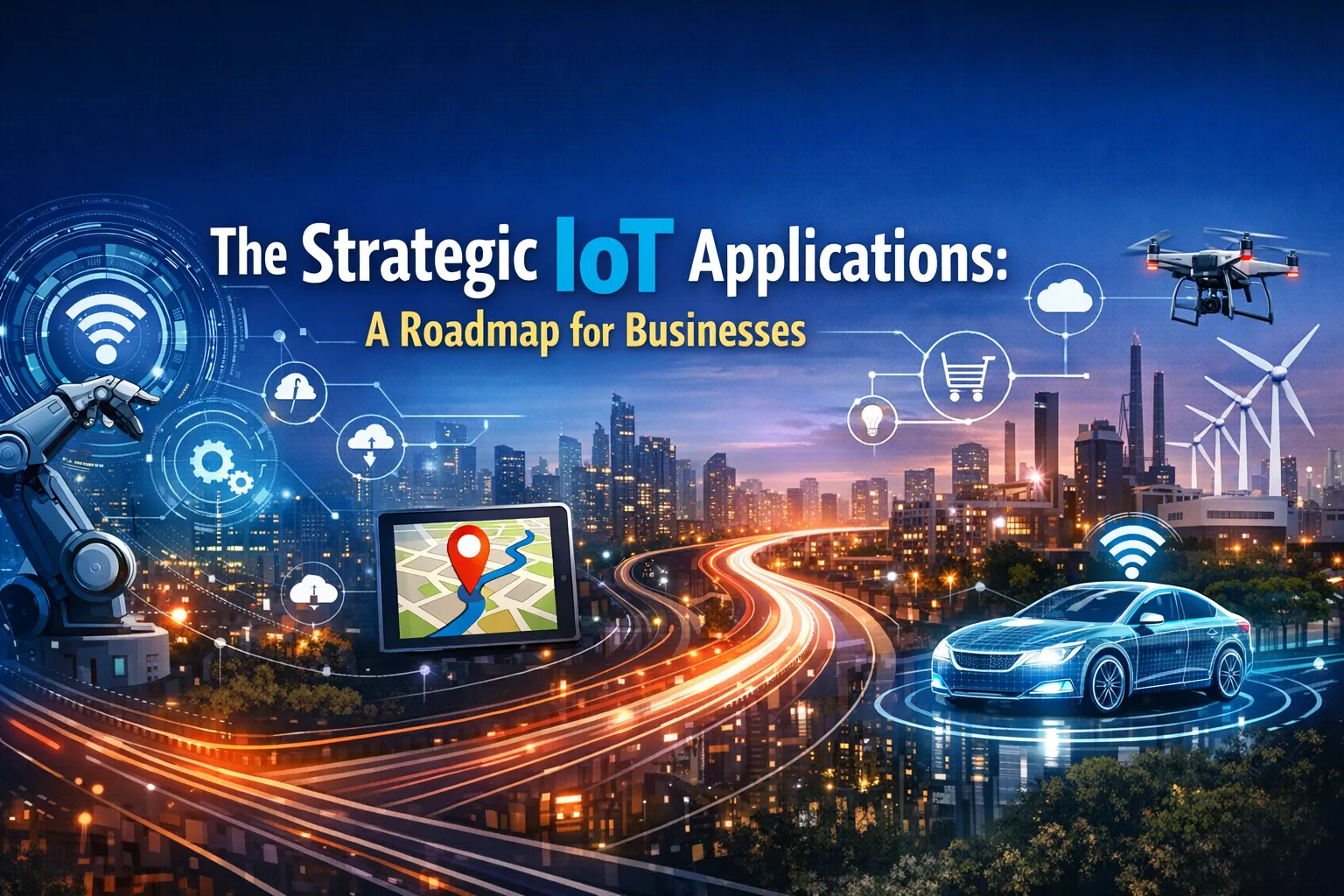
The Strategic IoT Applications: A Roadmap for Businesses
Introduction
The Internet of Things represents a fundamental shift in how we interact with the physical world. At its core, IoT applications are the networking of physical objects embedded with sensors and software, enabling them to collect and exchange data. This creates a vast ecosystem where everyday items—from factory machinery to home thermostats—become intelligent, interconnected assets. IoT applications are not a singular technology but a convergence of multiple fields, including ubiquitous computing, embedded systems, and machine learning.
The proliferation of IoT applications is staggering. By 2026, the number of connected devices is projected to exceed 19 billion globally, far surpassing the human population. This explosive growth is fueled by falling hardware costs and the rise of powerful enabling technologies like 5G networks and edge computing. In the United States alone, the IoT devices market is expected to grow at a compound annual growth rate (CAGR) of 12.7%, reaching a projected value of $35.6 billion by 2030. These figures underscore a critical point: IoT has moved beyond consumer novelty to become a foundational layer of modern business infrastructure.
Defining the IoT Application Architecture
A functional IoT system is built upon a layered architecture of interdependent technologies. It begins with sensors and actuators, the physical components that interact with the environment. Sensors detect changes—temperature, motion, humidity—while actuators execute physical actions, like opening a valve. This data is then transmitted via connectivity protocols, which range from short-range options like Bluetooth and Zigbee to wide-area networks like cellular (including LTE-M and NB-IoT) and 5G. The data finds its way to the cloud, where it is stored and processed, often using big data analytics and machine learning to extract actionable insights. Crucially, each layer must be underpinned by robust security and privacy technologies to protect against escalating cyber threats.
The Strategic IoT Applications: A Roadmap for Businesses
Core Business and Industrial Applications
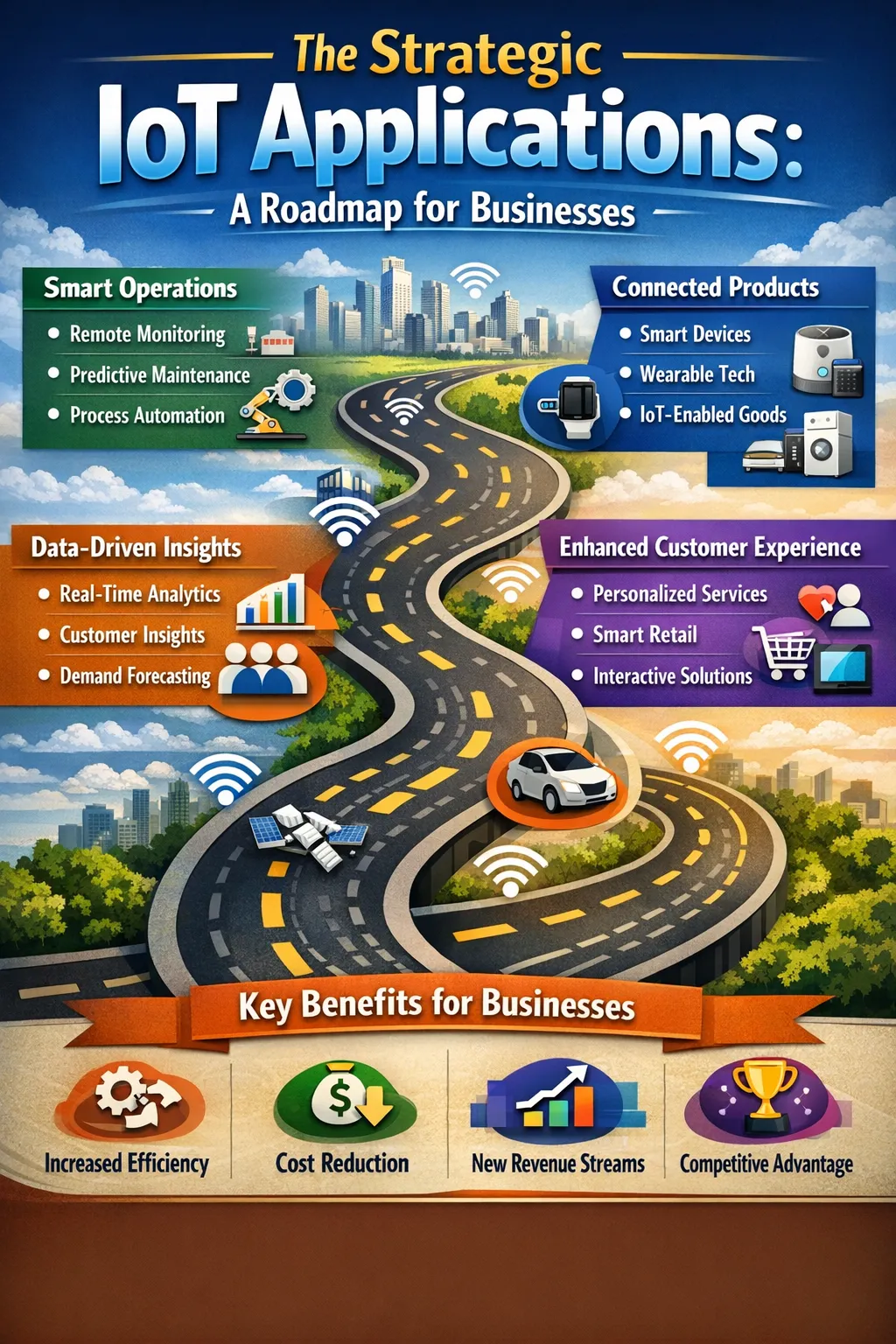
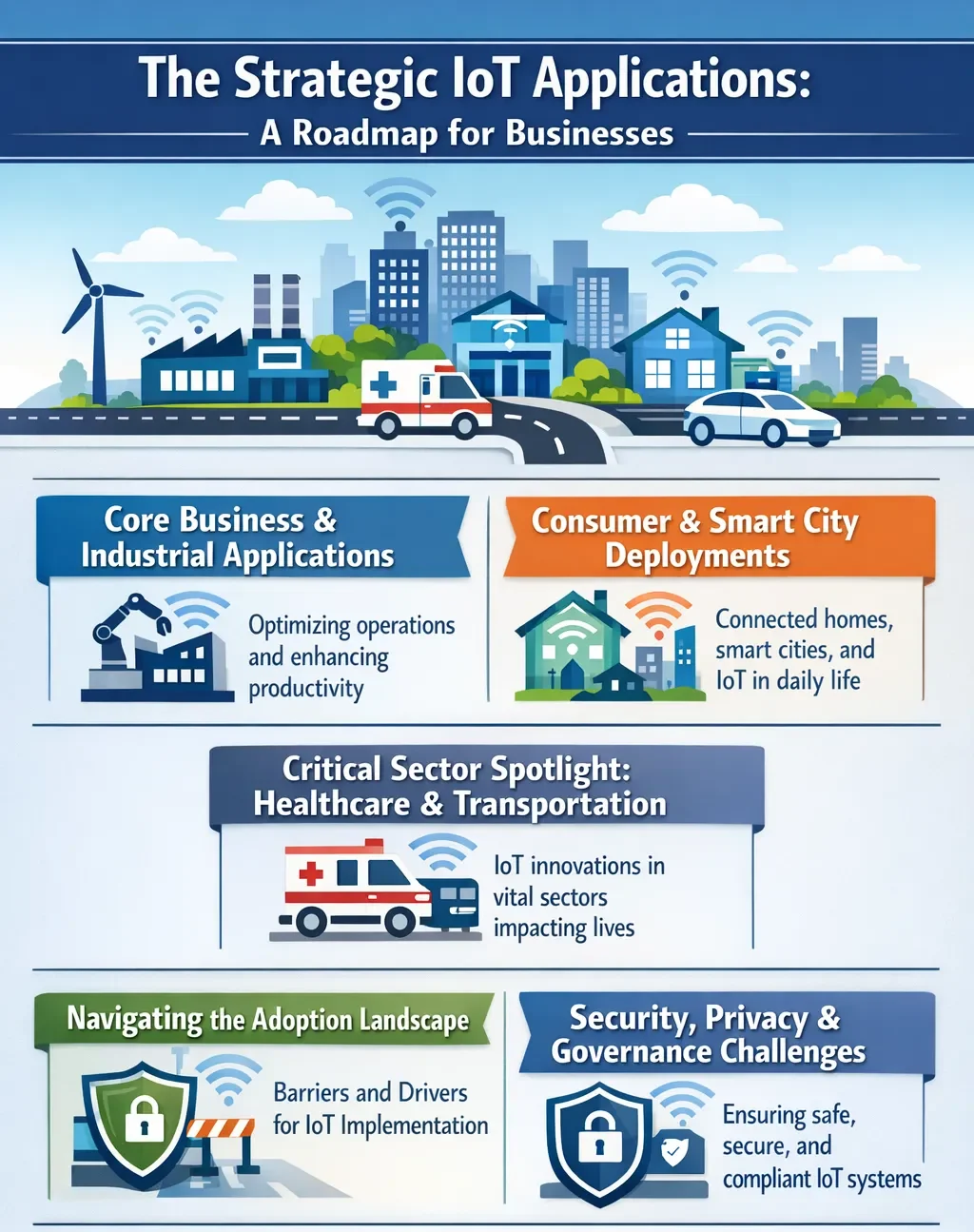
The most transformative IoT applications occur in the enterprise and industrial sectors. Predictive maintenance is a paramount use case, where sensors on machinery monitor performance and predict failures before they cause costly downtime. In logistics and fleet management—which constitutes the single largest application area—IoT enables real-time asset tracking, route optimization, and monitoring of perishable goods in transit. Furthermore, smart metering in utilities and industrial monitoring systems allows for unprecedented control over energy consumption and production processes. For UK and US manufacturers, these applications directly translate to reduced operational costs, enhanced supply chain resilience, and improved productivity.
Consumer and Smart City Deployments
On the consumer front, IoT is most synonymous with the smart home. This includes connected security systems, intelligent thermostats that learn user patterns, and voice-controlled appliances. Wearable technology for fitness and health monitoring continues to see rapid adoption. Beyond the home, IoT is the backbone of smart city initiatives. Here, connected sensors manage municipal services, optimizing traffic flow through adaptive signal control, enhancing waste management schedules, and monitoring public infrastructure health. These deployments aim to improve urban efficiency, sustainability, and the quality of life for residents.
Critical Sector Spotlight: Healthcare and Transportation
Two sectors experiencing profound IoT-driven change are healthcare and transportation. The Internet of Medical Things (IoMT) enables remote patient monitoring, allowing healthcare providers to track vital signs and manage chronic conditions outside clinical settings. This not only improves patient outcomes but also reduces the burden on healthcare systems. In transportation, IoT facilitates connected vehicle ecosystems. These systems enable vehicle-to-vehicle (V2V) and vehicle-to-infrastructure (V2I) communication, paving the way for enhanced safety features, optimized traffic management, and the foundational technology for autonomous driving.
Navigating the Adoption Landscape: Barriers and Drivers
Despite clear benefits, adoption faces headwinds. In the UK, SMEs cite complex vendor landscapes, unclear return on investment (ROI), and unreliable connectivity as primary barriers. Security concerns remain paramount globally, as every connected device represents a potential network entry point for cyberattacks. Conversely, key drivers are powerful: intense pressure to reduce operational costs, the need for real-time business insights, and growing automation demands are pushing businesses toward IoT solutions. The rollout of high-speed, low-latency 5G networks is also a critical enabler, particularly for applications requiring immediate data processing.
Security, Privacy, and Governance Challenges
The distributed nature of IoT introduces significant security and privacy challenges. Many devices have weak default passwords, lack encryption capabilities, and are difficult to patch, making them vulnerable to botnets like Mirai, which can harness thousands of devices for large-scale cyberattacks. Data privacy is equally critical, as devices collect vast amounts of personal and operational information. This creates a complex governance and regulatory challenge, as data flows across borders and jurisdictions. Businesses must therefore design IoT deployments with a “security-first” mindset, implementing strong encryption, access controls, and regular update protocols from the outset.
The Strategic IoT Applications: A Roadmap for Businesses
Conclusion: From Connectivity to Strategic Intelligence
The journey of IoT is evolving from simply connecting devices to harnessing their combined data for strategic intelligence. It is transitioning from isolated automation projects to integrated platforms that redefine business models and operational paradigms. For organizations in the UK and US, the question is no longer if but how and how swiftly they will integrate IoT into their core operations. Success will belong to those who view IoT not as a cost-center IT project but as a strategic framework for building a more responsive, efficient, and intelligent enterprise. The next step is to conduct an internal audit to identify one high-impact, low-complexity process where sensor data could immediately drive better decisions.
Frequently Asked Questions
What is the simplest way for a small business to start with IoT?
Begin with a single, well-defined use case like GPS tracking for delivery vehicles or smart meters to monitor energy usage, as this delivers quick, measurable value without overwhelming complexity.
What is the biggest security risk with IoT devices?
Many IoT devices are deployed with weak or default passwords and lack regular security updates, making them vulnerable to being hijacked and used as entry points into larger corporate networks or as part of botnets.
How does 5G technology improve IoT applications?
5G provides significantly higher speed, lower latency, and the ability to connect a massive number of devices simultaneously, which is essential for real-time applications like autonomous vehicles, advanced industrial automation, and seamless smart city infrastructure.