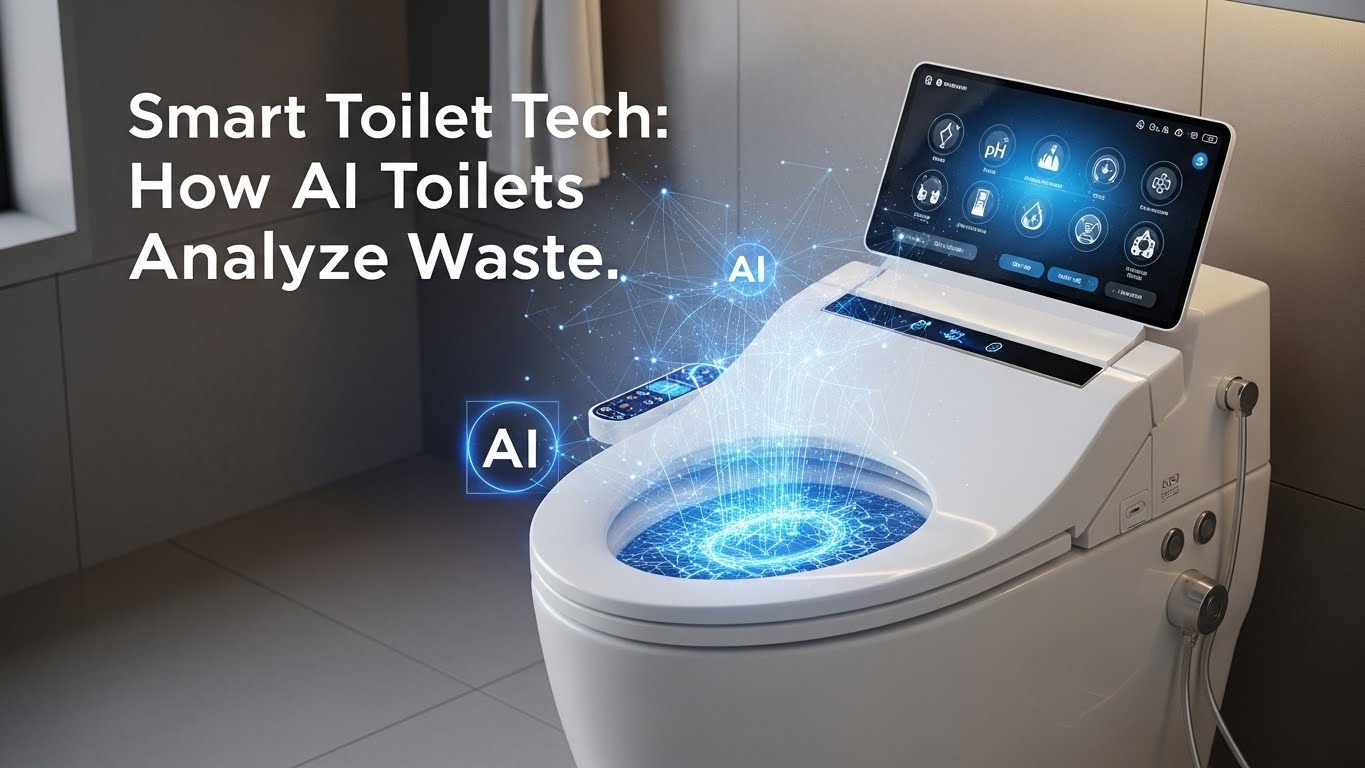
Smart Toilet Tech: How AI Toilets Analyze Waste
Introduction (Authority Framing)
Smart Toilet Tech is moving from labs and pilot projects into consumer bathrooms, and it matters because passive, daily biomonitoring can surface health signals earlier than episodic tests. Smart Toilet Tech converts routine bathroom use into longitudinal health data—urine chemistry, stool appearance, and trend analysis—without changing user behaviour. For clinicians and health-conscious households in the UK and USA, Smart Toilet Tech offers an unobtrusive window into metabolic, renal, and gut status, supporting earlier discussions with healthcare professionals and better-informed self-care. Smart Toilet Tech is now available in several commercial forms and through emerging retrofit devices, widening access to continuous biological monitoring.
How Smart Toilets Analyze Human Waste
Sensor-Driven Urine Analysis
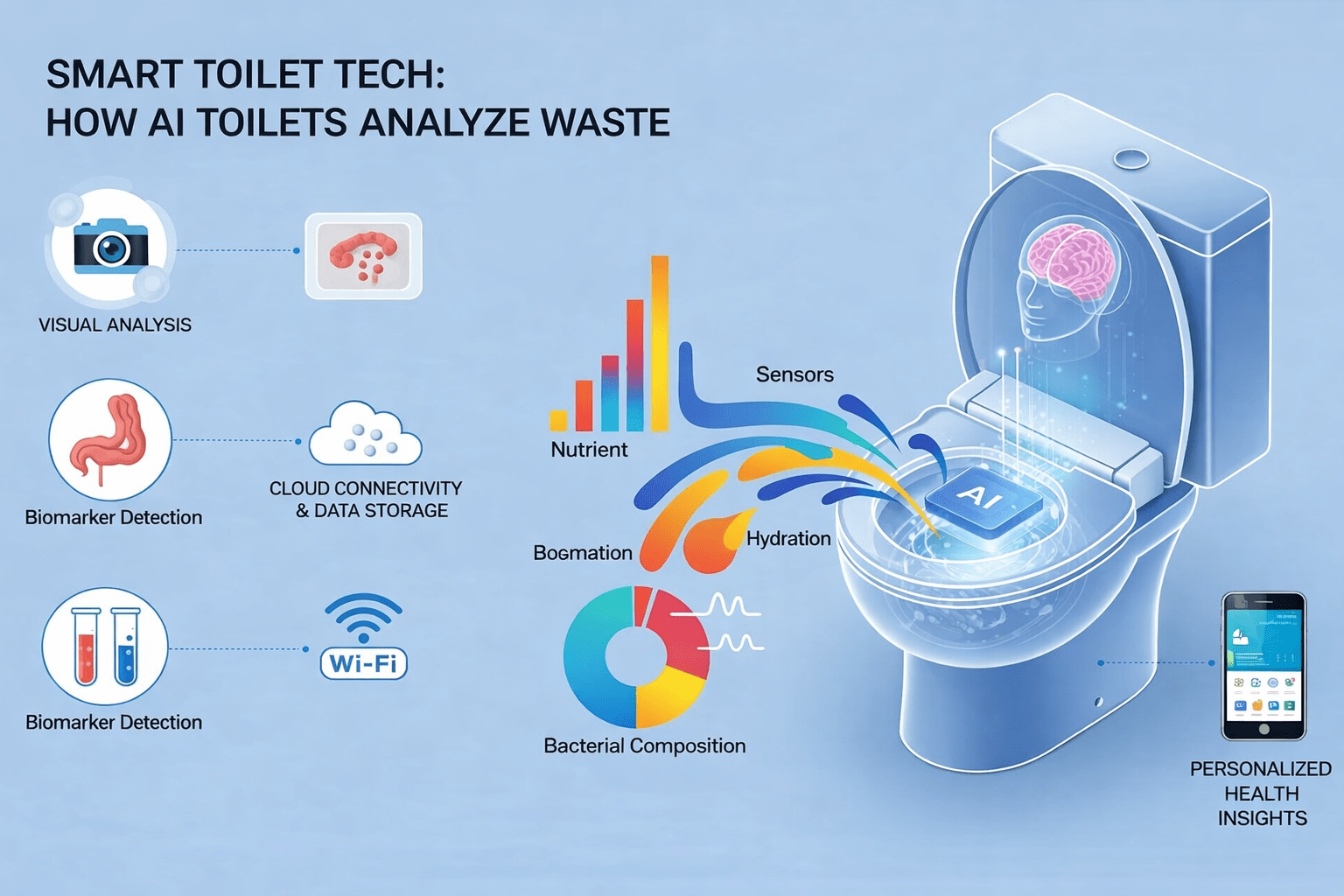
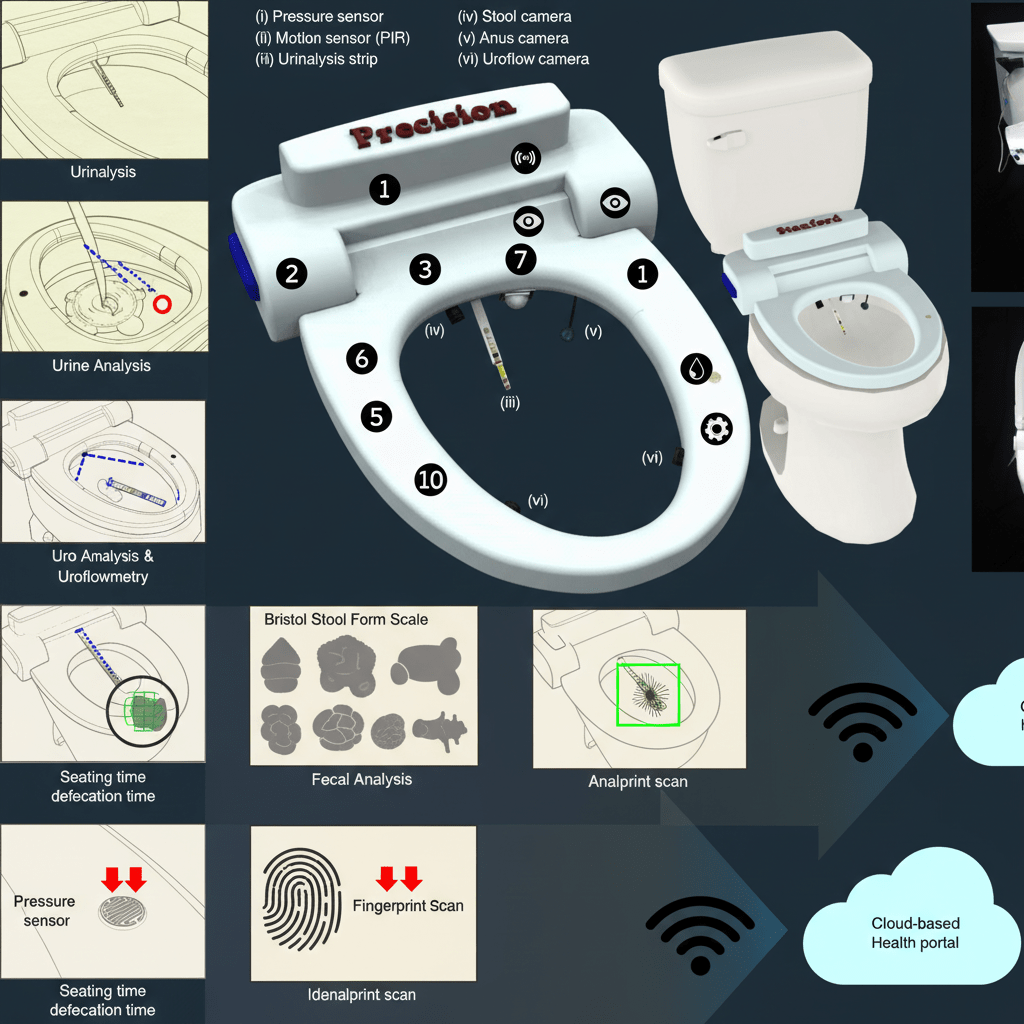
Devices embed optical, chemical, or microfluidic sensors to read urine markers (glucose, protein, pH, specific gravity, and nitrites). Signals are processed locally or in the cloud by trained models and returned as trend-based alerts—anomaly-first messaging that encourages confirmatory clinical follow-up rather than offering a definitive diagnosis. This is the core mechanism by which Smart Toilet Tech turns single samples into useful longitudinal context.
Optical and AI-Based Stool Analysis
Cameras and AI map stool color, form, and texture to clinical frameworks (e.g., the Bristol Stool Scale). The process flags changes—consistent softening, persistent hard stools, or traces of blood—that matter because they indicate when to escalate to professional evaluation. Commercial units pair this output with dietary and hydration guidance in-app.
Smart Toilet Tech: How AI Toilets Analyze Waste
Data Flow: Connectivity, Apps and Response Time
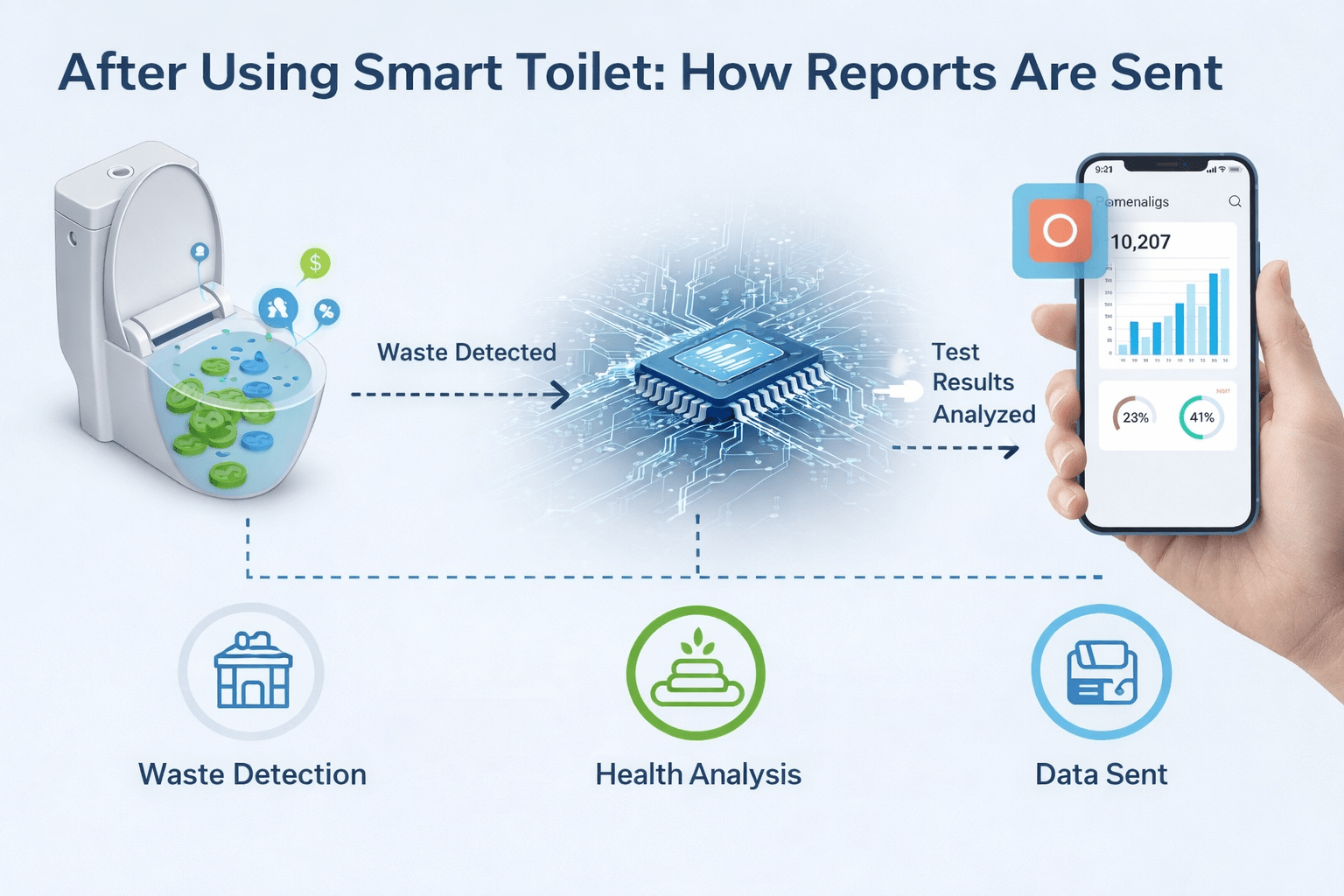
Collected data is sent via Wi-Fi or Bluetooth to vendor apps where analysis, histories, and push alerts live. Key commercial apps and response characteristics include Kohler Health (used by Kohler’s Dekoda; app available on mobile platforms, near-real-time insights), Throne App (Throne clip: near-instant capture and feedback), and Shanmu’s companion app/console (S1 reports a rapid quantitative readout—roughly ten minutes per analysis). These vendor apps are central to the user experience because they convert raw signals into recommended next steps.
Smart Toilet Tech: How AI Toilets Analyze Waste
Where to Buy, Price Table and Commercial Availability
Below are current, vendor-disclosed retail or preorder figures and typical geographic availability (representative—check vendor pages for exact shipping countries and timelines):
| Product / SKU | Typical Retail Price (USD) | Subscription / Membership | Commercial availability (countries / regions) |
| Kohler Dekoda | $599 | Kohler Health membership ($6.99/mo or $70/yr individual) | US-first; shipping and rollouts target North America and select markets. |
| Throne One (clip) | $319–399 $ (preorder/retail) | Membership required (vendor) | US-first; startup shipping to early-access customers, expanding thereafter. |
| Shanmu S1 | Price: TBA (CES product) | TBD (vendor app consumables/consumable replacements mentioned) | China commercial rollout and international demo at trade shows; wider export subject to announcements. |
| TOTO Wellness/advanced smart toilets | Reported retail tiers vary widely (example: reported range ~US$3,000+ for high-end integrated models) | Depends on model (usually no subscription; app features vary) | Japan-first (TOTO pioneered advanced washlet tech); global distribution via regional subsidiaries and dealers. |
Major brands publish purchase pages: Kohler Health’s store lists Dekoda purchase/preorder options and membership details; Throne sells direct from its shop; and Shanmu lists product and CES recognition on its site. For end users, retail availability tends to roll out country-by-country—the US and Japan are leading early commercial markets, with China showing strong activity in device development.
Evidence Signals and Practical Impact
Early adopters and clinical research prototypes suggest most value arises from trend recognition rather than one-off detection. Vendors and research groups emphasize longitudinal change detection, consumer adherence via app summaries, and using device outputs to trigger timely clinician visits. Adoption follows an expected pattern: consumer retrofit devices (lower price, quicker uptake) → integrated toilets (premium, broader features) → clinical-grade approvals or institution pilots.
Smart Toilet Tech: How AI Toilets Analyze Waste
Conclusion
Smart toilet tech is no longer only a research curiosity; a growing set of retrofit sensors and integrated toilets now put routine waste analysis into the consumer health stack. By producing longitudinal biomarker and stool-pattern signals through dedicated apps (Kohler Health, Throne, and Shanmu console), these systems shift preventive care toward continuous, passive monitoring—empowering earlier conversations with clinicians while preserving everyday convenience. Continued scrutiny of privacy, regulatory status, and clinical pathways will determine how quickly it becomes mainstream.
Recommendation
If you’re evaluating smart toilet tech, pick a use case first—hydration/gut-trend monitoring or metabolic/renal surveillance—and match the vendor to that need. For fast entry, consider retrofit clips (lower upfront cost); for long-term household monitoring, integrated models offer durability. Carefully read app privacy policies and subscription terms, and confirm local shipping/compatibility. Treat outputs as trend signals: follow up abnormal flags with clinical testing. Finally, test interoperability with your phone (iOS/Android) before purchase and prioritize vendors offering clear consumable replacement plans and transparent data control.
Frequently Asked Questions
Where can I buy Dekoda and its app?
Dekoda is available for preorder on Kohler Health’s store and uses the Kohler Health mobile app for insights.
How fast do smart toilet devices give results?
Response times vary: some camera-based systems provide near-instant insights, while microfluidic urine analyzers (e.g., Shanmu S1) report quantitative results in roughly ten minutes.
Which countries sell these products commercially?
Early commercial availability is concentrated in the US, Japan, and China (development/market leaders); rollout to other countries is vendor-dependent—check regional dealer pages.