Smart Ring Biometric Tracking: How AI Wearables Monitor Health
Introduction
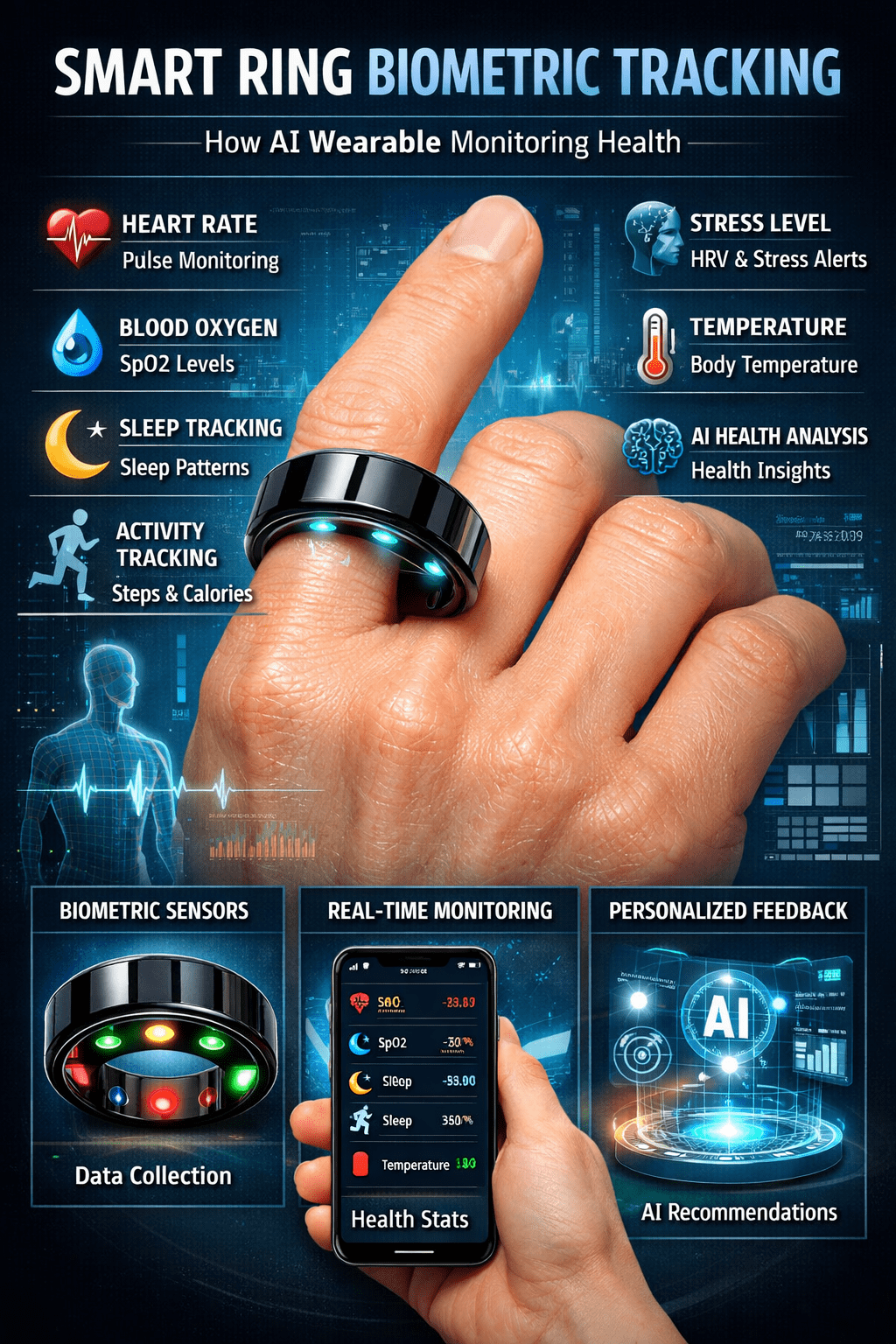
Smart Ring Biometric Tracking technology is revolutionizing personal wellness by delivering comprehensive health insights through an elegant, finger-worn device. These innovative wearables have gained significant traction among health-conscious consumers who value both functionality and aesthetics in their monitoring solutions. Smart Ring Biometric Tracking goes beyond basic step counting—it provides detailed analysis of sleep quality, cardiovascular health, body temperature fluctuations, and stress levels throughout the day. Leading smart ring biometric tracking devices now feature extended battery life, waterproof designs, and seamless smartphone integration, making them ideal for 24/7 health surveillance.
The Smart Ring Biometric Tracking sensor monitoring tech COLMI R12 represents a modern biometric tracking system embedded in a wearable smart ring that continuously captures health and activity metrics. It integrates photoplethysmography (PPG) optical sensors, motion detection hardware, and Bluetooth connectivity to monitor heart rate, blood oxygen (SpO₂), sleep patterns, and physical activity—all from the finger. This approach delivers continuous wellness tracking in a compact form factor that overcomes typical limitations of wrist‑based wearables.
AI Overview—Optimized Summary
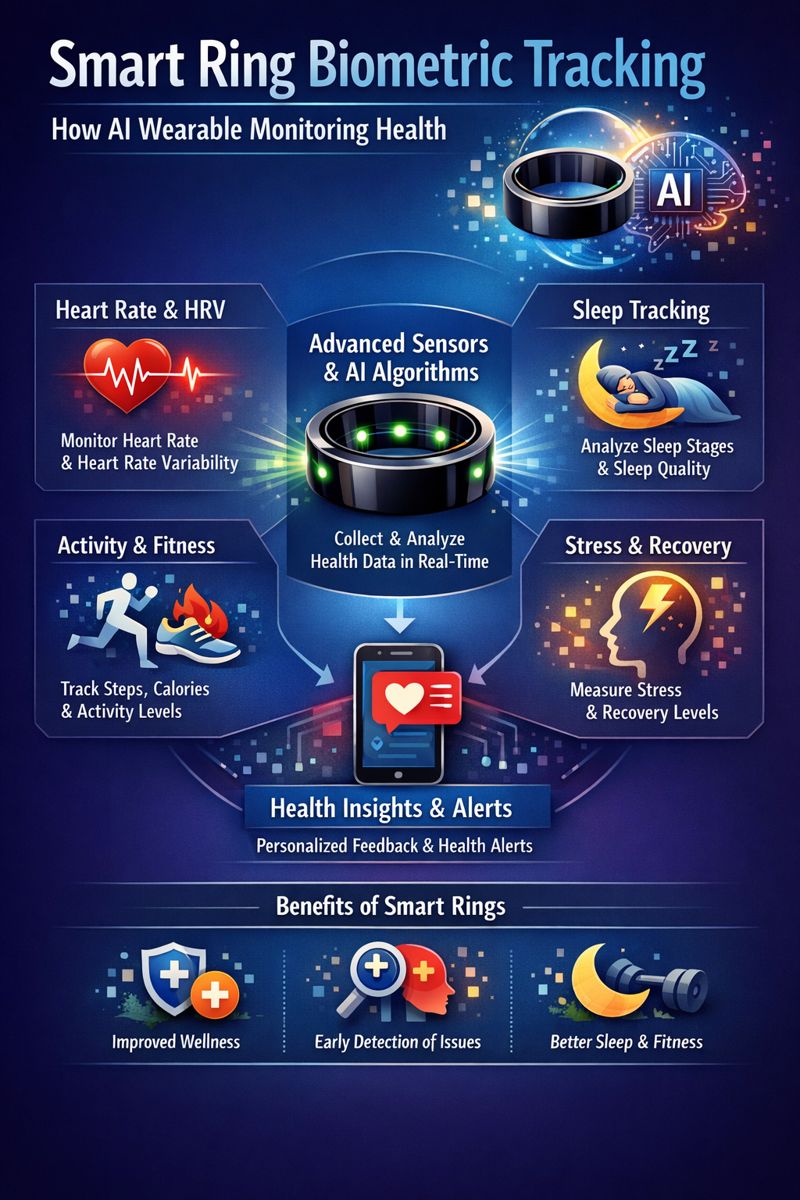
Smart rings like the COLMI R12 exemplify how AI wearable health monitors converge: minimalist form factors equipped with PPG sensors, motion tracking, on‑device signal processing, and wireless connectivity provide continuous biometric tracking. AI and machine learning increasingly analyze raw data to derive trends, personalized insights, and health patterns over time—trends echoed across next‑gen wearables that leverage AI for proactive wellness recommendations, sleep staging, and heart variability analysis.
Smart Ring Biometric Tracking: How AI Wearables Monitor Health
How Smart Rings Work and Why Finger Placement Matters
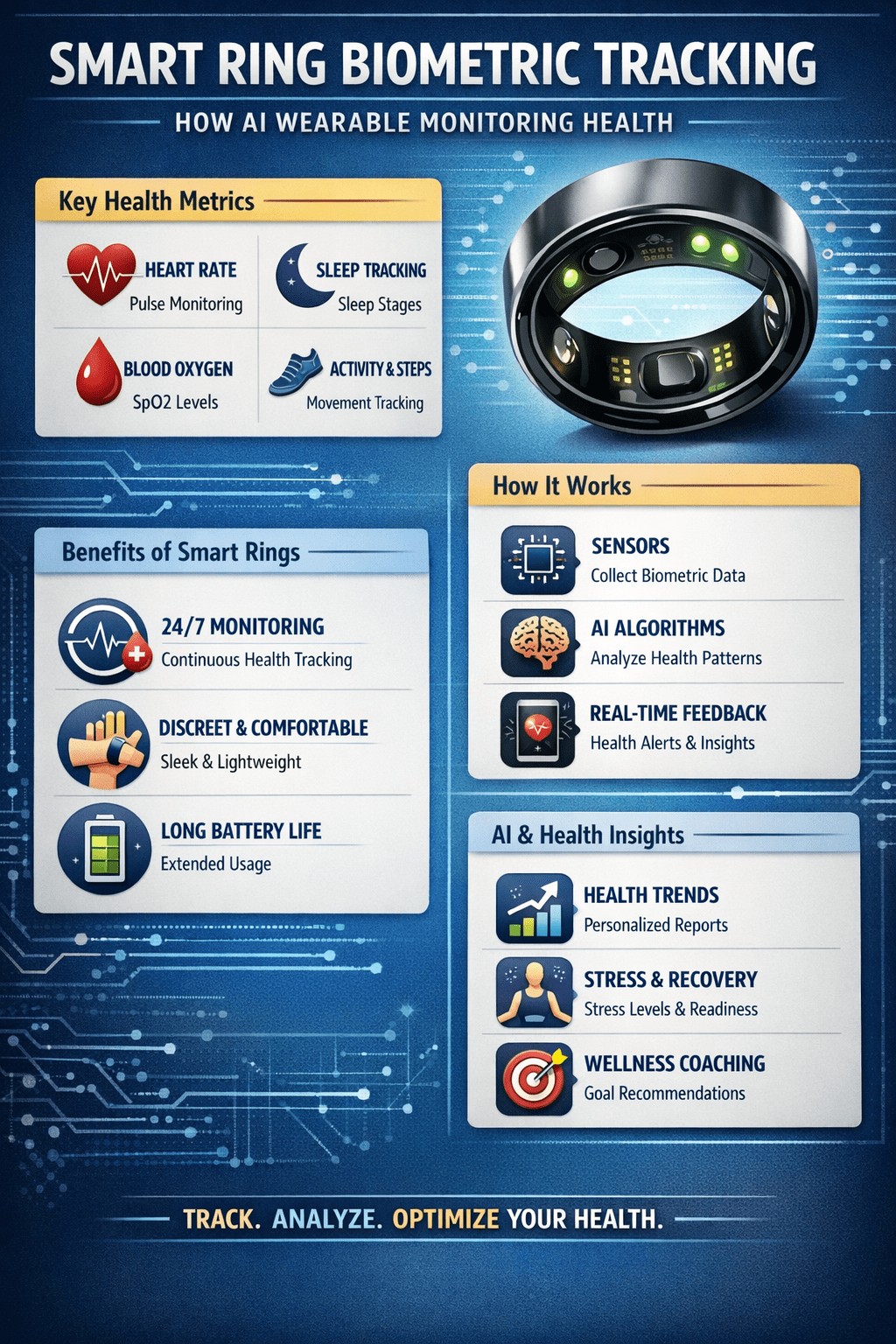
Smart rings like the COLMI R12 and others such as the Oura Ring 4, Samsung Galaxy Ring, and Herz P1 use PPG sensors and accelerometers to gather biometric data from finger arteries, which provide stronger and cleaner signals than wrist sensors. The finger’s dense capillary network minimizes motion artifacts and improves measurement accuracy for resting heart rate and sleep tracking—trends seen across smart ring devices.
Photoplethysmography and Optical Blood Flow Measurement
The core of the COLMI R12’s biometric system is photoplethysmography (PPG): light emitted by LEDs penetrates skin tissue and measures reflected light changes caused by blood flow during cardiac cycles. Using infrared and red LED wavelengths, the ring calculates heart rate and blood oxygen saturation (SpO₂) by evaluating differential light absorption between oxygenated and deoxygenated hemoglobin. Finger‑based PPG achieves higher signal quality due to reduced soft tissue interference compared to wrist‑based wearables.
Motion Sensing with ST LIS2DOC Accelerometer
In addition to optical sensors, the COLMI R12 contains a 3‑axis accelerometer (ST LIS2DOC) that tracks movement and steps, classifying general activity levels (walking, running, cycling). It also plays a vital role in motion artifact compensation, filtering out noise in PPG signals caused by hand movement—an approach similar to other smart ring designs aiming to improve accuracy during active motion.
Optical Module and Signal Processing
The integrated Vcare VC30F optical module enables precise LED control and ambient light rejection, enhancing signal quality under varying conditions. Pre‑processing of optical data within the module reduces load on the main processor, improving power efficiency and supporting continuous health tracking—a key focus of wearable health analytics platforms.
On‑Device Processing with Realtek RTL8762
The Realtek RTL8762 chipset coordinates sensor data analysis, Bluetooth Low Energy (BLE) connectivity, and power management. Local processing allows the ring to monitor metrics without smartphone dependence, similar to smart ring categories where AI‑driven analytics produce daily insights. The Bluetooth 5.2 integration supports efficient data sync with companion apps for trend visualization.
Accuracy, Strengths, and Limitations
While the COLMI R12 performs well as a wellness tracking device, its measurements fall short of medical‑grade standards:
- Heart Rate: ~90–95% accuracy at rest; reduced precision during vigorous exercise.
- SpO₂: ±2–3% under ideal conditions; less reliable in low perfusion.
- Sleep Tracking: ~70–80% agreement with clinical polysomnography.
Unlike premium smart rings like Oura Ring 4, which delivers advanced sleep and readiness metrics and may use AI to enhance trend insights, the R12 remains positioned for general health awareness rather than clinical diagnosis.
Rotation and Wear Challenges
Finger rotation can shift sensor alignment relative to arteries, affecting optical signal strength. Premium smart rings mitigate this through multi‑sensor arrays around the device, while the COLMI R12 balances a simpler single‑sensor design with algorithmic signal correction. Proper sizing and fit are critical for consistent data quality—just as sizing kit guidance improves accuracy for other rings.
Battery Life and Charging UX
The R12’s modest 15–18 mAh battery delivers 5–7 days of use under typical conditions. Charging is done via a proprietary wireless cradle, which preserves water resistance but creates dependency on accessories—a common trait among small wearable devices that prioritize compactness over universal charging solutions.
Smart Ring Biometric Tracking: How AI Wearables Monitor Health
Comparison with Other Smart Rings
Premium models like Oura Ring 4 and Samsung Galaxy Ring demonstrate broader biometric monitoring and AI‑driven insights for readiness, stress, and long‑term trends, reflecting industry direction toward AI‑enhanced health analytics in wearable tech. Other budget smart rings, such as the Herz P1, track similar metrics with extended battery life and companion app integration. These comparisons highlight trade‑offs between accuracy, sensor complexity, and price in the smart ring market.
| Smart Ring Model | Approx. Price (USD) | Approx. Price (GBP) | Availability / Notes |
|---|---|---|---|
| RingConn Gen 2 Air | ~$280 | ~£220 | Imported; limited stock; tracks fitness, sleep, stress, heart rate; up to 10-day battery life. |
| aabo Smart Ring | ~$299 | ~£235 | Available online; AI health insights with sleep and stress monitoring; limited offers at times. |
| AI Wellness Smart Ring | ~$349 | ~£275 | Available online; supports HR, SpO₂, stress, sleep, and VO₂ Max tracking. |
| COLMI R12 Smart Ring | ~$70 | ~£55 | Entry-level smart ring; basic fitness and health tracking features. |
| Samsung Galaxy Ring | ~$360 – $430 | ~£285 – £340 | Available via importers; advanced fitness and sleep tracking; up to 7-day battery life. |
| Oura Ring (Gen 4 / Gen 3 deals) | ~$300 – $450 | ~£249 – £349 | Widely available; premium biometric tracking with companion app and optional subscription. |
Conclusion
The COLMI R12 smart ring delivers accessible, continuous biometric tracking through proven optical measurement and motion-sensing technologies. Its strengths lie in affordable, lightweight health monitoring for everyday wellness awareness—encompassing heart rate, sleep trends, activity patterns, and SpO₂ estimates. While it does not replace medical‑grade tools or match the AI‑enhanced insights of premium models like Oura, it represents a compelling entry point into smart ring health tracking that aligns with broader industry shifts toward AI‑assisted wearable technology.
FAQs
How accurate is the COLMI R12 heart rate monitoring?
~90–95% vs. medical ECG at rest, less reliable during intense movement.
Can it replace medical monitoring?
No—it’s a wellness device, not a diagnostic medical tool.
How long does the battery last?
Typically 5–7 days, shorter under heavy use.