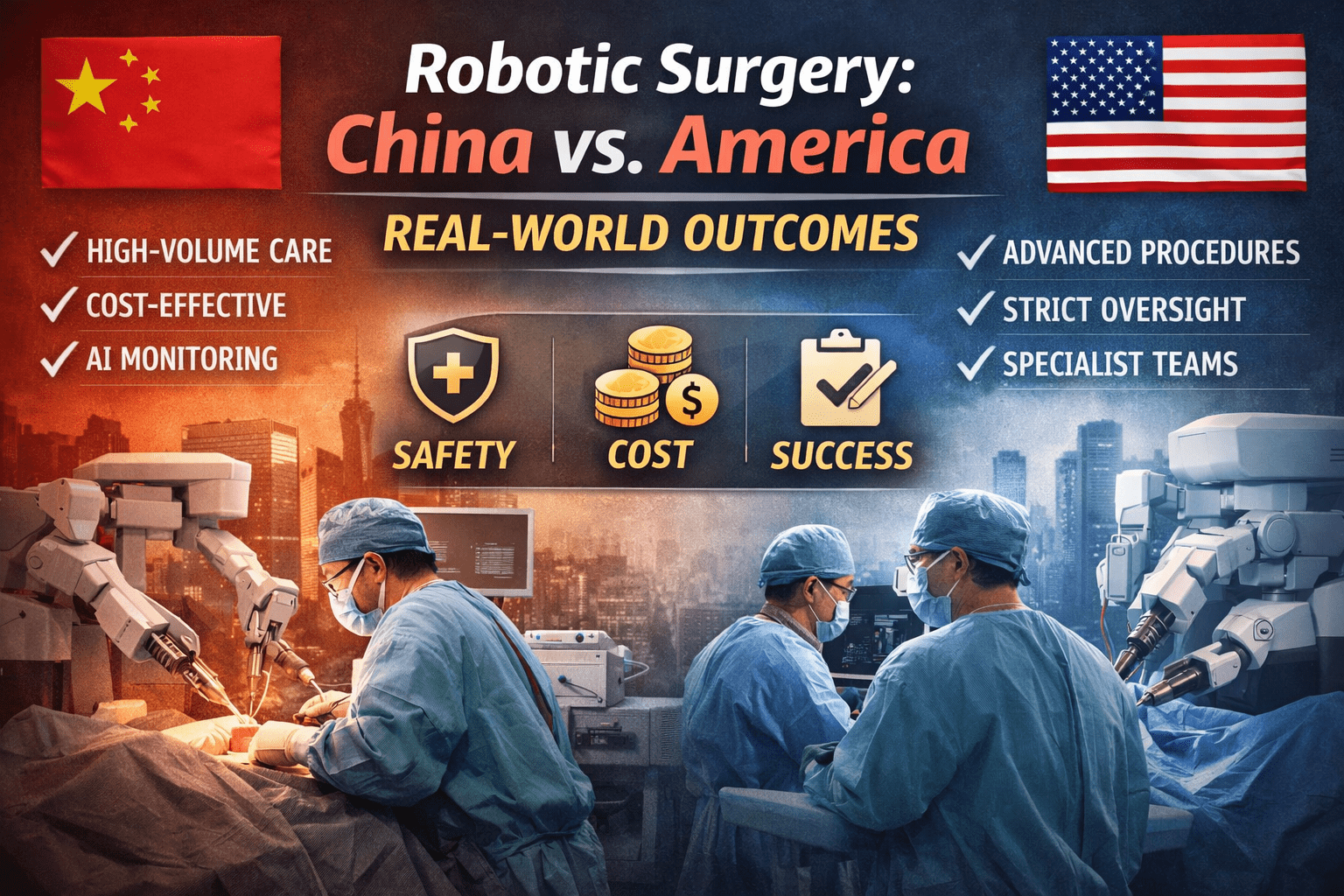
Robotic Surgery: China vs. America—Real-World Outcomes
Introduction
Robotic Surgery highlights how surgeon-controlled robotic systems are reshaping precision medicine. These systems are not autonomous “robot doctors” but highly sophisticated platforms that augment human expertise, particularly in delicate eye and heart surgeries. Understanding this distinction is crucial for clinicians, patients, and healthcare administrators evaluating technology adoption across countries.
Robotic Surgery represents a pivotal comparison in modern healthcare. Both countries deploy surgeon-controlled robotic systems, yet their approach to safety, cost, reliability, and operational scale differs. Understanding Robotic Surgery helps patients, clinicians, and healthcare administrators evaluate technology adoption strategically.
Today, robotic surgery is not autonomous; it enhances a surgeon’s precision in delicate procedures, particularly in eye and heart surgery. Exploring Robotic Surgery provides insight into how governance, clinical protocols, and service delivery impact real-world outcomes.
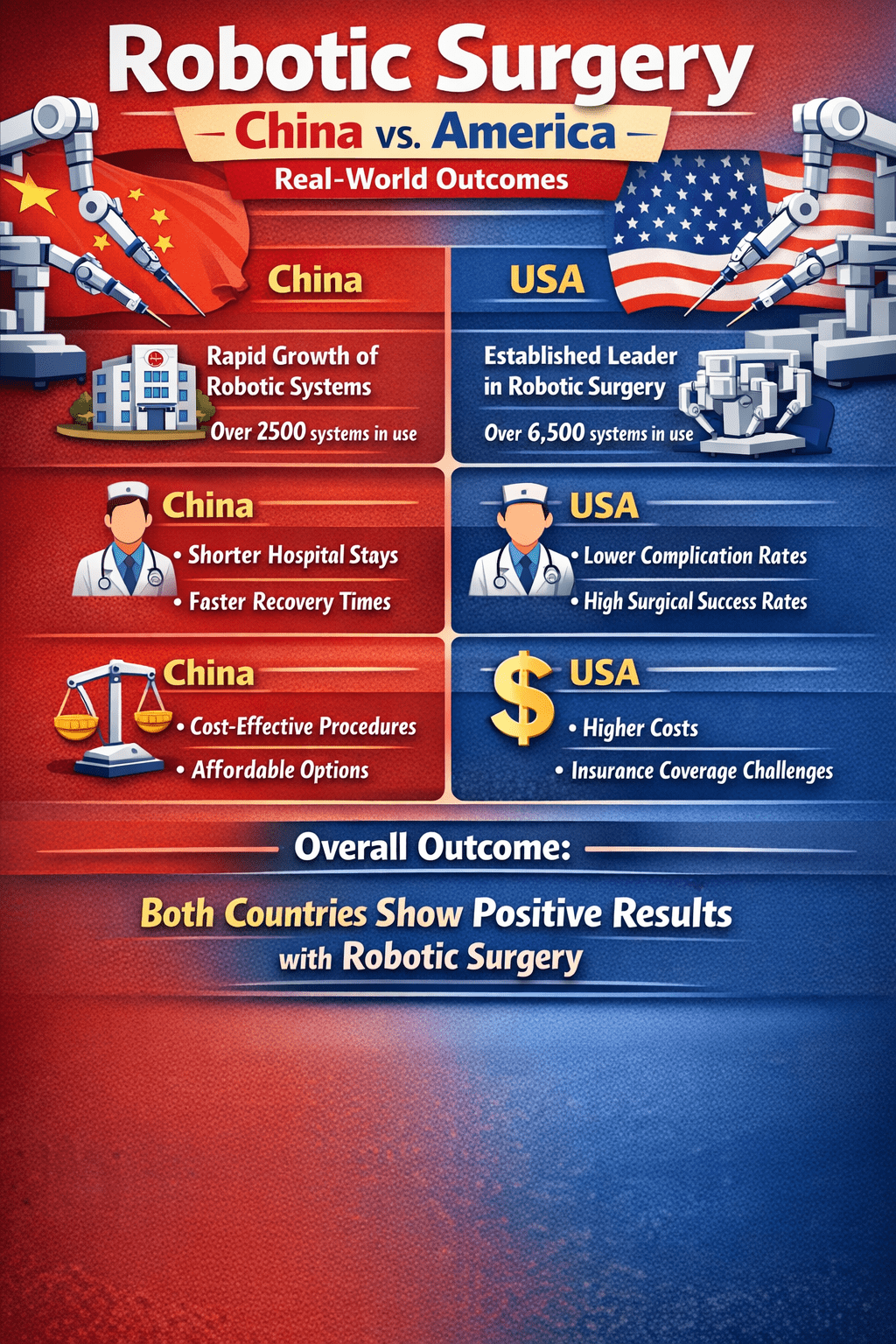
Robotic Surgery: China vs. America—Real-World Outcomes
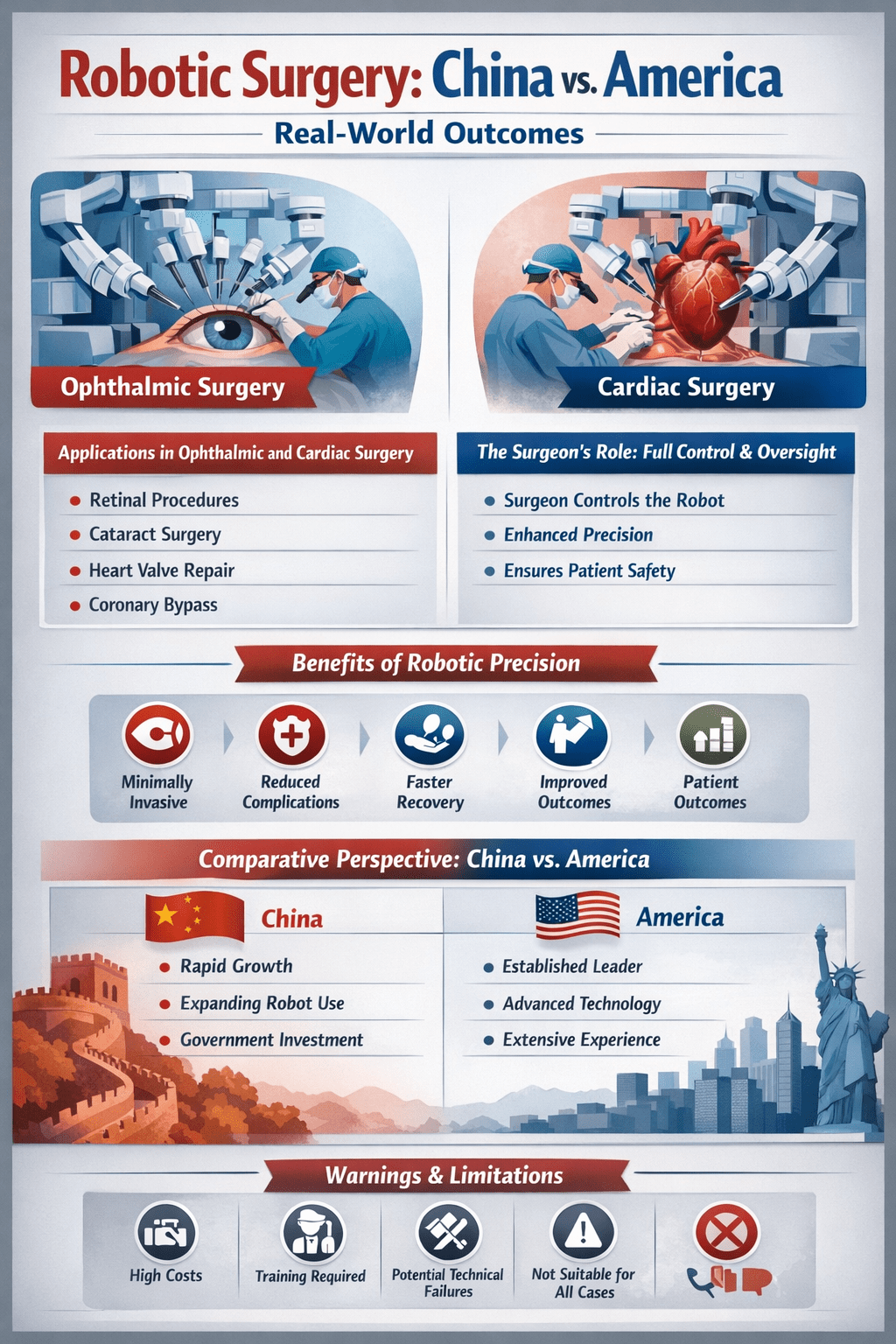
Experimental Applications in Ophthalmic and Cardiac Surgery
Robotic surgery has demonstrated success in minimally invasive procedures, with varying degrees of adoption between China and America.
Ophthalmic (Eye) Surgery
Established Procedures:
- Cataract surgery, completed successfully with robotic assistance
- Retinal membrane peeling to remove micron-thin membranes
Experimental Applications:
- Subretinal injections for gene or stem cell therapies
- Retinal vein cannulation, enabling precise medication delivery to tiny veins
Cardiac (Heart) Surgery
Established Procedures:
- Mitral valve repair
- Closure of heart defects and tumor removal
Experimental Applications:
- Fully robotic heart transplants, successfully performed in the U.S. and Saudi Arabia in 2024–2025, avoiding large chest incisions
The Surgeon’s Role: Full Control and Oversight
In all robotic procedures, the surgeon remains in complete control. The system translates hand movements into precise, tremor-filtered motions, allowing for enhanced accuracy in microsurgical tasks.
Key points:
- Robotic platforms do not make independent clinical decisions
- Surgeons monitor and adjust in real time
- Human expertise ensures safety, judgment, and ethical compliance
This principle is consistent across both China and America, even where adoption models differ.
Benefits of Robotic Precision
Robotic-assisted surgery offers measurable advantages:
- Minimally Invasive Procedures: Small incisions reduce trauma, avoid bone splitting, and decrease infection risk.
- Enhanced Precision and Stability: Tremor filtering and microscopic control allow for delicate procedures in the eye and heart.
- Faster Patient Recovery: Reduced pain, shorter hospital stays, and quicker returns to daily activities.
These benefits are universal, though operational strategies differ between countries.
Comparative Perspective: China vs America
- China: Focuses on scale and accessibility, integrating robotic systems into high-volume hospitals. Procedures like cataract surgery and valve repairs are deployed broadly, reducing wait times.
- America: Emphasizes complex, high-risk procedures, including experimental robotic heart transplants, with stringent regulatory oversight and individual surgeon accountability.
Both countries maintain human oversight, but their priorities differ: volume and efficiency in China, and precision and controlled innovation in the U.S.
Warnings and Limitations
Despite high accuracy in controlled settings, robotic surgery carries risks:
- Misalignment of instruments due to input errors
- Potential complications in experimental procedures
- Dependence on proper surgeon training and system calibration
These concerns underscore that robots augment rather than replace surgeons.
Robotic Surgery: China vs. America—Real-World Outcomes
Cost of Robotic Surgery in China vs. America
| Procedure | China (USD) | America (USD) |
|---|---|---|
| Prostatectomy | $8,000 – $15,000 | $20,000–$50,000 |
| Cardiac Surgery (e.g., bypass) | $15,000–$25,000 | $50,000–$120,000 |
| Cataract Surgery | $3,000–$5,000 | $10,000–$15,000 |
| Hysterectomy | $7,000 – $12,000 | $15,000–$40,000 |
| General Robotic Surgery (average) | $7,000 – $20,000 | $25,000–$80,000 |
Conclusion
Robotic Surgery China vs. America demonstrates how surgeon-controlled platforms are enhancing surgical outcomes without compromising human oversight. While both countries leverage the technology differently—China for operational scale, America for complex innovation—the core principle remains the same: safety, precision, and surgeon accountability.
As robotic systems evolve, healthcare leaders must evaluate integration strategies carefully, ensuring surgeons retain control and patients receive optimal outcomes.
FAQs
Are robotic surgeons autonomous?
No. Surgeons control all robotic movements; the system enhances precision only.
What surgeries benefit most from robotic systems?
Eye procedures like cataract and retinal surgery, and heart procedures such as valve repair.
Do robotic systems speed up recovery?
Yes. Minimally invasive techniques reduce pain, shorten hospital stays, and accelerate return to normal activity.