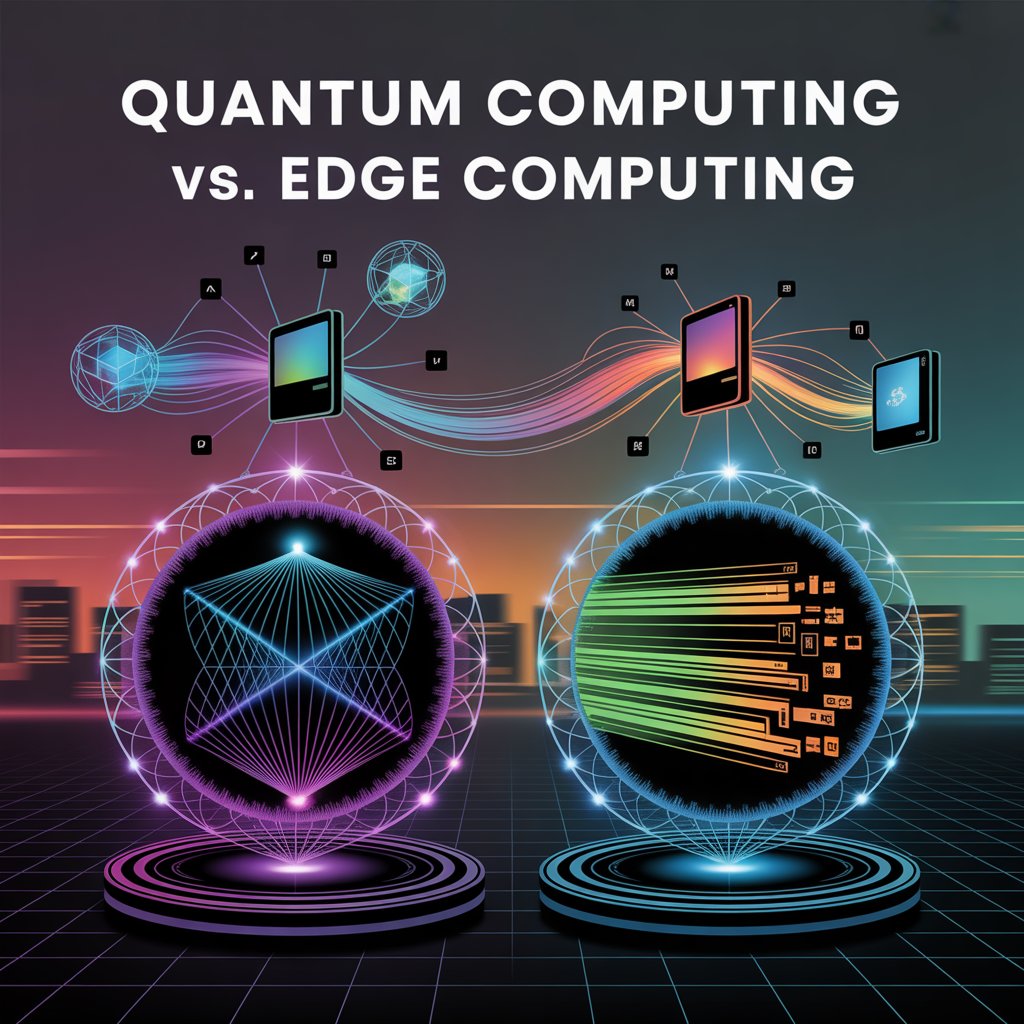
Quantum Computing vs. Edge Computing: The Ultimate Comparison
Introduction
The world of technology is evolving at lightning speed, and businesses in the UK and USA are constantly exploring the best tools to stay ahead. Among the most talked-about innovations are Quantum Computing vs Edge Computing. The technological frontier is being reshaped by two distinct paradigms: Quantum Computing vs Edge Computing. While both are transformative, they operate at opposite ends of the computational spectrum. This article demystifies Quantum Computing vs Edge Computing by analyzing their core principles, practical applications, and the emerging synergy that will define the next era of enterprise technology.
The distinction is not about which is superior but about their complementary roles. Quantum computing provides the foundational power to solve previously impossible problems, while edge computing delivers intelligence and immediacy at the point of action. For business and technology leaders, understanding this strategic interplay is critical for future-proofing operations and innovation.
Quantum Computing vs Edge Computing: The Ultimate Comparison
Core Architectural Principles: A Study in Contrasts
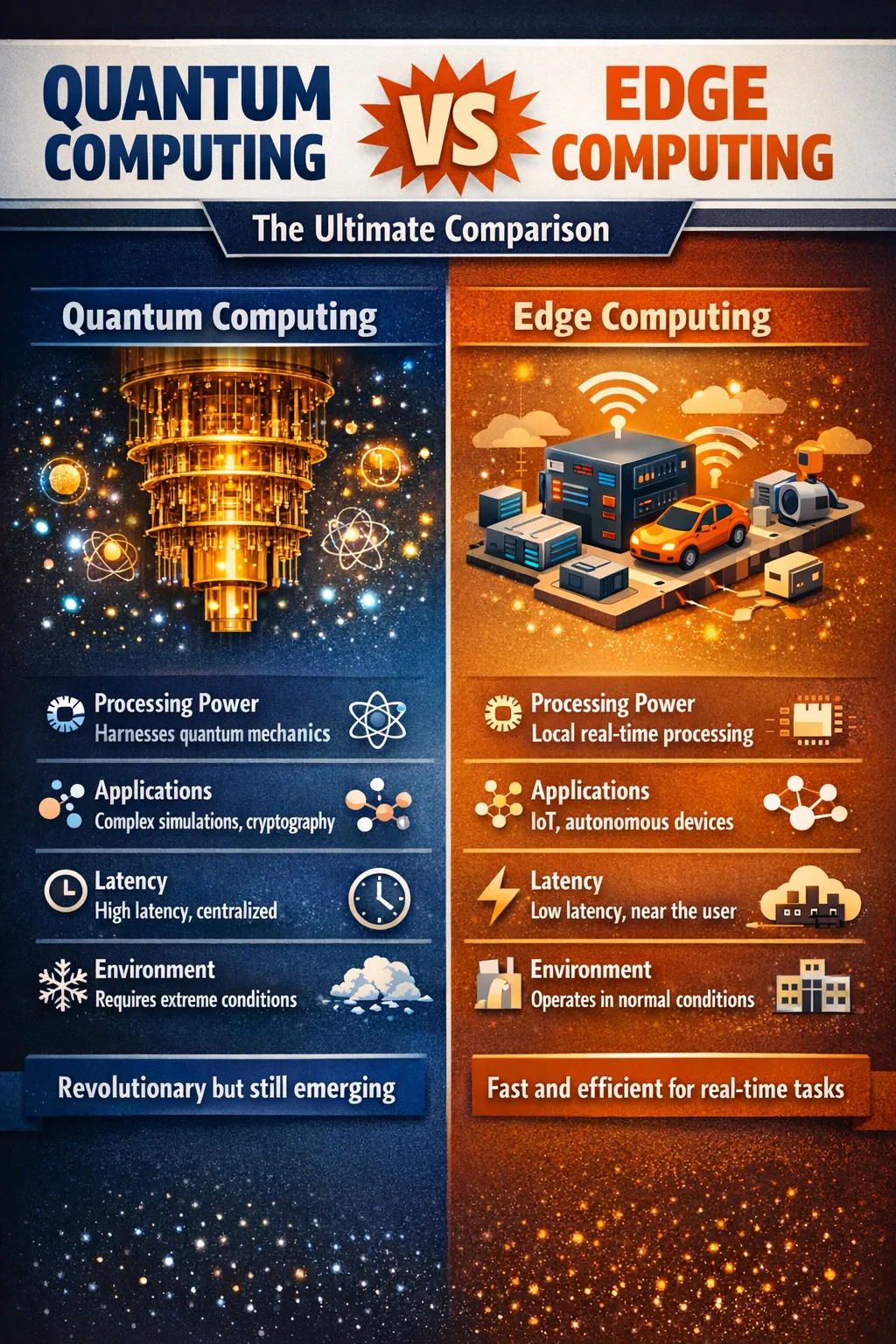
Quantum Computing is a fundamental reimagining of processing power. It leverages quantum mechanics, using qubits that can exist in multiple states simultaneously through superposition and be instantly correlated across distances via entanglement. This allows quantum computers to explore vast solution spaces in parallel, making them uniquely suited for complex optimization, molecular simulation, and cryptographic challenges.
Edge Computing rearchitects the location of processing. It decentralizes computation, moving it from centralized cloud data centers to the physical “edge” of the network—closer to devices, sensors, and users. The core aim is to reduce latency, conserve bandwidth, and enable real-time decision-making where speed is critical, such as in autonomous systems or industrial automation.
Current State of Development and Accessibility
Quantum Computing remains in a specialized, experimental phase. Major challenges include maintaining qubit stability (coherence), scaling up qubit counts, and managing extreme operational requirements like near-absolute-zero temperatures. However, 2026 is poised to be pivotal, marked by trends like Quantum-as-a-Service (QaaS) from cloud giants, the pursuit of fault-tolerant systems, and the development of room-temperature qubits, which will significantly lower barriers to access.
Edge Computing is a mature, widely deployed technology. It is the operational backbone for the Internet of Things (IoT), smart cities, and real-time analytics. Its infrastructure is well-understood, scalable, and integrated into mainstream enterprise IT strategies. The primary evolution here is in scaling management and enhancing the security of distributed networks.
Primary Enterprise Applications and Use Cases
- Quantum Computing Applications: Excels in backend, high-complexity problem-solving.
- Drug Discovery & Materials Science: Simulating molecular interactions to accelerate the creation of new pharmaceuticals and advanced materials.
- Financial Modeling & Logistics: Optimizing ultra-complex portfolios, risk assessments, and global supply chain routes.
- Next-Gen Cybersecurity: Both posing a threat to current encryption and enabling new quantum-safe cryptography
- Edge Computing Applications: Shines in front-line, time-sensitive data processing.
- Autonomous Vehicles & Industrial IoT: Processing sensor data locally for millisecond-response control and predictive maintenance.
- Smart City Infrastructure: Enabling real-time management of traffic, utilities, and public safety systems.
- Remote Healthcare & Retail: Facilitating immediate patient monitoring and real-time, in-store customer analytics.
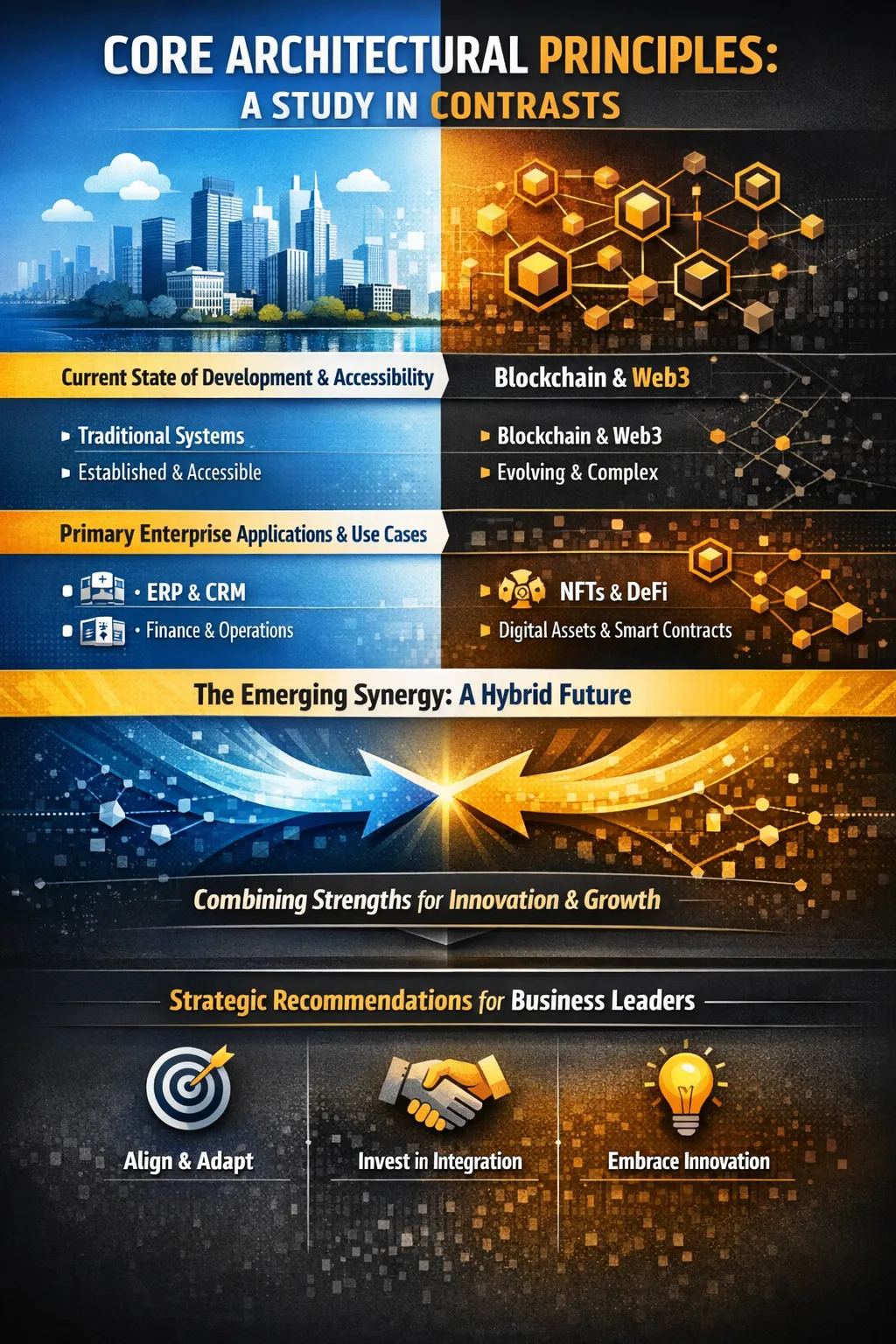
The Emerging Synergy: A Hybrid Future
The most compelling narrative is not competition but convergence. A hybrid model is emerging where quantum and edge computing collaborate to create unprecedented capabilities.
- Future Workflow: A quantum computer in a centralized facility could train a highly complex AI model or solve a massive optimization problem. The resulting algorithm or insight is then deployed to a network of edge devices, which execute it in real-time, adapting to local data without latency. For instance, a quantum-optimized global logistics model could be run locally on edge servers in ports and warehouses for real-time adjustments.
- The Role of AI: This synergy is often mediated by AI. Quantum AI can accelerate model training, while edge AI enables local execution. Developers are working on streamlined models (like small language models) that are efficient enough for edge hardware and structured in a way that could eventually leverage quantum processing advantages.
Strategic Recommendations for Business Leaders
- Adopt a Portfolio Mindset: Treat quantum and edge as separate, complementary tools in your strategic technology portfolio.
- Invest in Edge for Tangible ROI Now: Implement edge solutions to solve immediate challenges in latency, bandwidth, and real-time analytics. The technology is ready and offers clear operational benefits.
- Develop Quantum Literacy and Run Pilots: Engage with Quantum-as-a-Service (QaaS) platforms from major cloud providers to run pilot projects. Focus on a specific, high-value problem where classical computing struggles, such as complex scheduling or material simulation.
- Prepare Infrastructure for Integration: Build agile, API-driven architectures that can eventually integrate quantum-processed insights into edge deployment networks.
- Prioritize Quantum-Readiness in Cybersecurity: Begin assessing your data’s vulnerability to quantum decryption and plan a migration to post-quantum cryptography (PQC) This is a defensive necessity, not a future option.
Quantum Computing vs Edge Computing: The Ultimate Comparison
Conclusion
The dialogue between quantum computing and edge computing defines the next wave of digital transformation. Quantum computing is the new engine for deep, foundational discovery, while edge computing is the intelligent nervous system for immediate, localized action. The forward-thinking enterprise will not choose one over the other but will architect systems that leverage the profound computational power of the quantum core alongside the agile, responsive intelligence of the edge. The strategic imperative is to build the organizational skill, technical infrastructure, and pilot experience today to harness this powerful synergy tomorrow.
Frequently Asked Questions (FAQs)
When will quantum computing become mainstream for businesses?
Industry-specific, high-value applications may emerge in the next 2-5 years, but versatile, broad enterprise adoption is likely still a decade away, dependent on overcoming key hardware stability and scalability hurdles.
What is the main difference between quantum computing and edge computing?
Quantum computing focuses on solving complex, large-scale problems, while edge computing processes real-time data locally.
Why is edge computing important for everyday users?
It powers fast, reliable services like smart homes, connected cars, and instant online applications.