LLM Visibility: A Data-Driven Guide to Ranking Your Content on AI Platforms
Introduction
For decades, online visibility was measured by Google’s top 10 “blue links.” Today, LLM Visibility defines the modern battleground. Brands that fail to secure a presence in AI responses risk invisibility to audiences relying on ChatGPT, Gemini, Perplexity, and OpenAI for insights. To thrive, marketers must LLM Visibility using advanced strategies that combine traditional SEO with Generative Engine Optimization (GEO), Answer Engine Optimization (AEO), AI Indexing Optimization (AIO), and Search Experience Optimization (SXO).
This approach ensures your content is structured, entity-rich, and AI-friendly, making it discoverable and authoritative across all major LLM platforms. By focusing on semantic SEO, schema markup, and snippet-ready content, you can LLM Visibility and secure citations in the rapidly expanding AI search ecosystem.
LLM Visibility: A Data-Driven Guide to Ranking Your Content on AI Platforms
Why LLM Visibility is the New SEO
Your content is no longer just for Google; you are writing for the AI models that power modern search. Platforms like ChatGPT process over 2.5 billion queries monthly, and AI-driven traffic is projected to surpass traditional search traffic by 2028. Unlike traditional search engines, AI platforms prioritize delivering direct, synthesized answers, often pulling from multiple sources to create a single, authoritative response. If your content is clear, helpful, and well-structured, these models will cite it as a source. If not, you are absent from the conversation, and your competitors will be cited instead.
This creates a “zero-click” environment where the user gets their answer directly from the AI, reducing traditional organic clicks. However, being cited in an AI response dramatically increases brand awareness, positions your brand as a topical authority, and influences purchasing decisions, often driving higher-intent users to your site when they do click.
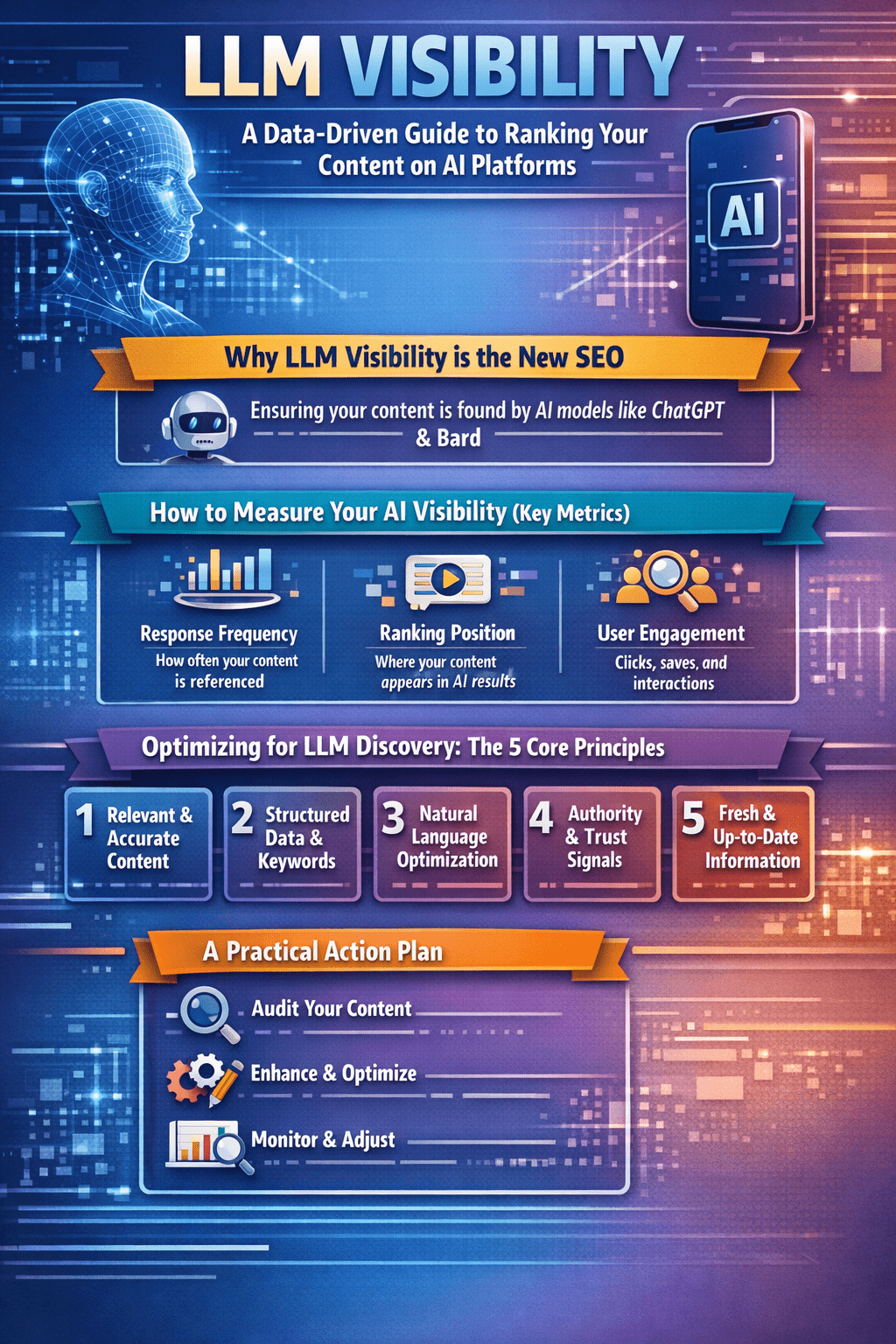
How to Measure Your AI Visibility (Key Metrics)
You cannot manage what you do not measure. AI visibility requires a new set of metrics, distinct from traditional keyword rankings. According to industry experts, these are the core data points you must track:
| Metric | What It Measures | Why It Matters |
| AI Brand Visibility | The % of relevant prompts where your brand is mentioned. | Shows your overall presence in AI conversations. |
| AI Answer Citations | The number of times LLMs link to your content as a source. | A direct indicator of your content’s authority and trustworthiness. |
| Share of Voice | Your brand’s mention frequency relative to competitors. | Reveals your competitive position in the AI landscape. |
| AI Sentiment | The tone (positive/negative/neutral) AI uses when referencing you. | Indicates your brand’s perceived authority and reputation. |
Effective tracking at scale requires specialized platforms like Semrush Enterprise AIO or Conductor, which offer automated monitoring across millions of AI prompts and provide competitive benchmarking. Manual tracking is insufficient due to the vast, personalized, and probabilistic nature of AI responses.
Optimizing for LLM Discovery: The 5 Core Principles
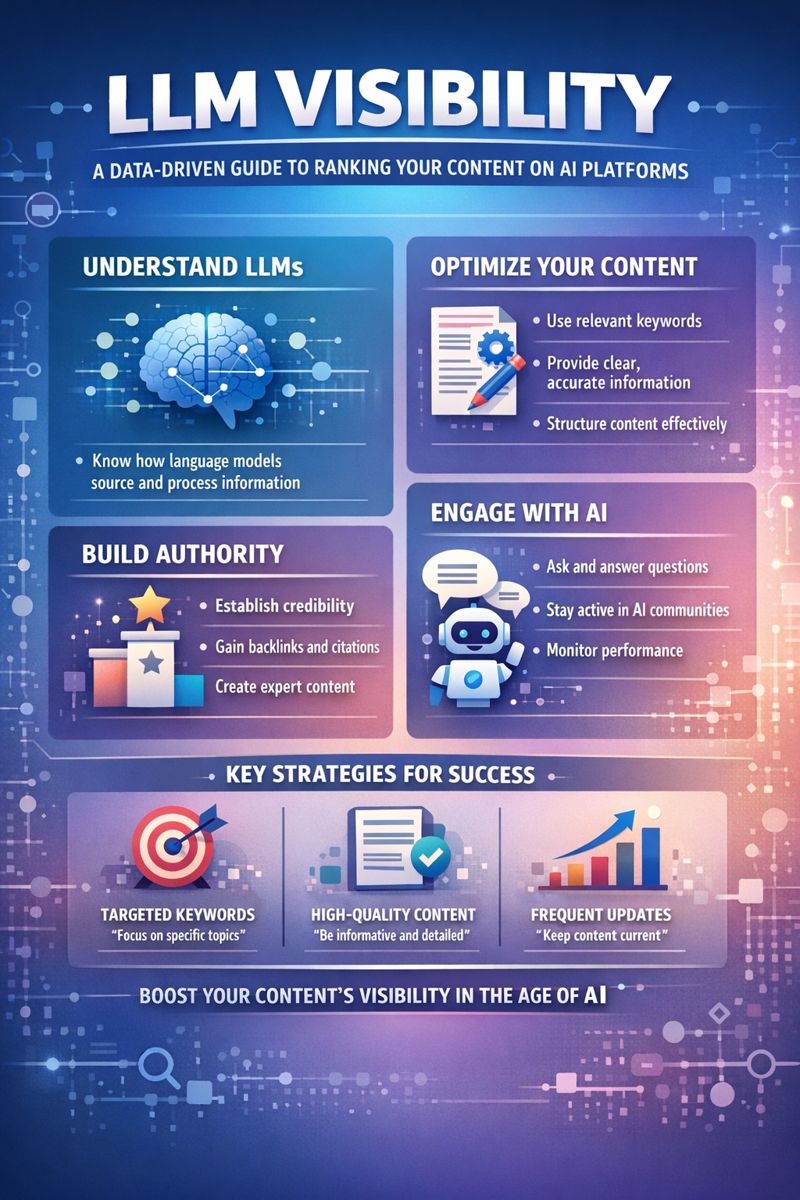
To rank in AI, you must engineer your content to be the perfect source. This involves a strategic shift from keyword-centric SEO to topic-centric, entity-first publishing. The principles are clear and actionable.
- Prioritize E-E-A-T and Topical Authority
AI models, like Google, evaluate content through the lens of Experience, Expertise, Authoritativeness, and Trustworthiness (E-E-A-T). Content quality is paramount. LLMs favor original, well-researched, and factually accurate content from credible sources. This means investing in deep, comprehensive guides that establish you as a definitive expert on a subject, not just thin blog posts. - Master Content Structure and Clarity
AI models parse information differently than humans. Structure your content for machine readability. Use clear headers (H1, H2, H3), bulleted or numbered lists, and definitional content to create a logical hierarchy. Write in a natural, conversational tone that directly answers the questions a user might ask an AI assistant. - Implement Strategic Schema Markup
Schema markup is a critical technical signal. It helps AI crawlers instantly understand the entities on your page—whether it’s a product, FAQ, local business, or article. Proper schema implementation makes your content machine-interpretable and dramatically increases its chances of being cited in a rich AI response. - Build a Foundation of Digital Authority
Just as backlinks signal authority to Google, brand mentions and citations from other reputable websites signal authority to AI models. A strong Digital PR strategy that earns coverage in authoritative publications creates a network of trust signals that LLMs recognize, boosting your visibility. - Adopt an SXO Mindset
Finally, integrate these tactics into a holistic Search Experience Optimization (SXO) framework. SXO aligns your organic SEO, paid media, and AI optimization efforts to create a seamless, high-converting user journey from the first AI-generated answer to the final conversion on your site.
A Practical Action Plan
To implement this strategy, follow this three-step action plan for your brand.
- Diagnose and Benchmark: Begin by auditing your current AI visibility. Use a specialized tool to measure your baseline for Brand Visibility, Citations, and Share of Voice. Identify key competitors who are winning in AI and analyze the content they are being cited for.
- Optimize High-Value Content: Select cornerstone content (product pages, service guides, research reports) and optimize it using the five principles above. Focus on adding comprehensive FAQs, implementing relevant schema, and enhancing clarity and structure.
- Measure, Iterate, and Scale: Continuously monitor your key AI visibility metrics. Create new content targeted at the questions and prompts where you have low visibility but high commercial intent. Scale successful tactics across your content portfolio.
LLM Visibility: A Data-Driven Guide to Ranking Your Content on AI Platforms
Conclusion: Own the AI Conversation
Maximizing LLM visibility is not a speculative future strategy; it is the essential present reality for any brand that wants to remain relevant. The transition from SEO to a comprehensive SXO and GEO strategy represents the most significant shift in digital marketing in a generation. The organizations that will dominate their markets are those that proactively engineer their content to be the authoritative source for AI models.
Your first step is to audit your current AI visibility. Identify where you are absent from the conversation, and begin creating the high-quality, well-structured, entity-rich content that AI models are designed to trust and cite. The future of search is conversational, and your brand needs to be part of the answer.
FAQs
How does traditional SEO differ from AI platform optimization?
Traditional SEO targets keywords and clicks. AI optimization is topic- and E-E-A-T-focused, aiming to be cited by models like ChatGPT and Gemini.
How can I tell if AI models cite my content?
Track AI brand visibility, answer citations, and share voice using specialized tools that monitor AI responses.
What is the most critical technical step for AI discoverability?
Use comprehensive schema markup to make entities machine-readable, helping AI recognize and trust your content.