IoT in Healthcare: A Smarter Future for Patient Care
Introduction
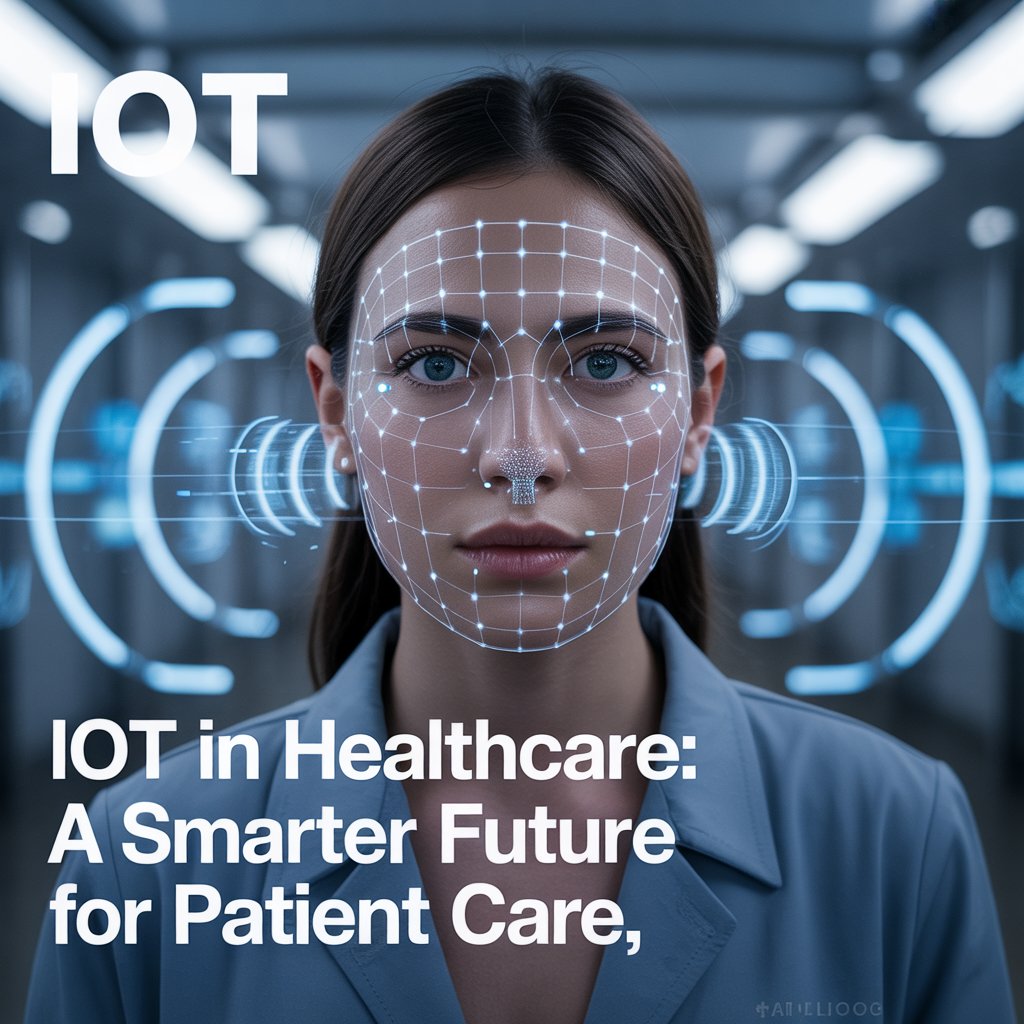
The rapid growth of smart technology has highlighted the importance of the Internet of Things IoT in Healthcare, transforming how patients and providers interact. The integration of the IoT in Healthcare represents a foundational shift from episodic, facility-centric care to continuous, data-driven health management. IoT in Healthcare is the networked ecosystem of medical devices, wearable sensors, and operational equipment that collect, transmit, and analyze health data in real time. This technological convergence is moving beyond experimental pilots to become the engine room of operational efficiency and patient-centered care.
The landscape is characterized by explosive growth—the U.S. market alone is projected to grow from $87.9 billion in 2025 to $341.5 billion by 2035—but also by a stark divergence in adoption maturity between regions like the aggressive U.S. and the more cautious UK. Success hinges on navigating a complex matrix of technical integration, stringent multi-jurisdictional compliance, and persistent security threats.
Core Applications and Evolving Use Cases
Modern IoT healthcare applications are defined by their move from simple data logging to intelligent, interactive systems.
- RPM uses wearable devices to send real-time patient data from home to clinicians, supporting effective management of chronic conditions like diabetes and heart failure while reducing hospital readmissions.
- Smart Hospital Operations: IoT transforms facility management through real-time asset tracking (e.g., infusion pumps, wheelchairs), environmental monitoring (temperature, humidity in ORs), and smart inventory systems like the NHS’s SMART for bed management.
- Advanced Therapeutic Adherence & Rehabilitation: Innovations like “smart pills” with ingestible sensors confirm medication ingestion, while projects like Australian Unity’s “Internet of Knees” use motion sensors and cloud analytics to guide and monitor post-surgical physiotherapy, dramatically improving compliance.
- Surgical Assistance: IoT-enabled microsurgical robots and connected imaging systems are enhancing precision in operating rooms, improving coordination and outcomes for complex procedures.
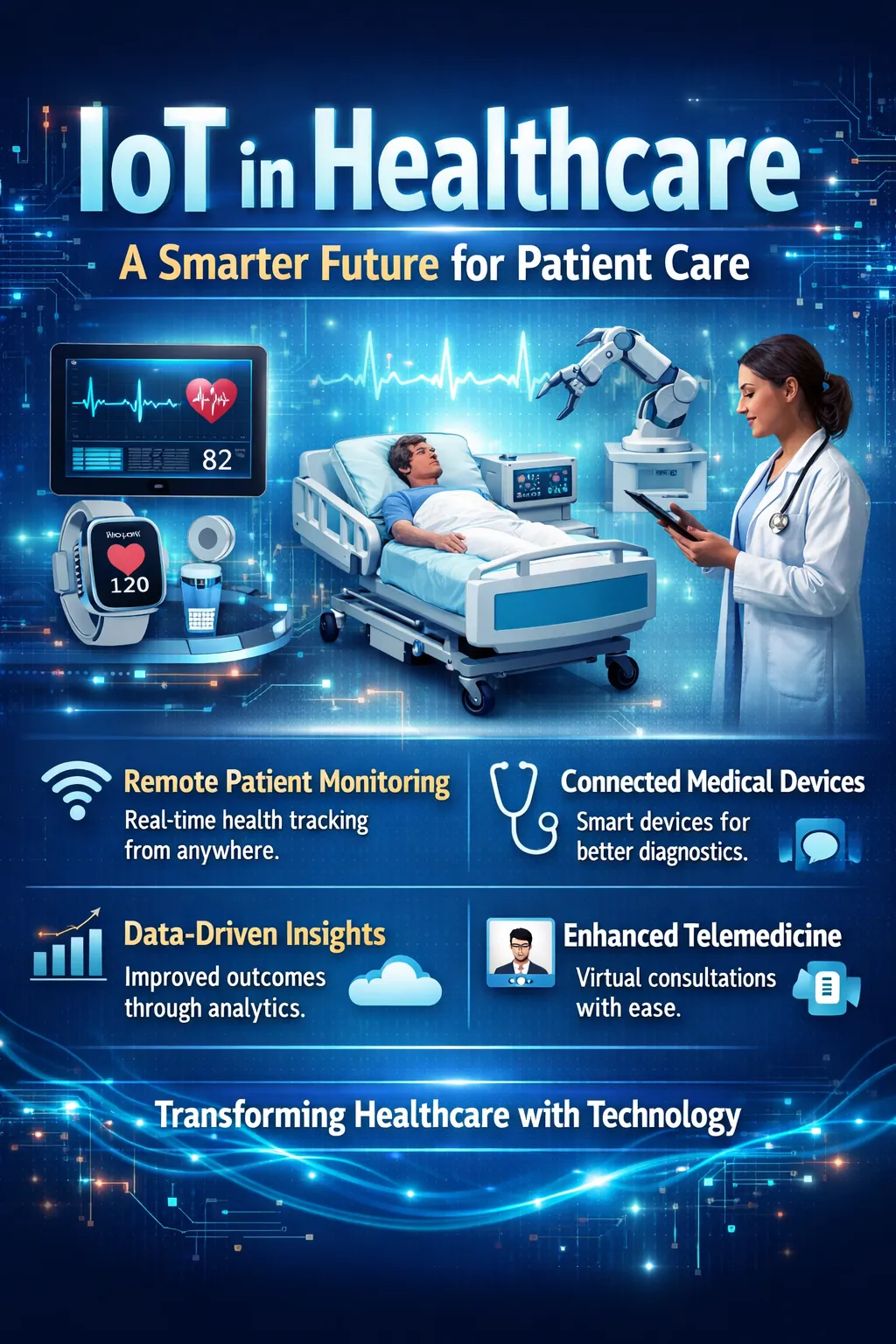
IoT in Healthcare: A Smarter Future for Patient Care
The Dual-Axis Strategic Benefit: Operational and Clinical
The value proposition of healthcare IoT unfolds across two critical dimensions:
- Clinical Outcome Enhancement: The primary driver is improved care quality. IoT enables early detection of patient deterioration through automated alerts, supports personalized treatment plans via continuous data streams, and empowers patients in their own health management. For instance, one IoT rehabilitation solution reported nearly 100% patient motivation and 86% confidence in performing exercises correctly.
- Operational and Financial Efficiency: IoT drives significant cost savings by optimizing resource utilization, reducing equipment loss, and minimizing unnecessary tests or lengthy hospital stays through effective remote monitoring. A case study on AWS indicated development costs could be recuperated in 18 months due to scalability and efficiency gains.
The Paramount Imperative: Security and Regulatory Compliance
The connectivity that enables benefits also creates profound vulnerabilities. IoT devices are attractive targets for attacks like device hijacking (“medjacking”), DDoS attacks, and PHI theft. Compliance is not a single checkbox but a layered framework:
- U.S. Regulatory Landscape: Governed primarily by the HIPAA Security Rule for data protection, the HITECH Act, and guidelines like the NIST Cybersecurity Framework and HICP (Healthcare Industry Cybersecurity Practices).
- UK Regulatory Landscape: Centered on UK GDPR/Data Protection Act 2018, supplemented by the NHS Data Security and Protection Toolkit (DSPT) and the NCSC’s Cyber Assessment Framework (CAF).
- Core Compliance Challenges: Organizations face device-level security flaws (weak authentication, unpatched firmware), data sovereignty issues with cloud storage, and the complexity of managing thousands of devices from disparate vendors within a single, compliant ecosystem.
Is your organization’s IoT security strategy built on a foundation of compliance by design, or is it a patchwork of reactive measures?
Implementation Architecture and Technical Considerations
A robust technical foundation is non-negotiable. Key components include:
- Device & Sensor Layer: This layer includes physical components such as medical wearables, environmental sensors, and embedded device sensors. Hardware represents the largest share of the IoT market, accounting for roughly 60% of overall demand.
- Connectivity & Data Transport: Selection of protocol (Bluetooth, Wi-Fi, Zigbee, cellular) depends on use-case requirements for bandwidth, range, and power. Secure, encrypted data channels are critical.
Cloud platforms process IoT data and use AI and machine learning to generate predictive insights. - Applications & User Interfaces: The presentation layer for clinicians (real-time dashboards, alerts) and patients (mobile apps for engagement and feedback).
Actionable Best Practices for Secure Deployment
Mitigating risk requires a proactive, layered strategy:
- Security-by-Design Procurement: Mandate adherence to security standards (e.g., UL 2900, ISO/IEC 27001) in vendor contracts. Prioritize devices with secure boot, encrypted communications, and reliable over-the-air update capabilities.
- Network Segmentation & Zero Trust: Isolate IoT devices on separate network segments to limit lateral movement during a breach. Implement strict, role-based access controls (RBAC) and multi-factor authentication (MFA) for all system access.
- Comprehensive Asset Management & Vigilance: Maintain a real-time, accurate inventory of all connected assets. Employ AI-driven monitoring tools to detect anomalous device behavior indicative of a compromise.
- Unified Compliance Framework: Create a governance model that maps controls to all relevant regulations (HIPAA, GDPR, NIS2). Conduct regular gap assessments and readiness audits to stay ahead of evolving requirements.
Strategic Recommendations for Leadership
- Adopt a Phased, Interoperability- First Scaling Plan: Start with a high-impact, contained use case (e.g., remote monitoring for a specific chronic condition). Plan for scalability from day one, insisting on open standards and API-first design to avoid vendor lock-in and integration dead ends.
- Bridge the Clinical-IT Governance Divide: Establish a joint governance committee with equal representation from clinical leadership, IT/security, compliance, and data analytics. This ensures technology serves clinical workflow and patient outcomes.
- Budget for Total Lifecycle Cost: Move beyond initial CAPEX. Secure ongoing OPEX for security monitoring, software updates, staff training, and compliance auditing. The highest risk often lies in the ongoing maintenance of deployed devices.
- Future-Proof with AI Integration: Design your data architecture with AI analytics in mind. The transition from descriptive (what happened) to predictive (what will happen) insights is where IoT will deliver its most transformative clinical and operational value.
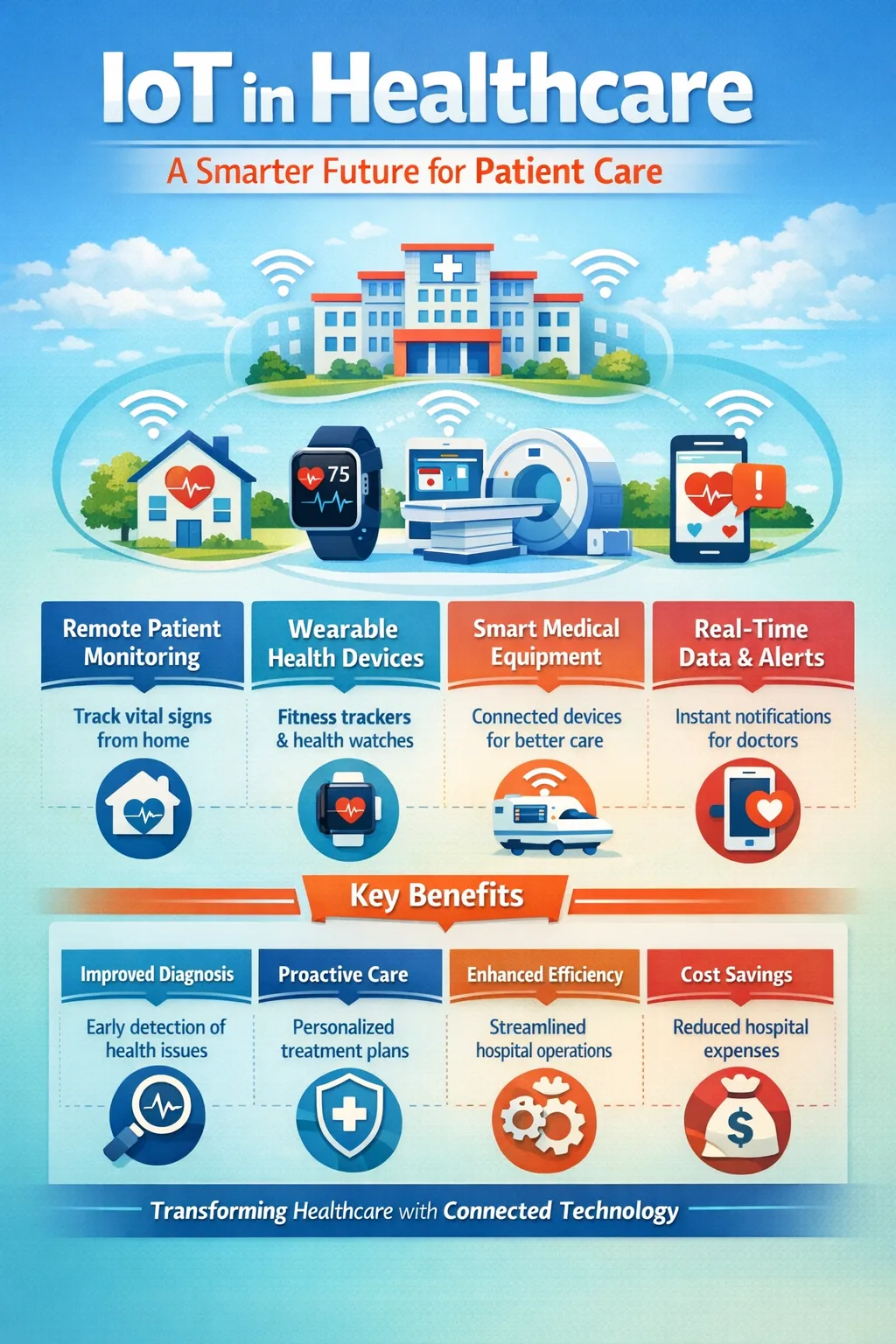
IoT in Healthcare: A Smarter Future for Patient Care
Conclusion
IoT in healthcare has matured from a promising concept into an indispensable component of modern care delivery and facility management. The trajectory is set toward more personalized, preventive, and efficient healthcare systems. However, the path to successful implementation is fraught with technical complexity and significant regulatory and cyber risks. The organizations that will lead are those that treat IoT not as a discrete IT project but as a strategic, cross-functional initiative. They will prioritize secure architecture and proactive compliance with equal vigor to clinical innovation, building resilient systems that protect patient data as diligently as they improve patient health. The imperative for leadership is clear: build with precision, scale with intelligence, and always secure by design.
Frequently Asked Questions (FAQs)
How is IoT used in healthcare?
IoT in healthcare connects devices, patients, and providers to monitor health, manage treatment, and improve care efficiency.
What are the benefits of IoT in healthcare applications?
IoT enables real-time monitoring, reduces hospital visits, improves medication adherence, and enhances patient safety.
Is IoT in healthcare secure?
Yes, with proper encryption and access controls, IoT systems can protect patient data and ensure compliance with regulations.