Ethical Hacking Tools: Best Free and Paid Cybersecurity Testing
Introduction
Hacking tools—also known as ethical hacking tools, penetration testing tools, or cybersecurity testing tools—are designed to help security professionals identify system weaknesses before cybercriminals exploit them. While the phrase “hacking-breaking tools” often implies illegal usage, in professional cybersecurity, these ethical hacking tools are used for authorized penetration testing, vulnerability research, and digital defense.
As cyber threats continue to grow, both free and paid ethical hacking tools are becoming essential for cybersecurity experts, IT teams, and ethical hackers seeking to strengthen digital security.
What Are Hacking-Write-Off Tools?
Hacking-breaking tools refer to software that can
- Detect security vulnerabilities
- Simulate real-world cyberattacks
- Test password strength
- Analyze network traffic
- Identify website security flaws
- Support red team and blue team operations
When used legally, these tools play a critical role in preventing data breaches and cybercrime.
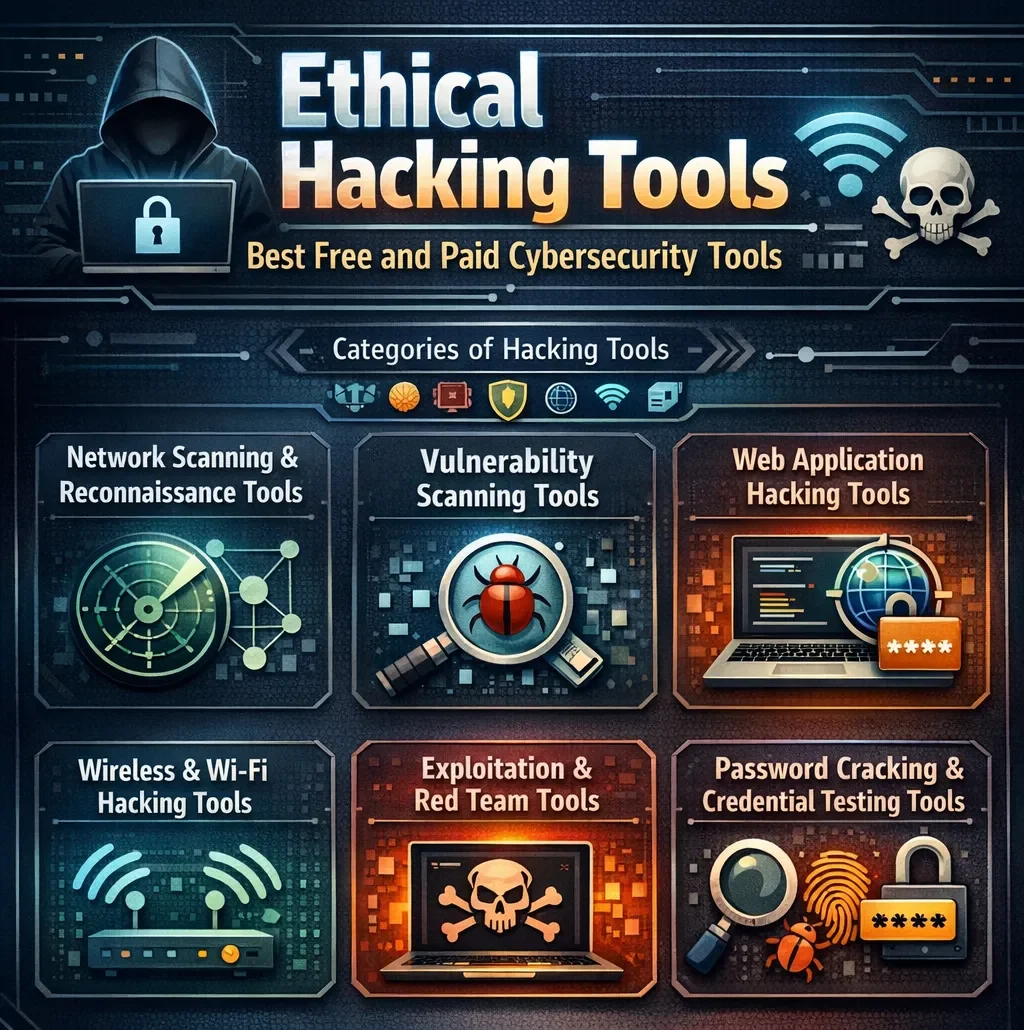
Categories of Hacking Tools
Ethical Hacking Tools: Best Free and Paid Cybersecurity Testing
Network Scanning & Reconnaissance Tools
Used to discover devices, open ports, and network vulnerabilities.
- Nmap—Network mapping & port scanning
- Angry IP Scanner—Fast IP scanning
Use Case: Network penetration testing
Vulnerability Scanning Tools
Detect system weaknesses before attackers exploit them.
- OpenVAS—Open-source vulnerability scanner
- Nessus—Advanced vulnerability scanning
Use Case: Risk assessment & security auditing
Web Application Hacking Tools
Identify SQL injection, XSS, and authentication flaws.
- Burp Suite—Web security testing
- OWASP ZAP—Automated vulnerability scanning
Use Case: Website penetration testing
Password Cracking & Credential Testing Tools
Test password security and strength.
- Hashcat—High-speed password cracking
- John the Ripper—Password auditing
- Hydra—Login brute-force testing
Use Case: Password security audits
Wireless & Wi-Fi Hacking Tools
Test wireless network security.
- Aircrack-ng—Wi-Fi penetration testing
- Kismet—Wireless traffic monitoring
Exploitation & Red Team Tools
Simulate real-world cyberattacks.
- Metasploit Framework—Exploit testing
- Cobalt Strike—Advanced red-team operations
Forensics & Malware Analysis Tools
Investigate cyber incidents and analyze threats.
- Wireshark—Packet traffic analysis
- Autopsy—Digital forensics
- Cuckoo Sandbox—Malware behavior analysis
Price Table—Hacking & Hacking-Breaking Tools
| Tool Name | Category | Best For | Free/Paid | Estimated Price |
| Kali Linux | All-in-One Pentesting OS | Ethical hacking labs | Free | $0 |
| Nmap | Network Scanning | Network auditing | Free | $0 |
| Wireshark | Packet Analysis | Traffic inspection | Free | $0 |
| OpenVAS | Vulnerability Scanner | Security testing | Free | $0 |
| Burp Suite | Web Security | Web testing | Free / Paid | $0–$449/year |
| OWASP ZAP | Web Security | Vulnerability scanning | Free | $0 |
| Nessus | Vulnerability Scanning | Enterprise security | Free / Paid | $0–$3,390/year |
| Metasploit | Exploit Framework | Pentesting simulation | Free / Paid | $0–$2,000+/year |
| Hashcat | Password Cracking | Credential testing | Free | $0 |
| John the Ripper | Password Security | Password auditing | Free / Paid | $0–$99/year |
| Aircrack-ng | Wireless Security | Wi-Fi hacking | Free | $0 |
| Cobalt Strike | Red Team Tool | Advanced testing | Paid | $3,500+/year |
📌 Prices vary depending on license, region, and enterprise usage.
Best Free Hacking Tools for Beginners
- Kali Linux—Complete ethical hacking platform
- Nmap—Network reconnaissance
- Wireshark—Packet analysis
- Burp Suite Community Edition—Web testing
- Metasploit Framework—Exploit simulation
- OWASP ZAP—Free vulnerability scanner
Benefits of Free & Paid Hacking Tools
- Strengthen cybersecurity defenses
- Support ethical hacking training
- Reduce risk of cyberattacks
- Improve incident response
- Enable bug bounty and penetration testing careers
Legal & Ethical Warning
Hacking tools must only be used on systems you own or have written authorization to test. Unauthorized hacking is illegal and punishable under cybersecurity laws.
Ethical hackers follow:
- Responsible disclosure
- Legal compliance
- Professional integrity
- Security research ethics
Future of Hacking & Cybersecurity Tools
Modern hacking tools are integrating the following:
- AI-powered vulnerability detection
- Automated penetration testing
- Machine learning threat analysis
- Cloud security scanning
This evolution will make ethical hacking faster, smarter, and more effective.
Conclusion
Hacking-breaking tools—when used responsibly—are powerful assets for cybersecurity professionals, penetration testers, and ethical hackers. From free open-source tools to enterprise-grade paid platforms, these tools help secure networks, prevent breaches, and build strong cybersecurity careers.