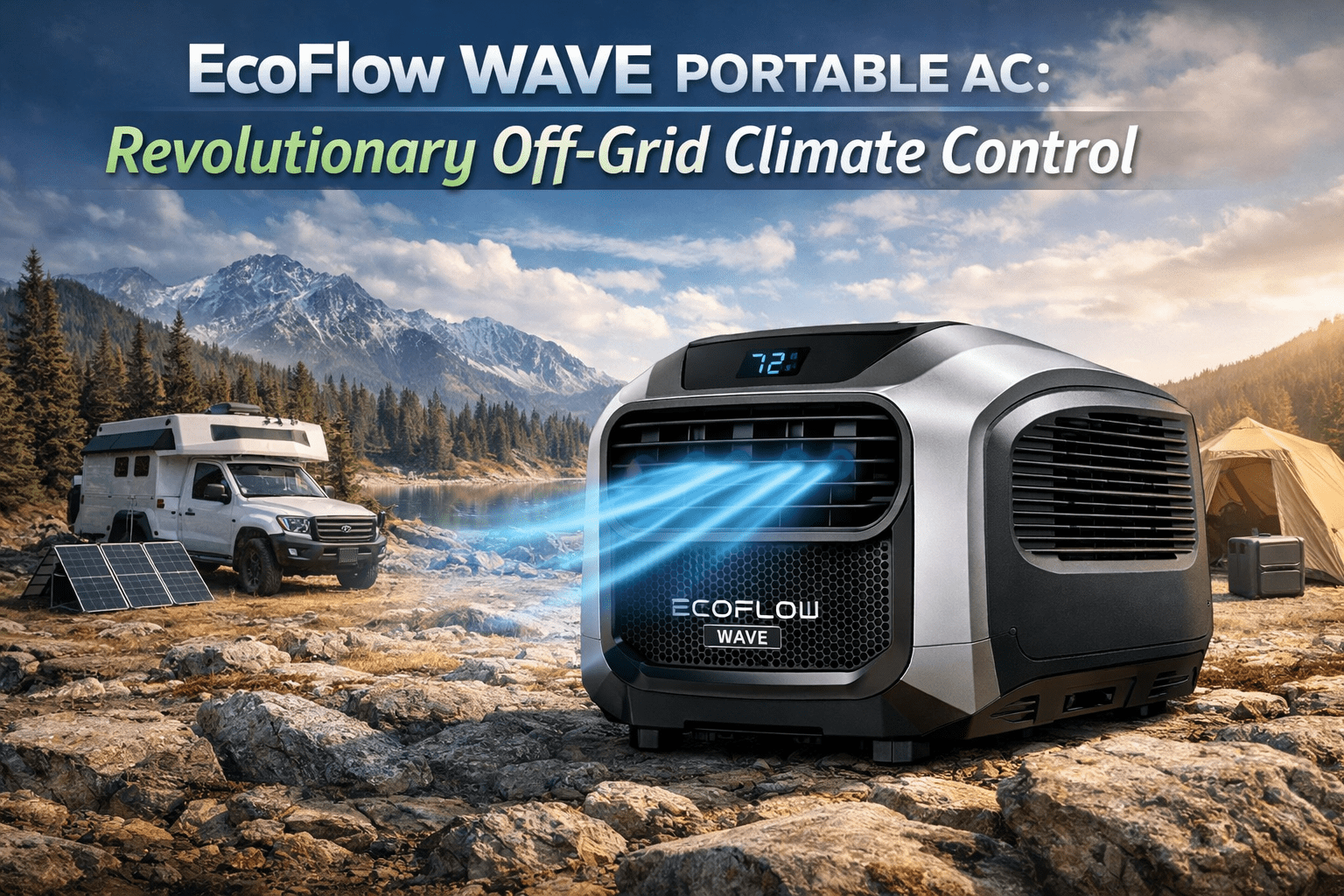
EcoFlow Wave Portable AC: Revolutionary Off-Grid Climate Control
Introduction
The EcoFlow Wave portable AC is a battery‑powered air conditioner and heater that delivers genuine climate control without plugging into wall outlets or relying on generators. This makes the Wave a compelling solution for RVs, van life, camping, off‑grid living, and emergency climate control scenarios.
When summer heat becomes unbearable, the EcoFlow Wave Portable AC emerges as a game-changing solution for modern adventurers and outdoor enthusiasts. This innovative portable air conditioning unit combines powerful cooling capabilities with the freedom to take comfort anywhere you go.
What sets the EcoFlow Wave Portable AC apart is its dual-hose design and genuine refrigerant-based cooling technology that can lower temperatures by up to 30°F (17°C). With smart app control, customizable modes, and whisper-quiet operation, it’s engineered for those who refuse to compromise on comfort—making it essential equipment for climate control beyond traditional homes.
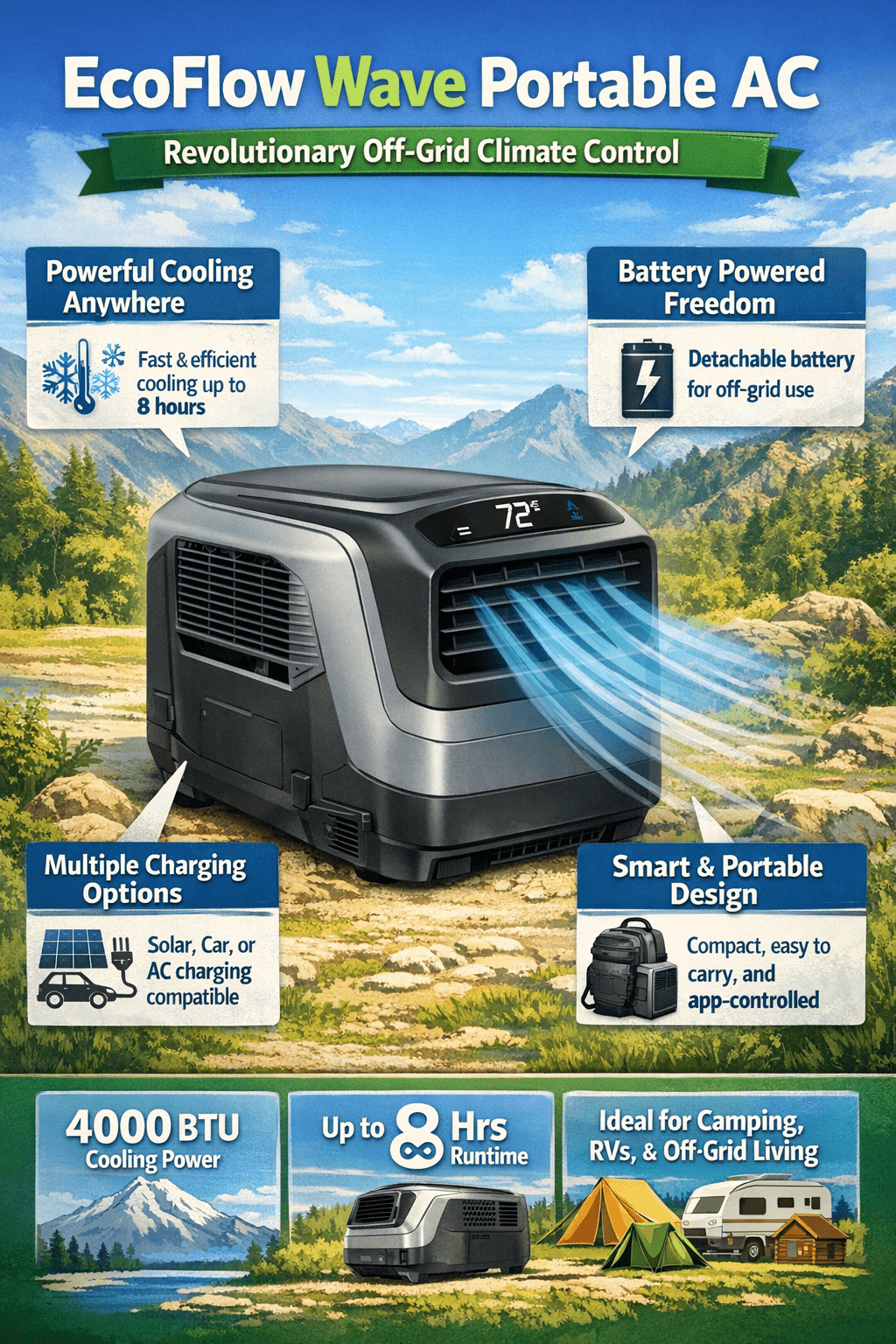
EcoFlow Wave Portable AC: Revolutionary Off-Grid Climate Control
Cooling & Heating Power: BTU Ratings and Capability
The British Thermal Unit (BTU) rating measures an air conditioner’s capacity to remove heat from a space. Higher BTUs deliver stronger cooling but also demand more power.
- Wave 1: ~4000 BTU—ideal for small tents or compact RV sleeping areas.
- Wave 2: ~5100 BTU—suited for larger tents and modest mobile spaces with flexible exhaust options.
- Wave 3: ~6100 BTU cooling and ~6800 BTU heating—handles larger mobile areas like vans, boats, or tiny homes.
These portable units can quickly reduce cabin temperatures—dropping interior heat significantly in minutes under ideal conditions—though real‑world performance depends on insulation, ambient climate, and air exchange.
Battery Technology & Runtime
The Wave uses swappable 1008–1024 Wh lithium iron phosphate (LFP) batteries, known for long life, safety, and stable performance over thousands of cycles.
- Maximum cooling mode: 2–3 hours
- Eco Mode: Up to ~8 hours by alternating between fan and compressor to conserve energy
- Sleep Mode: Quiet operation (~44–58 dB) with extended runtime
Charging flexibility is a standout feature:
- Wall outlet charging: Fast recharge in a few hours with 1000W input.
- Solar panels: Off‑grid charging with correct panel wattage.
- Car alternator charging: Power while driving.
- EcoFlow power stations: Integration with the DELTA and RIVER series extends cooling times up to 12+ hours when paired with higher‑capacity batteries.
The app provides real‑time battery and runtime estimates, helping users plan cooling cycles intelligently.
Installation & Venting for Best Performance
Although battery‑powered, the Wave’s compressor cooling requires venting to expel hot air:
- Exhaust hose: A flexible five‑foot hose routes heat outside tents, RV windows, doors, or roof vents.
- Wave 3 insulated ducts: Reduce heat buildup along long vent paths.
- Condensation handling: Most conditions allow internal evaporation, but high humidity may necessitate manual drainage.
Setup is quick—roughly 5–10 minutes for first‑time installation and under two minutes once familiar.
App & Smart Features
The EcoFlow mobile app enhances usability with:
- Remote temperature and mode control (Bluetooth/Wi‑Fi)
- Timer and automatic cooling scheduling
- Pet Care Mode: Monitors temperature and activates cooling when a set threshold is exceeded, with notifications for safety
- Water level and battery alerts to avoid surprise shutdowns
These features make the EcoFlow Wave smarter and more convenient than basic portable AC units that lack remote control and automation.
Real‑World Use Cases
The EcoFlow Wave excels in settings where traditional climate control is impractical:
- Camping: Keeps tents comfortable, especially in the evening or shaded times.
- Van dwellers & RV travelers: Maintains comfortable cabin climates through the night using energy-saving and rest settings.
- Truck sleeper cabins: Provides rest‑stop cooling without engine idle.
- Boat cabins: Effective in compact enclosed marine spaces when humidity is managed.
- Emergency home cooling: Useful for bedrooms or offices during outages but not a whole‑home replacement.
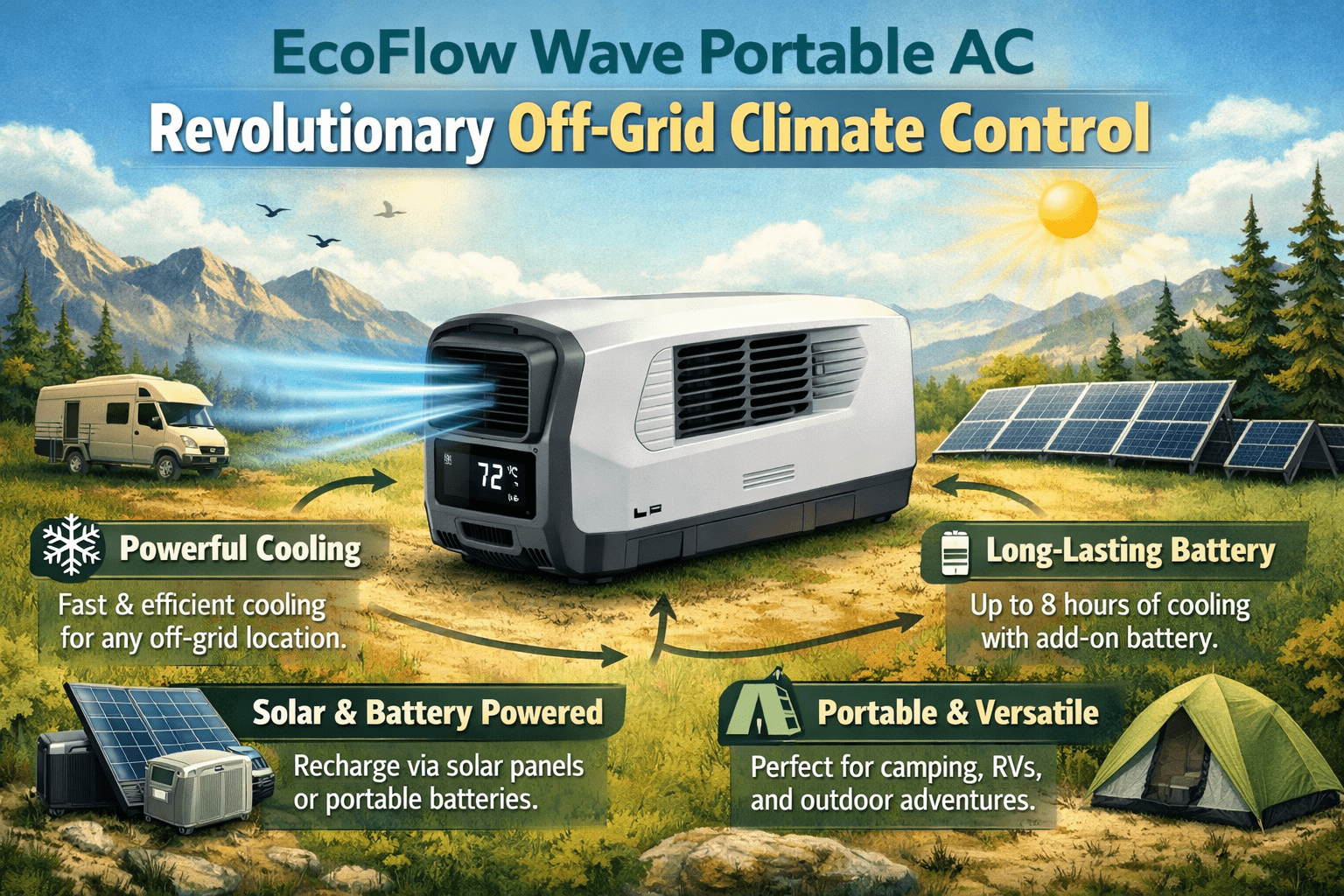
EcoFlow Wave Portable AC: Revolutionary Off-Grid Climate Control
Limitations & Practical Considerations
Despite strong portability and flexibility, there are important constraints to understand:
- Cooling capacity: Cannot match high‑BTU stationary air conditioners; best suited for small to medium spaces.
- Battery runtime planning: Continuous high‑power cooling requires careful charging infrastructure.
- Weight: The Wave 3 plus battery weighs ~55+ lbs, better suited for vehicle use than backpack transport.
- Noise: ~44–58 dB in sleep mode, louder at max operation.
- Investment Level: Premium tier pricing between $1,400 and $2,200, significantly above standard cooling fan options.
Reviews reflect mixed real‑world performance—users report cooling effectiveness varies significantly with insulation and ambient conditions, and some units struggle in hot or poorly sealed spaces despite BTU claims.
Price Table
| EcoFlow Wave Model | Cooling / BTU | Approx. Price (USD) | Approx. Price (GBP) | Availability/Notes |
|---|---|---|---|---|
| Wave 1 Portable AC | ~4000 BTU—ideal for small tents or compact RV sleeping areas | ~$1,399 – $1,499 | ~£1,100 – £1,200 | Portable AC for small spaces; single unit without integrated heater (pricing from listings). |
| Wave 2 Portable AC | ~5100 BTU—suited for larger tents or modest mobile spaces | ~$599–$1,299 | ~£480 – £1,030 | The Base Wave 2 unit is often listed around ~$799–$1,299 depending on stock/sales; it may require a separate battery for extended runtime. |
| Wave 3 Portable AC | ~6100 BTU cooling / ~6800 BTU heating—handles larger mobile areas | ~$899 – $1,099 | ~£699 – £850 | The latest model with both cooling & heating, wireless use, and app control available. |
Recommendations
To choose and use the EcoFlow Wave effectively:
- Match BTU to your space: Use ~30–35 square feet per 1000 BTU as a planning guide.
- Plan power sources: Combine solar, alternator, and larger EcoFlow station batteries for extended off‑grid use.
- Test noise levels: Sleep and eco modes offer quieter operation, but expectations vary.
- Compare cost vs. frequency: Frequent travelers or van lifers justify investment better than occasional campers.
FAQs
How long does the Wave run on battery?
Battery life varies from ~2–3 hours on max cooling to up to ~8 hours in eco mode, depending on ambient conditions and battery capacity.
Can the Wave cool a full‑size RV?
It performs optimally in compact to moderately sized RV interiors (120–180 sq. ft.) rather than whole‑vehicle cooling.
Does it require venting?
Yes—the compressor requires an exhaust hose to expel hot air through windows or vent openings.