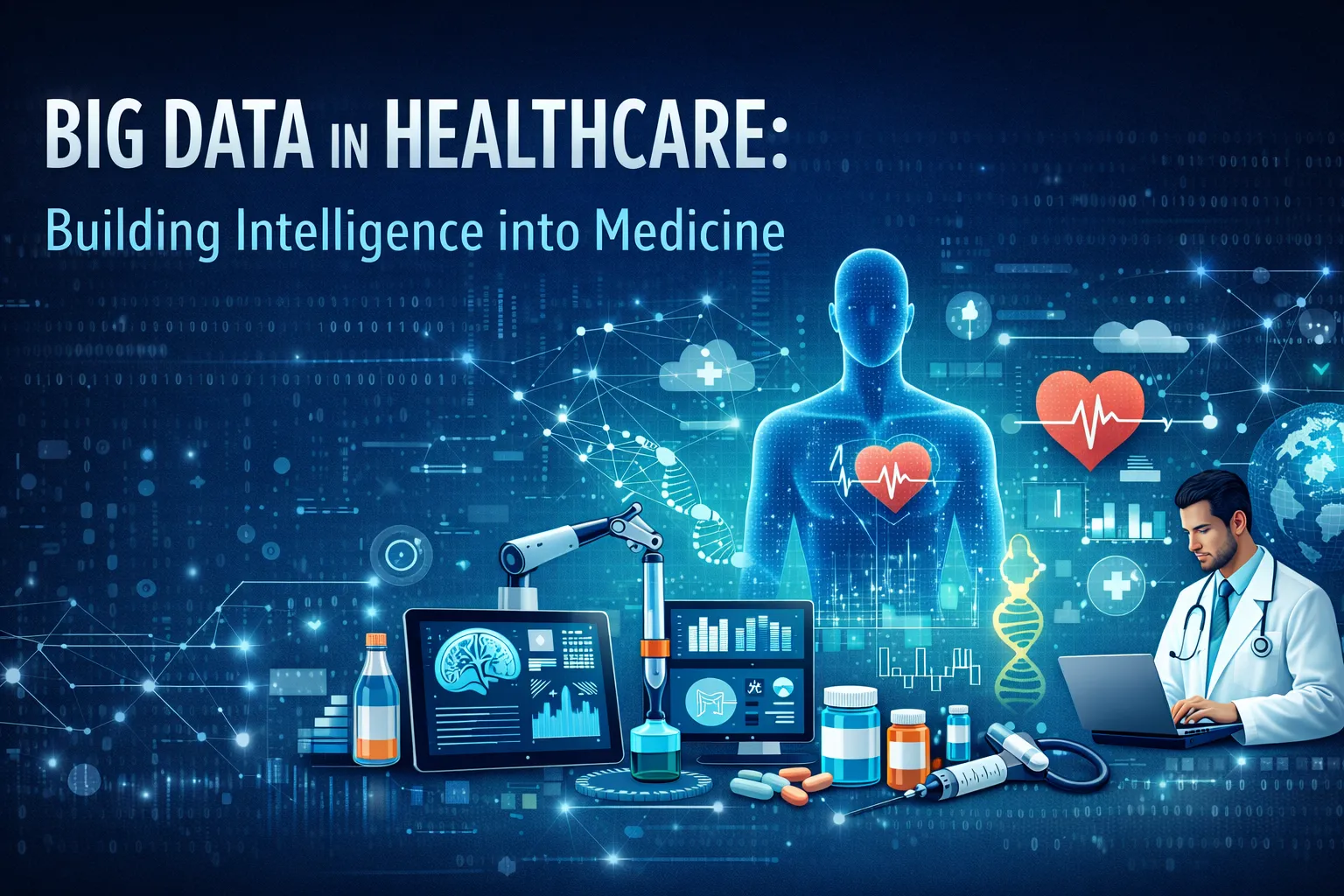
Big Data in Healthcare: Building Intelligence into Medicine
Introduction
The modern healthcare landscape is fundamentally defined by data. The transition from paper charts to pervasive digital systems has created an unprecedented explosion of clinical information. Big data in Healthcare refers to the vast, complex datasets generated across the industry that are too large for traditional processing but hold the key to transformative insights. This deluge, characterized by volume, velocity, and variety, comes from electronic health records (EHRs), genomic sequencing, wearable devices, and medical imaging. For healthcare leaders and technology strategists, understanding how to architect systems to harness this Big data in Healthcare is no longer optional—it is the core differentiator for future success in improving outcomes and operational sustainability.
However, the frontier has moved from simple adoption to sophisticated utilization. True value emerges not from storing data but from activating it through analytics, artificial intelligence (AI), and interoperable exchange. This evolution is creating Big data in Healthcare ecosystems that drive personalized medicine, predictive care models, and intelligent health system operations, representing a market projected to grow steadily in value.
Core Data Sources and Analytical Frameworks
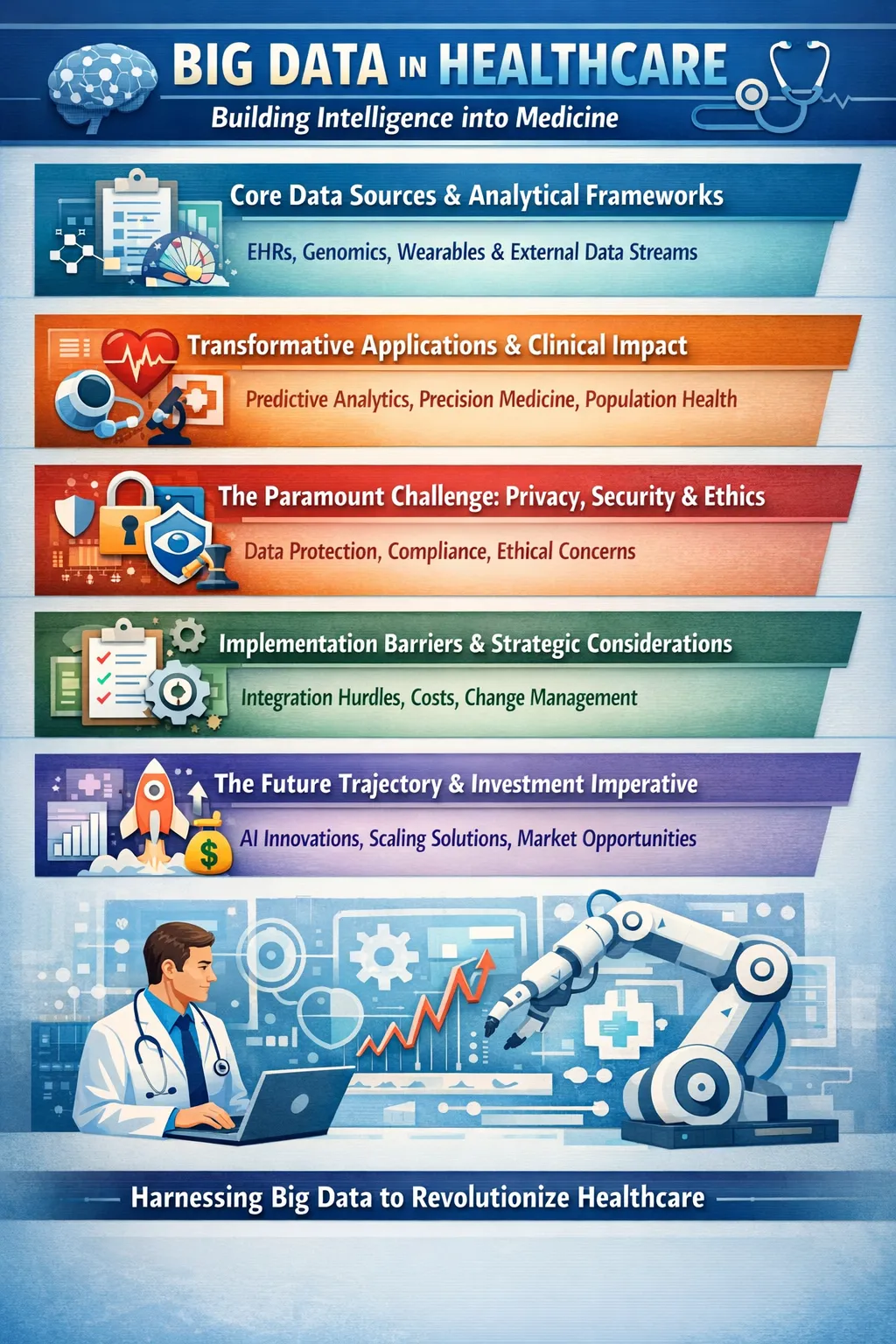
A functional big data architecture in healthcare integrates multiple high-volume streams. The primary sources are Electronic Health Records (EHRs), which form the essential historical repository of patient demographics, treatments, and outcomes. Beyond the EHR, real-time sensor data from Internet of Things (IoT) devices and wearables provides continuous streams of patient activity, vital signs, and other health indicators. Advanced diagnostic fields contribute massively to data volume: genomic data from sequencing enables precision medicine, while medical imaging data from MRIs and CT scans is analyzed by AI for pattern recognition. These diverse sources feed into a framework where integrated technologies—like cloud platforms and big data processing tools—transform raw information into actionable insights for administrators, clinicians, and patients themselves.
Big Data in Healthcare: Building Intelligence into Medicine
Transformative Applications and Clinical Impact
The applied power of this data is revolutionizing care delivery and system management across several key domains:
- Predictive Analytics and Disease Surveillance: By analyzing patterns across EHRs, social media, and public health data, algorithms can predict local disease outbreaks and identify population-level health trends. This enables proactive public health interventions.
- Personalized and Precision Treatment: Analytics can correlate individual patient data—including genetics, history, and lifestyle—with vast datasets on treatment outcomes. This supports clinicians in tailoring therapies for higher efficacy and fewer adverse reactions, moving toward truly personalized care plans.
- Operational and Administrative Optimization: Healthcare organizations use data analytics to streamline operations. This includes predicting patient admission rates to optimize staffing, managing supply chains, reducing wait times, and identifying patients at high risk of readmission for targeted intervention.
- Enhanced Clinical Decision Support: AI tools, particularly in medical imaging, can now detect nuances in X-rays or retinal scans with accuracy rivaling or exceeding human experts, aiding in earlier and more accurate diagnosis of conditions like diabetic retinopathy or certain cancers.
The Paramount Challenge: Privacy, Security, and Ethics
The scale and sensitivity of health data make privacy the most critical challenge. Concerns are both consequential (risk of discrimination, identity theft, emotional distress) and deontological (a fundamental right to autonomy and control over personal information). The regulatory landscape is complex, primarily governed in the U.S. by the Health Insurance Portability and Accountability Act (HIPAA) and the HITECH Act, which set standards for protecting patient information and promoting EHR adoption. In the UK and for EU data, the General Data Protection Regulation (GDPR) applies a broader, principle-based framework. Non-compliance risks are severe, including multimillion-dollar fines and irrevocable damage to patient trust. A central ethical tension lies in the concept of consent; big data research often uses de-identified or publicly available data where traditional informed consent is not obtained, potentially undermining patient autonomy.
Implementation Barriers and Strategic Considerations
Beyond privacy, organizations face significant hurdles. Data silos and interoperability remain a major barrier; while 70% of U.S. hospitals can routinely send, receive, find, and integrate data, deep seamless exchange is not universal. Legacy system integration with modern analytics platforms is often costly and complex. There is also an acute talent gap; extracting meaningful insights requires scarce data science expertise. Furthermore, algorithmic bias poses a risk, as models trained on non-representative data can perpetuate health disparities. Leaders must view data not as an IT project but as a strategic asset, investing in unified data governance, cloud-based agile platforms, and partnerships to close capability gaps.
The Future Trajectory and Investment Imperative
The trajectory points toward deeply embedded, intelligent systems. AI and Machine Learning will advance from diagnostic aids to predictive engines for individual patient trajectories and system-wide resource management. The vision of the Learning Health System, where data from every patient encounter automatically feeds back to improve care guidelines and practices, will become more attainable. Financially, while some healthcare segments face pressure, health services and technology (HST) is identified as the fastest-growing segment, driven by demand for the software and analytics platforms that make big data actionable. The question for executives is no longer if to invest, but how to sequence investments to build a scalable, ethical, and clinically relevant data intelligence core.
Conclusion: From Data to Wisdom
The era of big data in healthcare signifies a shift from intuitive, experience-based practice to evidence-driven, intelligent medicine. The foundational digital layer is now in place, exemplified by near-ubiquitous EHR adoption. The next decade will be defined by building the analytical superstructure upon it. Success will hinge on seamlessly connecting data silos, ensuring ethical governance, and translating algorithmic insights into tangible actions at the bedside and in the boardroom. For organizations that master this integration, the reward is a more sustainable, proactive, and profoundly personalized healthcare system. The imperative is to act strategically now to shape that future.
Frequently Asked Questions
What are the main benefits of big data in healthcare?
Big data helps healthcare providers deliver personalized treatments, detect diseases early, reduce costs, and make smarter, data-driven decisions.
How is patient privacy protected in big data projects?
Patient data is secured through anonymization, encryption, strict access controls, and compliance with regulations like HIPAA and GDPR.
What is the biggest obstacle to using big data in healthcare?
The biggest challenge is combining diverse healthcare data while ensuring accuracy, security, and regulatory compliance across systems.