Best AI Writing Tools: Here is the Final Verdict
Introduction
I spent weeks testing the most popular and best AI writing tools to find out which ones actually deliver on their promises. After putting seven leading platforms through rigorous real-world scenarios, I’m sharing my honest findings to help content creators, marketers, and business owners make the right choice.
This comprehensive review is perfect for anyone tired of mediocre best AI writing tools or struggling to pick between countless writing assistants flooding the market. You’ll get straight answers about which tools work best for different writing needs and budgets. By the end, you’ll know exactly which best AI writing tool deserves your investment.
Testing Methodology for AI Writing Tools
Selection Criteria for Top AI Writing Platforms
- Tools with proven performance in multiple formats (blogs, marketing copy, technical docs, creative writing).
- Advanced language models like GPT-4, Claude, or proprietary tech.
- User-friendly design with intuitive interfaces.
- Integration with CMS, collaboration tools, publishing platforms, and APIs.
Performance Benchmarks and Evaluation Metrics
Metric |
Weight |
Measurement Method |
|
Content Quality |
35% |
Human expert evaluation + AI detection scores |
|
Generation Speed |
20% |
Average response time across content types |
|
Instruction Following |
25% |
Compliance rate with specific prompts |
|
Grammar & Style |
20% |
Automated scoring tools and manual review |
Real-World Testing Scenarios
- Blog posts (SEO-optimized, 1,500–3,000 words).
- Email marketing campaigns (subject lines, CTAs, segmentation).
- Social media content (Twitter, LinkedIn, Instagram, Facebook).
- Technical documentation (product descriptions, FAQs, and manuals).
- Creative writing (short stories, narratives, and brand storytelling).
Cost-Effectiveness Analysis
- Monthly vs. annual plan value.
- ROI compared to freelance writers.
- Team collaboration and scaling costs.
- Free tier limitations and hidden charges.
Comprehensive Reviews of Leading AI Writing Tools
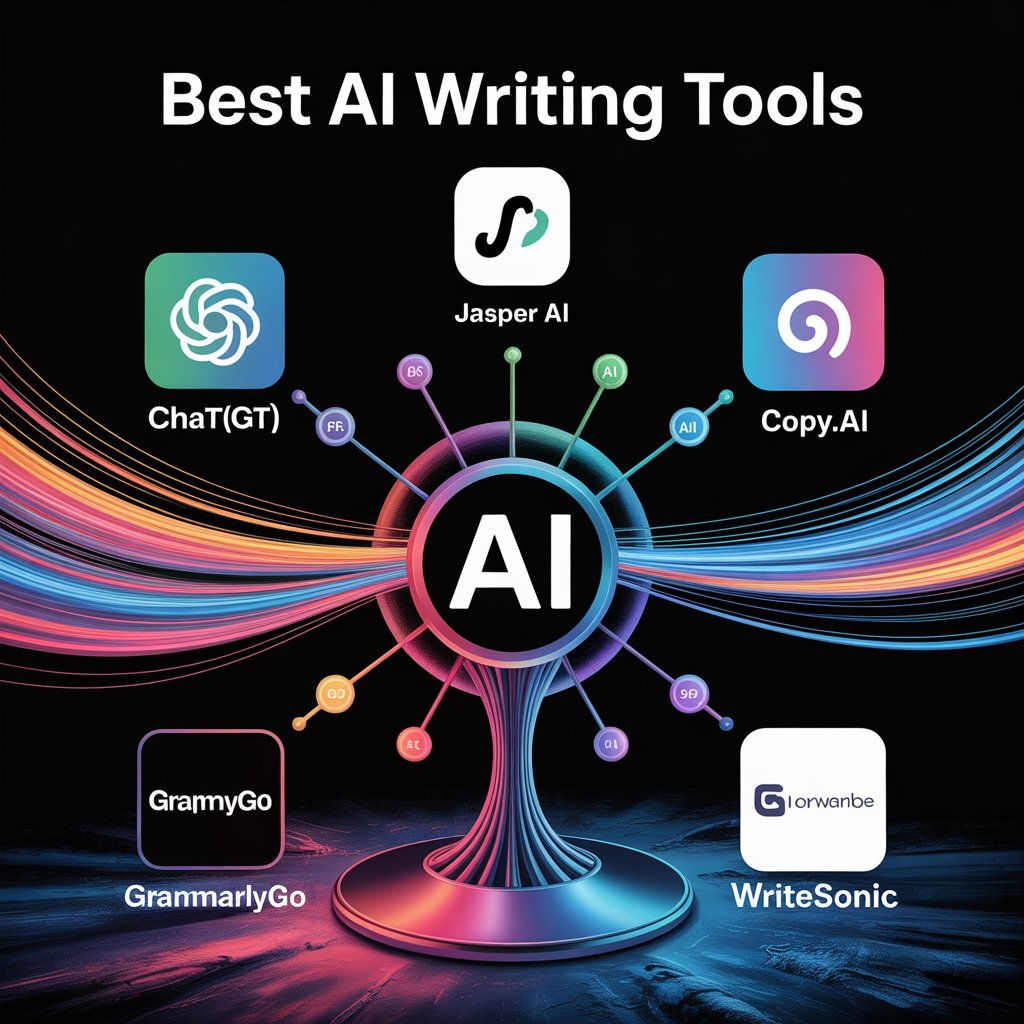
ChatGPT (OpenAI)
- Strengths: Versatile across formats, conversational refinement, contextual memory, logical reasoning, cost-effective.
- Weaknesses: Occasional verbosity, limited real-time data, struggles with niche technical topics.
- Best For: Writers needing adaptable, user-friendly AI assistance.
Jasper AI
- Strengths: Excellent for marketing copy, brand voice consistency, SEO integration, polished long-form content.
- Weaknesses: Premium pricing, learning curve, repetition in long texts.
- Best For: Businesses and professional marketers.
Copy.ai
- Strengths: Intuitive, fast short-form generation, workflow automation, strong social content creation.
- Weaknesses: Limited customization, weaker for technical writing, fewer integrations.
- Best For: Marketers and small teams needing quick results.
Grammarly Go
- Strengths: Seamless editing, tone detection, accuracy in grammar and style, privacy-first.
- Weaknesses: Not a full content generator, requires text input, premium tier for best features.
- Best For: Professionals focused on correctness and polishing drafts.
Writesonic
- Strengths: Strong SEO tools, long-form article generation, creative adaptability, affordable pricing.
- Weaknesses: Cluttered interface, inconsistency in niche topics, limited enterprise customization.
- Best For: SEO-driven content creators.
Best AI Writing Tools: Here is the Final Verdict
Feature Comparison and Functionality Analysis
Content Generation Speed (Avg. times):
- ChatGPT-4: 50 sec for 1,000 words
- Jasper: 45 sec for 1,000 words (batch processing supported)
- Copy.ai: 35 sec for 1,000 words (fastest for short-form)
- Writesonic: 40 sec for 1,000 words
Tone & Style Adaptability:
- Best: ChatGPT, Jasper, Copy.ai
- Moderate: Writesonic
- Focused polish: Grammarly Go
SEO Optimization:
- Strongest: Jasper, Writesonic
- Manual: ChatGPT, Copy.ai
Plagiarism Detection:
Best AI Writing Tools: Here is the Final Verdict
Built-in: Jasper (Copyscape), Writesonic
- Third-party needed: ChatGPT, Copy.ai
- Integrated with style: Grammarly Go
💲 Pricing Structure and Value Proposition
| Tool | Free Plan | Monthly Price | Annual Price | Notable Features |
| ChatGPT | Basic free | $20 (Plus) | N/A | GPT-4 access, conversational AI |
| Jasper | Trial only | $59 | $49/mo (annual) | Templates, brand voice, SEO mode |
| Copy.ai | 2k words free | $49 | $36/mo (annual) | Workflow builder, team features |
| Writesonic | 10k words free | $20 | $16/mo (annual) | SEO tools, Surfer integration |
| Grammarly Go | Free tier | $30 | $12/mo (annual) | Grammar, clarity, plagiarism checks |
Hidden costs include plagiarism add-ons (Jasper), overage fees, and advanced integrations.
Use Case Recommendations
- Blog & Long-form: Jasper, Writesonic, ChatGPT
- Social Media: Copy.ai, Jasper
- Email Marketing & Sales: Jasper, Copy.ai
- Academic & Technical Writing: ChatGPT, Grammarly Go, Claude (for advanced reasoning).
Final Verdict
Overall Winner: ChatGPT—best versatility, natural tone, and user-friendliness.
Budget-Friendly: Copy.ai—affordable and fast for short-form content.
Professional Choice: Jasper AI—premium, polished outputs with brand voice tools.
Best for Accuracy & Polishing: Grammarly Go—perfect for editing, clarity, and professional writing.
SEO-Focused: Writesonic—strong for ranking-driven content.
Conclusion
AI writing tools have matured into must-have companions. They cut drafting time, improve consistency, and boost creativity. The best tool depends on your specific needs and budget:
- Go with ChatGPT for versatility.
- Pick Jasper if brand voice and marketing copy are critical.
- Choose Copy.ai for affordable, quick social content.
- Use Grammarly Go for accuracy and tone refinement.
- Select Writesonic if SEO is your priority.
👉 Pro Tip: Test multiple free trials before committing. The right AI assistant should feel like a natural extension of your writing workflow.