Atomesus AI: Future of Artificial Intelligence Integration
Introduction
Atomesus AI represents a transformative approach within the artificial intelligence domain, focusing on seamless integration and enhanced decision-making capabilities. At its core, Atomesus AI structures intelligent systems to operate efficiently across diverse environments, prioritizing adaptability and precision. Understanding Atomesus AI is essential now as AI becomes foundational to technology strategies across industries, especially in the UK and USA, where innovation meets real-world application demands.
It also situates Atomesus AI within the landscape of AI technologies, emphasizing its unique features without overstating claims. By focusing on clear, expert insights, this piece serves as a reliable guide for tech-aware readers seeking depth and actionable knowledge.
What Is Atomesus AI and Why It Matters
Atomesus AI is an advanced AI framework designed to unify various machine learning models and data processes into a coherent system. Unlike single-purpose AI, it orchestrates multiple AI components, maximizing performance through coordinated intelligence. This approach enhances decision accuracy and operational efficiency in dynamic, complex environments.
Its impact is visible in sectors like finance, healthcare, and autonomous systems, where rapid, context-aware decisions are critical. The ability to combine knowledge from disparate sources while maintaining real-time responsiveness sets Atomesus AI apart, addressing limitations in traditional AI setups. For instance, financial services use Atomesus AI to detect fraud by integrating pattern recognition with behavioural analytics, delivering faster and more reliable alerts.
Core Entities Supporting Atomesus AI
Key entities integral to Atomesus AI include:
- Machine Learning Models: Various types, including supervised, unsupervised, and reinforcement learning, collaborate within the system.
- Data Integration Layers: These combine structured and unstructured data from multiple sources, facilitating comprehensive analysis.
- Neural Architecture: Flexible neural networks adapt and evolve as new data emerges, ensuring ongoing accuracy.
- Decision Engines: Modules that process combined insights to derive optimal strategies.
- API Interfaces: Allow seamless interaction with external software and platforms.
- Feedback Loops: Continuous learning mechanisms that refine outputs over time.
Each entity works in tandem, supported by a robust computational infrastructure that balances speed with scalability.
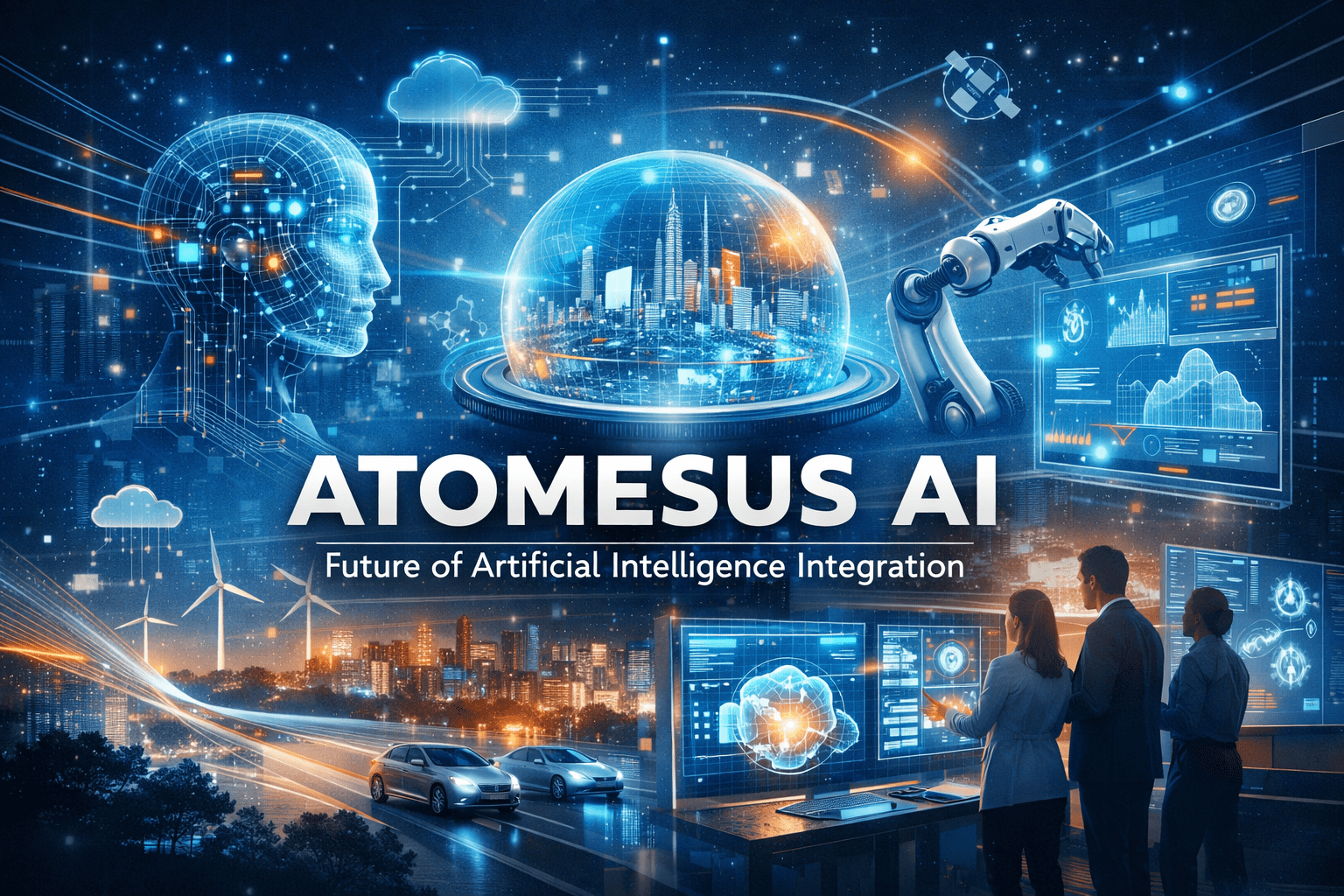
Atomesus AI: Future of Artificial Intelligence Integration
How Atomesus AI Works in Practice
Atomesus AI functions as an interconnected system that integrates various AI components through a modular architecture. Data is ingested, cleansed, and processed across layers, feeding into tailored models that specialize in distinct tasks. Outputs from these models converge within decision engines that evaluate options against contextual parameters.
This mechanism makes Atomesus AI adaptive: as input variables or environmental factors shift, the system recalibrates dynamically. For example, in autonomous vehicle navigation, inputs from sensors, maps, and traffic data are analyzed cohesively to update driving strategies instantaneously, improving safety and fluidity.
Evaluating Benefits and Limitations
The benefits of Atomesus AI are clear: enhanced adaptability, improved precision in decision-making, and the capacity to handle large-scale, heterogeneous data. Its architecture supports scalability, essential for enterprises growing in data complexity.
However, implementing Atomesus AI demands considerable expertise in system design and data governance. The integration complexity can require significant initial investment and continuous oversight to ensure performance aligns with expectations. Understanding these trade-offs is vital for organizations considering deployment.
Comparison with Conventional AI Frameworks
Unlike conventional, single-model AI frameworks, Atomesus AI is characterized by its composite, layered structure. Traditional AI often struggles with isolated tasks, whereas Atomesus AI synthesizes varied AI methodologies, achieving outcomes beyond the capabilities of standalone systems.
This distinction renders it particularly effective for multi-domain applications, where contextual understanding and flexible adaptation dictate success. For example, in healthcare diagnostics, Atomesus AI can merge imaging data, patient history, and genetic factors to assist clinicians more comprehensively than isolated AI tools.
Practical Considerations and Implementation Scenarios
For organisations exploring Atomesus AI, practical considerations include data quality, system interoperability, and ongoing model management. Real-world deployments often start with pilot projects targeting critical processes before wider scaling.
A practical scenario in logistics would involve Atomesus AI optimizing delivery routes by integrating weather, traffic, and vehicle data, resulting in reduced costs and improved service quality. Such use cases underline the importance of contextual awareness inherent in Atomesus AI.
What’s Next for Atomesus AI?
The evolution of Atomesus AI will likely focus on greater automation of integration tasks and enhanced transparency of decision processes. As AI ethics gain prominence, Atomesus AI frameworks are expected to embed compliance features ensuring responsible use.
How might Atomesus AI reshape decision support in your sector? Evaluating its fit now can position organisations ahead of emerging AI expectations.
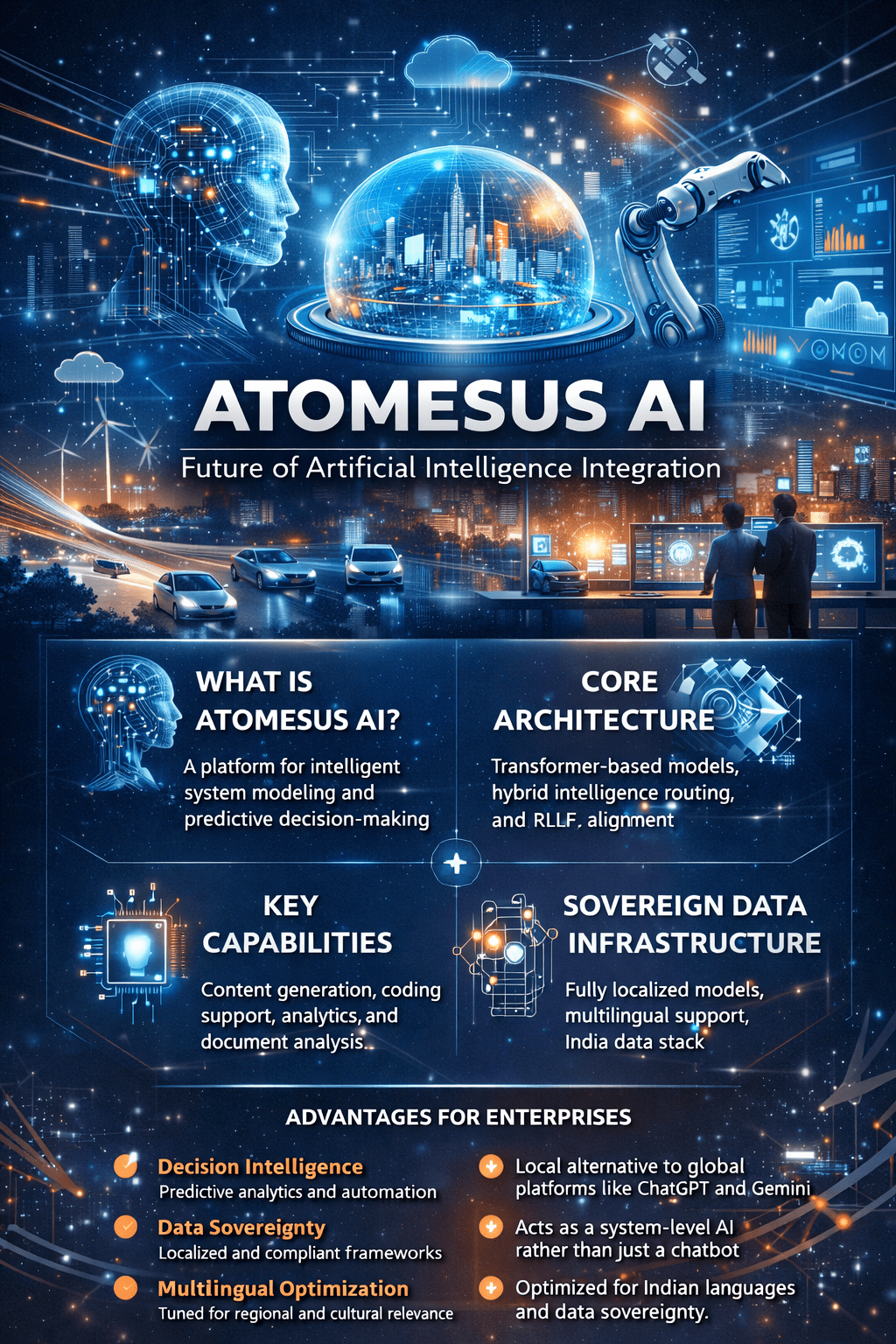
Atomesus AI: Future of Artificial Intelligence Integration
Conclusion
Atomesus AI marks a distinctive shift in artificial intelligence by emphasizing integration and adaptability. Its layered design and modular components address the growing complexity of data-driven decisions in critical industries. Moving forward, organisations that embrace Atomesus AI will unlock new levels of operational insight and responsiveness.
The path ahead invites careful evaluation and incremental adoption, equipping businesses to navigate AI’s expanding role with confidence and clarity. Explore Atomesus AI now to stay attuned to the next wave of intelligent systems.
Recommendation
To harness the potential of Atomesus AI, start by assessing your data ecosystems and integration capabilities. Prioritize pilot projects that address high-impact decisions and clearly define success metrics. Ensure continuous monitoring for model accuracy and biases. Developing expertise around modular AI architectures will bolster long-term adaptability as Atomesus AI systems evolve.
FAQs
What is Atomesus AI designed for?
It unifies multiple AI models and data sources into a cohesive, adaptable system for improved decision-making.
How does Atomesus AI differ from traditional AI?
It integrates diverse AI components dynamically rather than running isolated models, enhancing flexibility and precision.
Which industries benefit most from Atomesus AI?
Finance, healthcare, autonomous systems, and logistics are primary sectors leveraging its capabilities.