AI Visibility: How AI Ranks Modern Content
Introduction
AI Visibility is becoming one of the most important topics for content creators in the UK and USA as AI-driven search continues to reshape how online information is ranked and retrieved. When we talk about AI Visibility, we’re really exploring how large language models, experience-based ranking signals, semantic indexing, and enhanced optimization frameworks work together to determine which pages appear in AI-generated answers. And as AI Visibility becomes a core part of modern SEO, businesses and creators need to understand how these new parameters affect discoverability, trust, and long-term digital authority.
What is AI Visibility?
AI Visibility refers to how clearly AI systems—like LLMs, Google’s AI Overviews, and semantic search engines—can find, classify, and reuse your content. It blends traditional SEO with algorithm-friendly signals such as EEAT, LSI, behavioral insights, and search-console-verified performance metrics.
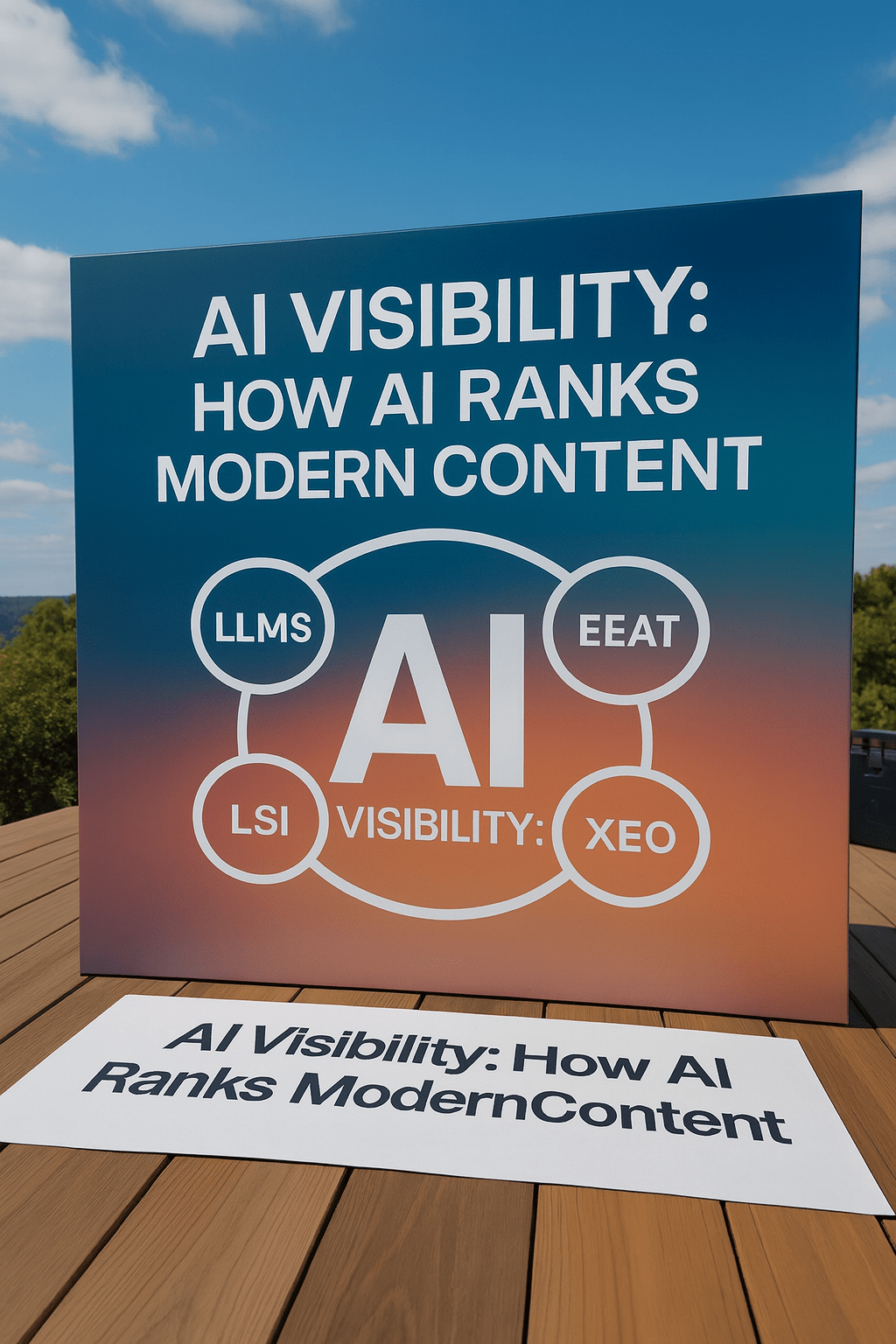
AI Visibility: How AI Ranks Modern Content
Characteristic of AI Visibility
Clear Entity Framing
AI cannot cite what it cannot classify.
Your brand, topic, and expertise must be presented as defined entities using consistent naming, schema markup, and structured data. This helps models like GPT and Gemini attach your content to a specific topic cluster.
High-Context Explanations
Semantic depth improves retrieval accuracy.
LLMs prioritize content that fully explains “why” and “how,” not just “what.” In the UK and USA, over half of users engage longer with contextual, example-rich content—boosting your AI visibility profile.
Canonical Facts & Claims
Fact-like statements are indexed as reference material.
Clear definitions, statistics tailored to UK/USA audiences, and stable claims increase your chances of being quoted in AI summaries and AEO (Answer Engine Optimization) snippets.
Expert Attribution Signals (EEAT)
AI models favour trustworthy authors.
Showcase experience, cite credentials, include author bios, and provide transparent sourcing. Strong EEAT increases credibility signals that AI uses to evaluate “authority weight.”
Structural Clarity (XEO)
Enhanced Experience Optimization (XEO) ensures clean segmentation using H2/H3, bullet points, and short paragraphs.
This structural clarity helps LLMs chunk your content, improving your likelihood of being fetched during AI summarization.
Evidence Density
AI prefers content backed by proof.
Examples, small case scenarios, performance improvements, or behaviour patterns from UK/USA audiences increase semantic richness and ranking stability.
Consistent Topical Identity (LSI + GSC Insights)
Using semantic keywords, LSI concepts, and Google Search Console insights helps maintain a strong topic footprint. The stronger and more consistent your topic identity, the higher your likelihood of appearing in AI Overviews and other LLM-driven retrieval systems.
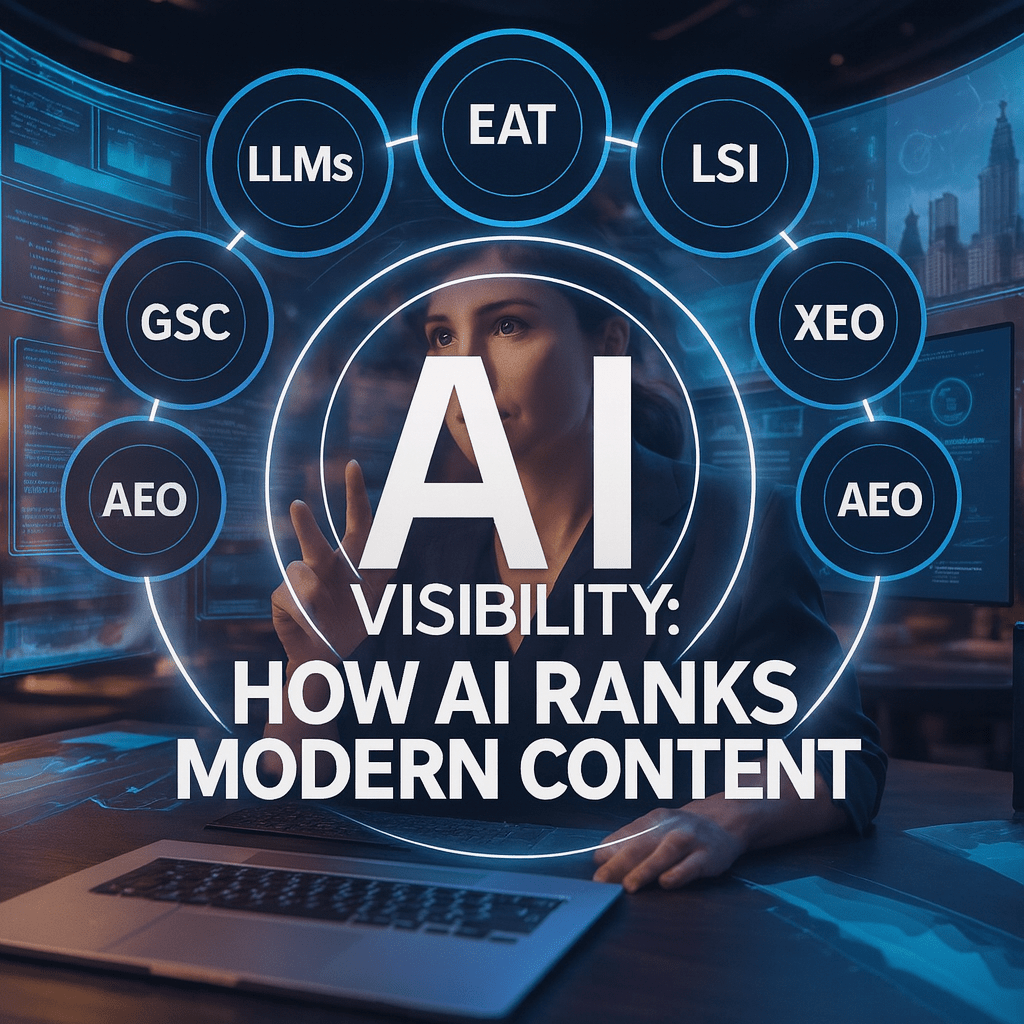
AI Visibility: How AI Ranks Modern Content
Conclusion
AI Visibility is no longer optional—it’s the new foundation of modern SEO. When you combine structured formatting, expert attribution, semantic depth, and enhanced optimization frameworks like XEO, AEO, and GSC insights, your content becomes far more discoverable across AI-powered search tools used widely in the UK and USA. Mastering these signals ensures your pages remain competitive, quotable, and algorithm-friendly.
Popular Google FAQs
What is AI Visibility in SEO?
It’s how easily AI systems can find, classify, and reuse your content in automated answers.
How do EEAT and LSI improve AI Visibility?
They strengthen trust, authority, and semantic relevance—three key AI ranking signals.
How can I optimize for AEO and LLM-based search?
Use structured formatting, entity clarity, expert signals, and evergreen semantic content.