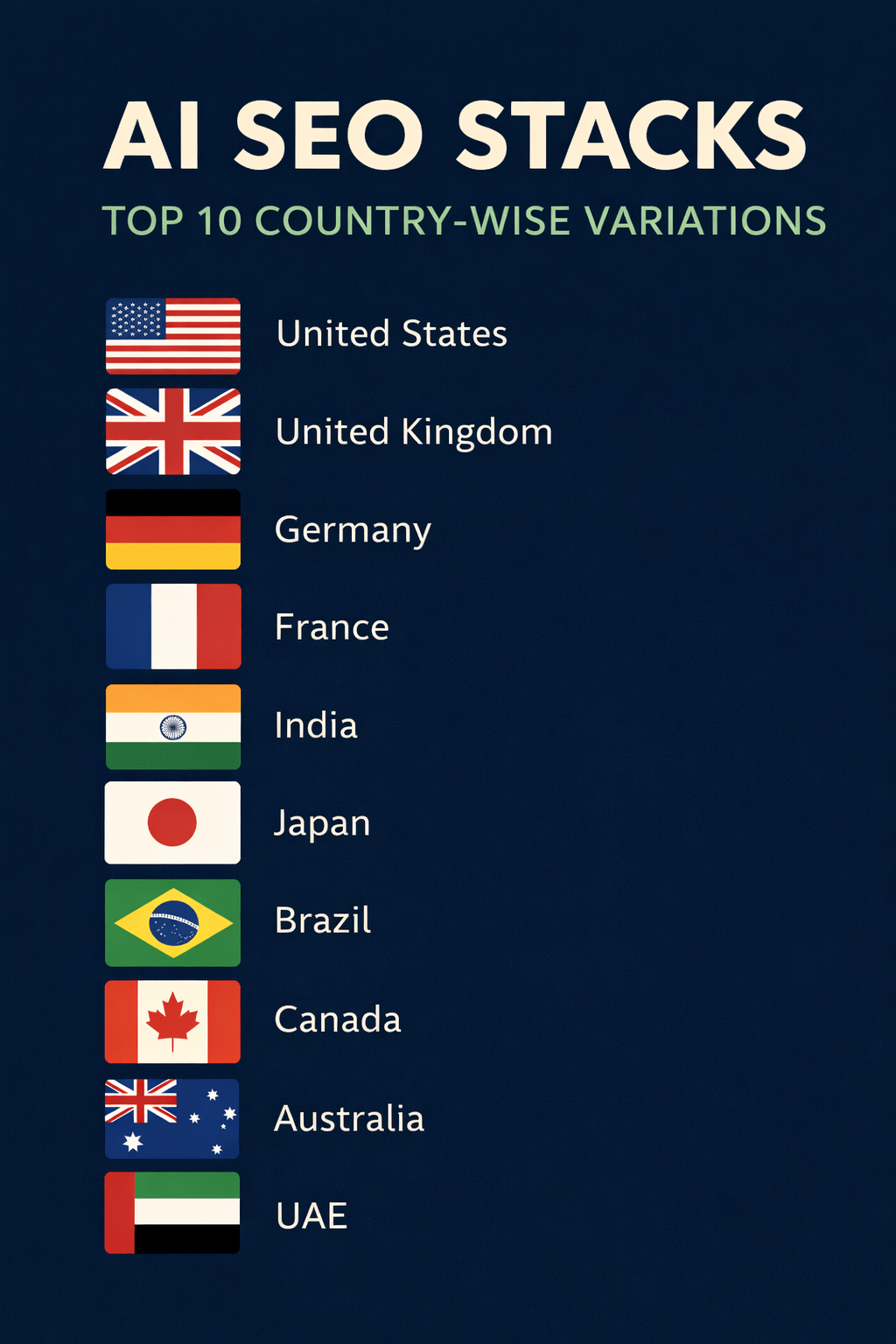
AI SEO Stacks: Top 10 Country-Wise Variations
Introduction: Why Country-Specific SEO Matters Now
Gone are the days when one-size-fits-all SEO strategies cut it. AI SEO stacks and tactics now differ significantly by country. Search engines and users are evolving, and so is the way we approach optimization. What works in one place might flop in another because search habits, language, and even preferred platforms vary widely across regions. For global businesses, ignoring these differences can mean being buried in search results, low user engagement, and missed growth opportunities. To stay visible, relevant, and converting, AI SEO stacks need to reflect local expectations. Truly effective AI SEO stacks are those tailored to the unique nuances of each market, ensuring your content connects where it matters most.
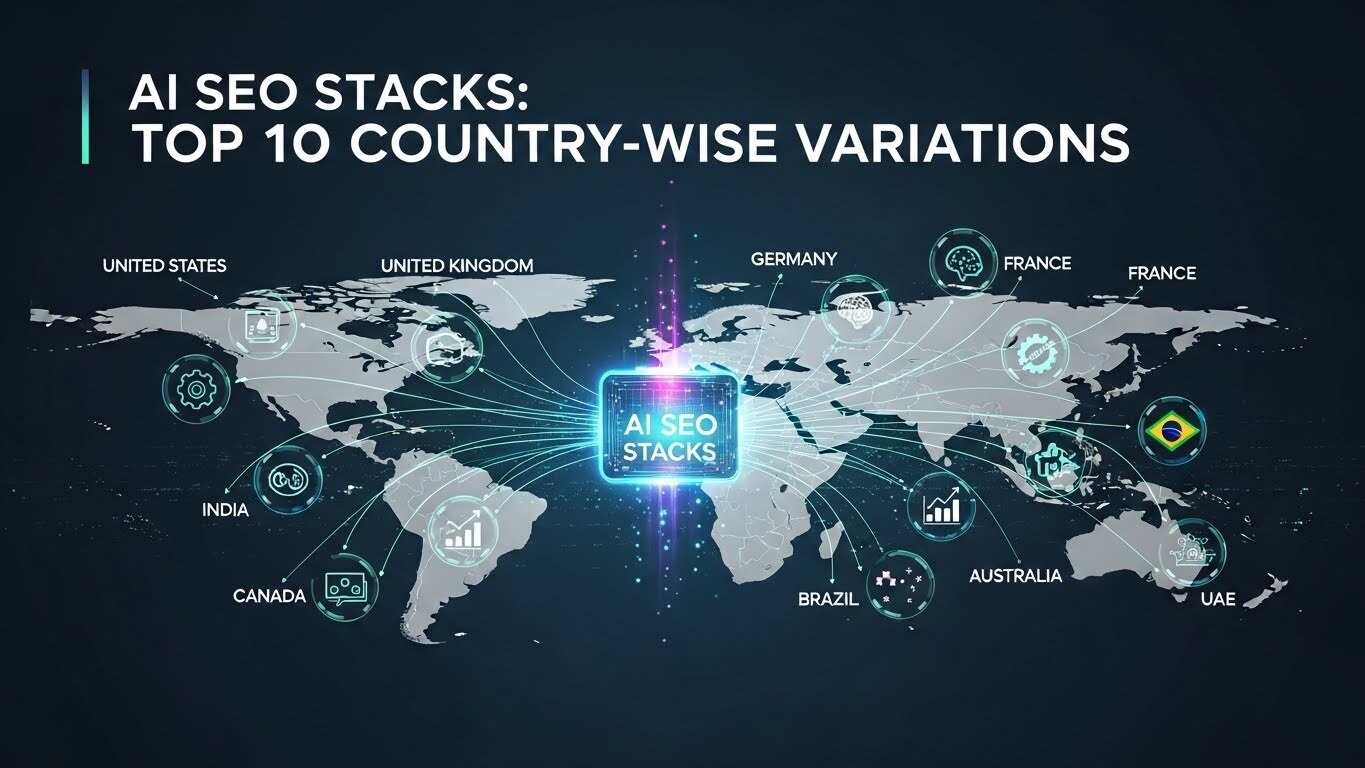
AI SEO Stacks: Top 10 Country-Wise Variations
United States: Voice Search and Structured Answers
In the U.S., voice search rules the mobile scene. This means SEO stacks here focus on conversational language, answering questions directly, and leveraging FAQ sections and schema markup to snag those coveted featured snippets. Tools like Semrush and Jasper play well by formatting content for voice search, giving AI engines clear signals to pull direct answers. Nail this, and you show up in those quick voice responses that keep users happy and engaged.
United Kingdom: Entity-Based Optimization and Rich Snippets
SEO in the UK leans heavily on understanding the relationships between concepts, a style known as entity-based optimization. Google loves content that clearly maps how topics connect, using schema.org markup. UK strategies invest in optimizing people; they also ask about boxes, canonical tags, and smart internal linking. Ahrefs and SurferSEO, with their entity mapping and topic clustering tools, are favorites for content that’s clean, clear, and semantic.
Germany: Compliance-Driven SEO and Technical Precision
German SEO is all about playing by the rules and being exact. GDPR compliance shapes strategy alongside rigorous technical SEO. Structured data isn’t optional—it’s a trust signal that supports smooth indexing. Strategies include managing hreflang tags to handle German and regional languages, optimizing crawl budgets, and crafting precise metadata. Tools like Sistrix and Ryte lead the pack, offering deep control over site structure and compliance management.
France: Semantic Depth and Editorial Quality
In France, SEO strategies emphasize semantic depth and editorial quality. French search engines favor content rich in meaning and crafted with editorial integrity. This approach relies on careful topic modeling, maintaining internal coherence, and capturing subtle language nuances. As a result, search engines gain a better semantic understanding of the content, rewarding pages that focus on depth rather than sheer keyword frequency. In this market, depth truly beats frequency.
India: Multilingual SEO and Mobile-First Indexing
India’s SEO scene is a complex web of languages and platforms. Mobile usability is king, paired with support for Hindi, Tamil, Bengali, and more. Keyword strategies group terms across languages to maximize reach, while structured data helps AI understand the content’s linguistic variations. Platforms like Rank Math and Ubersuggest provide critical multilingual insights and track mobile performance for ongoing optimization.
Japan: UX-Centric SEO and Mobile Optimization
User experience drives Japanese SEO stacks. Fast loading, sleek design, and easy navigation are rewarded by search engines. Strategies include breadcrumb schema, AMP integration for lightning-fast mobile pages, and minimalistic layouts that keep content accessible and engaging. Tools like PageSpeed Insights and Screaming Frog are go-tos for uncovering UX issues and fine-tuning performance.
Brazil: Social Signals and Localized Content
Social media isn’t just for engagement in Brazil—it influences SEO rankings, too. WhatsApp, Instagram, and other platforms boost visibility through social signals. Localized content enhanced with structured data for reviews, events, and business info builds trust and relevance. SEMrush and Google Business Profile are core to managing these local SEO efforts.
Canada: Bilingual SEO and Regional Targeting
Canada demands attention to dual languages—English and French. SEO stacks here focus on bilingual metadata, hreflang tags to signal language versions, and region-specific content. Structured data smooths the path for multilingual indexing. Yoast and Google Search Console help track performance and maintain clarity across languages.
Australia: Semantic Search and Freshness Signals
Australian SEO strategies prize semantic understanding and fresh content. Google rewards context-rich, frequently updated pages highlighted with structured data. Tactics include topic clusters, marking content freshness, and FAQ schemas. Tools like Clearscope and MarketMuse help keep content deep and current to hold rankings over time.
Middle East: Multilingual Indexing and Cultural Relevance
Middle Eastern SEO stacks juggle Arabic-English indexing and cultural nuances. Structured data assists AI in parsing right-to-left scripts and regional specifics. Strategies embrace schemas for religious events, trust signals, and mobile-first designs. SE Ranking and Google Trends provide critical regional insights for targeting and timing.
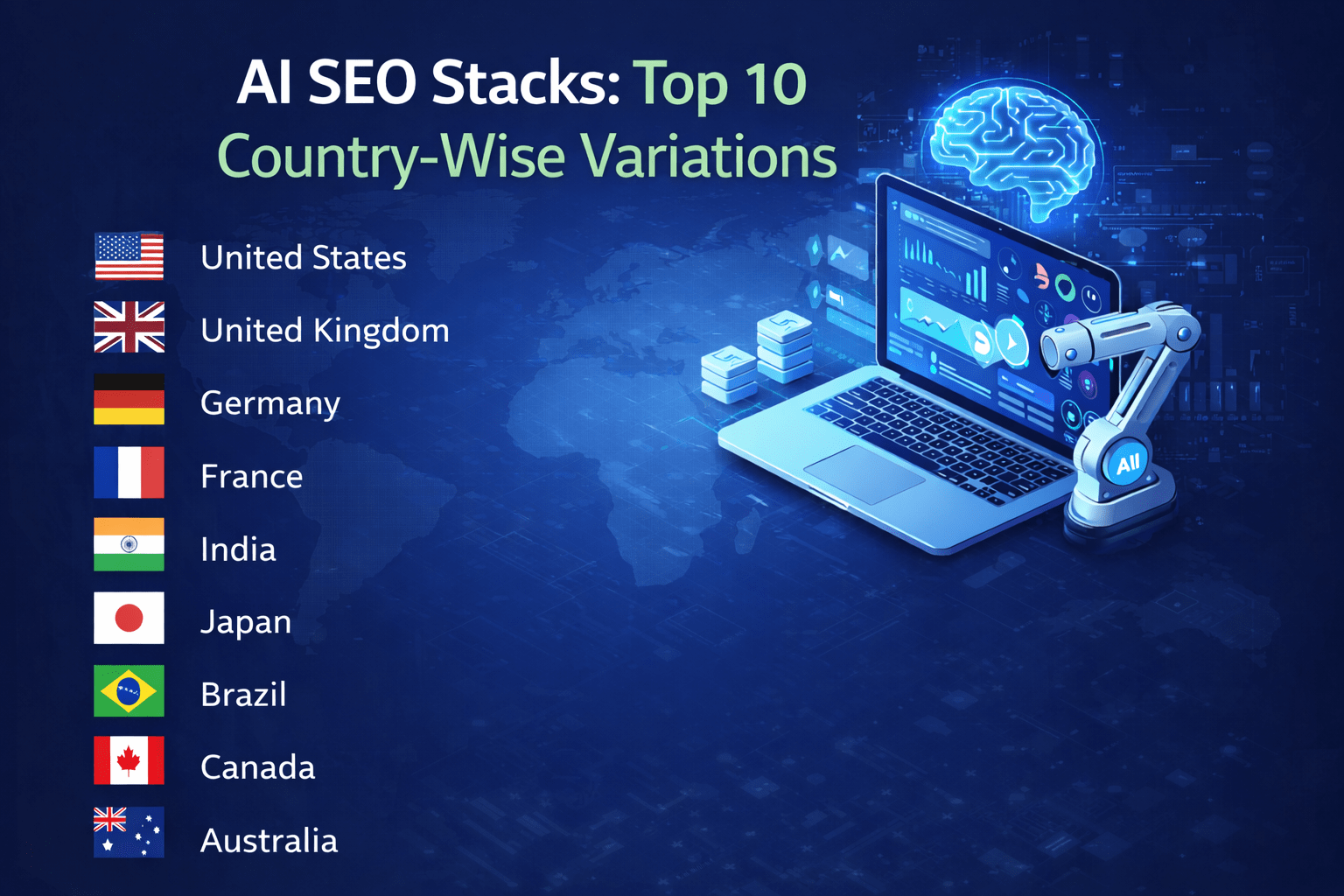
AI SEO Stacks: Top 10 Country-Wise Variations
SERP-Aligned Content and Topical Depth
Top search results answer user queries fully and clearly. The best AI SEO stacks focus on mapping user intent with depth, weaving related entities, semantic keywords, internal links, and structured data throughout content. This approach builds durable rankings and helps search engines extract the best possible answers.
E-E-A-T and Trust Signals Across Markets
Experience, expertise, authority, and trust shift by region. In the U.S. and UK, expert voices and factual accuracy weigh heavily. Germany, Japan, and South Korea emphasize structure, clarity, and consistent presentation to reinforce trust. Advanced AI SEO stacks bake these trust signals right into their content workflows.
Measurement, Feedback, and Iteration
Top-performing stacks don’t stay static. They include regular monitoring and feedback loops. Analyzing search performance data informs updates to content, keyword expansion, and internal linking, letting SEO systems adapt and thrive as user intent evolves.

AI SEO Stacks: Top 10 Country-Wise Variations
Recommendation
To win at global SEO, build modular stacks that adjust to each country’s search behaviors. Use structured data consistently—FAQ schema, product markup, language tags—to boost AI comprehension. Prioritize mobile-first design, semantic clarity, and localized content. Keep a content calendar for freshness signals. Pick tools that support multilingual indexing and entity mapping for smooth execution.
Conclusion: Regional and Structured SEO
AI SEO stacks are moving beyond generic templates into country-tailored strategies. Structured data is the thread tying it all together, helping AI engines understand, index, and rank content precisely. Businesses that dial in their SEO to local tastes and tech will lead in visibility, engagement, and conversions. The future is about precision and cultural savvy.
FAQs
What is an AI SEO stack?
It’s the mix of tools, content formats, and tactics designed to optimize for AI-driven search engines.
Why does SEO vary by country?
Search behavior, language, regulations, and preferred platforms all differ regionally, so strategies must adapt to fit.
How does structured data help SEO?
It organizes content so search engines can interpret and show it well, boosting rich results and visibility.