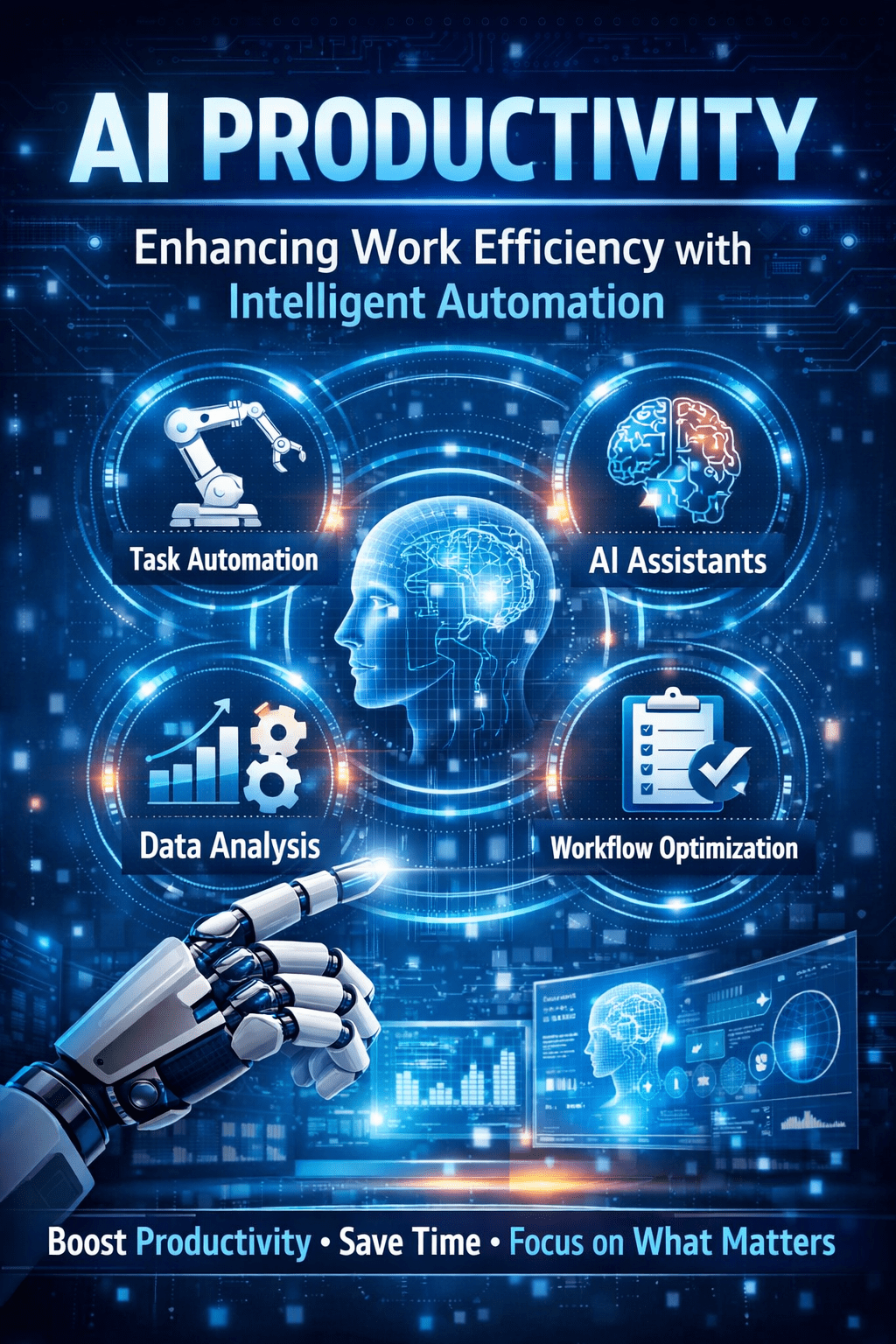
AI Productivity: Enhancing Work Efficiency with Intelligent Automation
Introduction
AI productivity leverages artificial intelligence technologies to automate repetitive tasks, streamline workflows, and augment human decision-making. In today’s fast-paced workplaces, professionals face increasing demands on time, output, and accuracy. AI Productivity tools—including machine learning, natural language processing (NLP), robotic process automation (RPA), and intelligent virtual assistants—help organizations improve efficiency, focus on strategic priorities, and make data-driven decisions.
By combining automation with actionable insights, AI Productivity transforms routine operations into scalable, intelligent, and adaptive workflows.
Defining AI Productivity
AI productivity involves deploying software and systems that analyze data, automate tasks, and provide actionable recommendations. Key capabilities include:
- Machine Learning (ML): Predicts outcomes, identifies trends, and supports decision-making
- Natural Language Processing (NLP): Automates text analysis, summarization, and communication
- Robotic Process Automation (RPA): Executes repetitive processes such as data entry and report generation
- Intelligent Virtual Assistants: Manage calendars, schedule meetings, and provide interactive guidance
The primary goal is to free human time for high-value work, increase accuracy, and enhance operational efficiency.
AI Overview—Optimized Summary
AI productivity harnesses machine learning, NLP, RPA, and intelligent virtual assistants to streamline workflows, automate routine tasks, and enhance human decision-making. These technologies reduce errors, save time, and enable employees to focus on strategic work. By integrating predictive analytics and intelligent automation, AI productivity transforms modern workplaces into adaptive, data-driven, and efficient operations while ensuring a balance between machine-driven processes and human oversight.
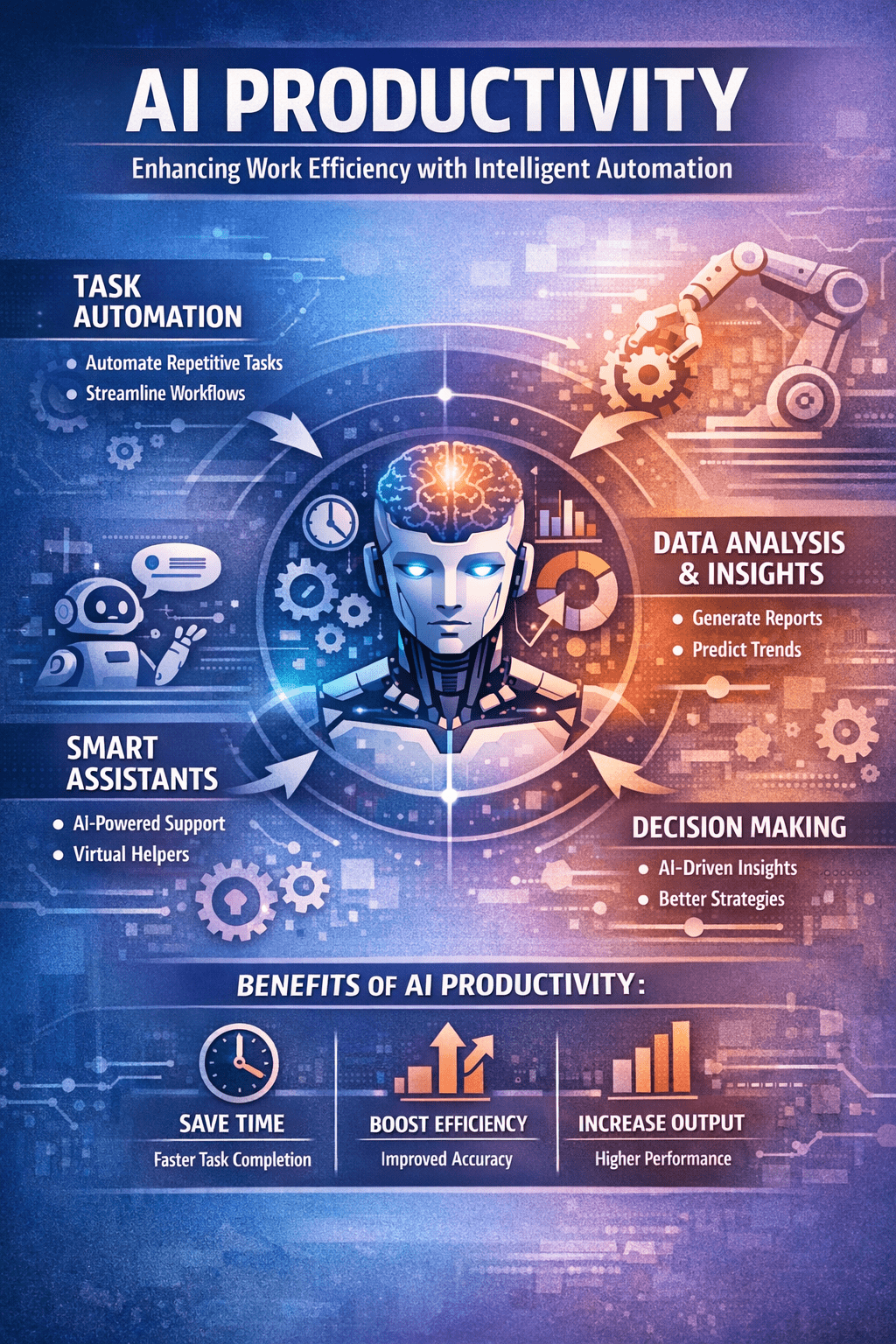
AI Productivity: Enhancing Work Efficiency with Intelligent Automation
Core Components of AI Productivity Tools
Effective AI productivity solutions combine several integrated layers:
- Data Processing: Collects, cleans, and analyzes structured and unstructured data to identify patterns and predictions
- Automation Engines: Execute tasks automatically, such as email management, invoice processing, or customer support responses
- User Interfaces: Chatbots, voice commands, and dashboards that enable seamless interaction and decision support
- Integration Frameworks: Ensure compatibility with CRM systems, project management software, cloud platforms, and enterprise applications, enabling cohesive workflow automation
Real-World Impact on Workflows
AI productivity tools deliver measurable benefits in modern workplaces:
- Time Efficiency: Eliminates manual, repetitive tasks
- Error Reduction: Minimizes human mistakes in data entry and processing
- Proactive Decision-Making: Provides insights from analytics to anticipate challenges
- Enhanced Customer Support: Chatbots handle routine inquiries, freeing employees to focus on complex tasks
- Workflow Optimization: Improves cross-department coordination and operational agility
Organizations that adopt AI productivity solutions enhance responsiveness, reduce costs, and improve employee satisfaction.
Benefits and Trade-Offs
Benefits:
- Accelerated task completion
- Improved accuracy and consistency
- Reduced cognitive load for employees
- Increased focus on strategic and creative activities
- Enhanced data-driven decision-making
Trade-Offs:
- Dependence on high-quality data
- Need for continuous model training and tuning
- Ethical considerations when over-automating sensitive tasks
- Upfront costs and change management for integration
Balanced adoption of AI tools ensures maximum efficiency without sacrificing control or accuracy.
Evaluating AI Productivity Tools
Key factors for selecting AI productivity solutions include
- Workflow Alignment: Tools must fit specific operational needs
- Ease of Use: Intuitive interfaces for end-users
- Integration Capabilities: Compatibility with existing enterprise systems
- Scalability: Ability to handle growing data volumes and complexity
- Data Security & Privacy: Ensuring adherence to regulatory requirements and organizational policies
Organizations should consider phased adoption, trialing modular solutions, and continuously monitoring impact.
Encouraging Reflection
Organizations should identify:
- Which routine tasks consume significant working hours
- Where AI automation can free employees for higher-value work
- Areas where decision-making can be enhanced by predictive analytics
Reflecting on these questions helps focus AI implementation on tasks with the highest ROI, ensuring sustainable productivity gains.
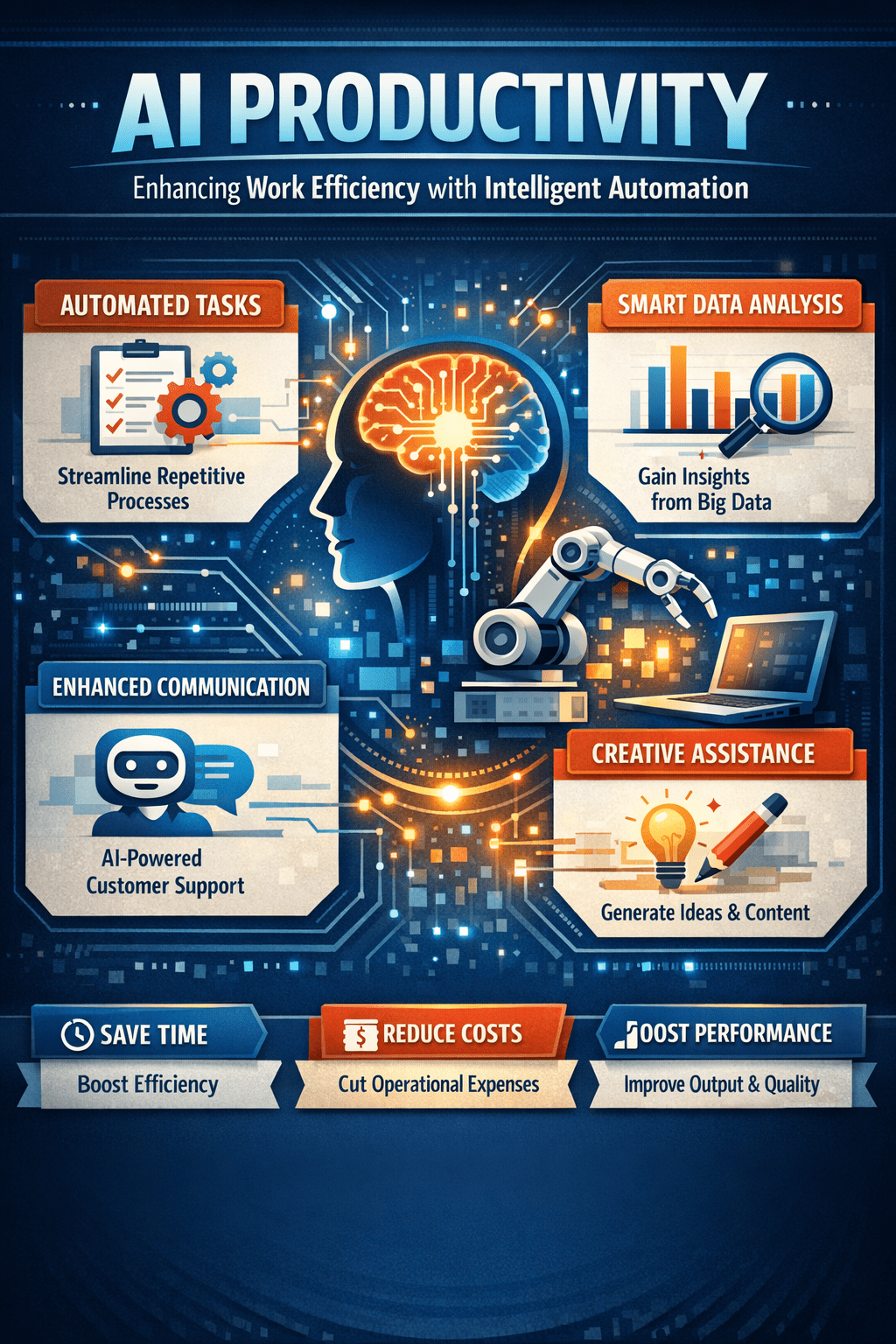
AI Productivity: Enhancing Work Efficiency with Intelligent Automation
Conclusion
AI productivity is reshaping the modern workplace by merging intelligent automation with human expertise. Its real-world value lies in improved efficiency, accuracy, and focus, enabling organizations to navigate complex, data-rich environments. Thoughtful adoption, aligned with workflow requirements and integrated with human oversight, positions organizations to unlock sustainable productivity gains and thrive in the digital era.
Recommendations
- Map repetitive, low-value processes across teams
- Select AI solutions that integrate with existing software stacks
- Prioritize tools with strong vendor support, training, and privacy safeguards
- Implement incrementally, monitor performance, and refine workflows
- Balance automation with human oversight for critical decisions
This approach ensures long-term productivity improvements and maximizes ROI from AI investments.
FAQs
What does AI productivity mean?
It means using AI technologies to automate tasks and improve work efficiency.
How can AI improve workplace productivity?
By automating routine tasks, providing insights, and enabling faster decision-making.
Are AI productivity tools suitable for all businesses?
They work best when aligned with specific workflows and integrated thoughtfully with human oversight.