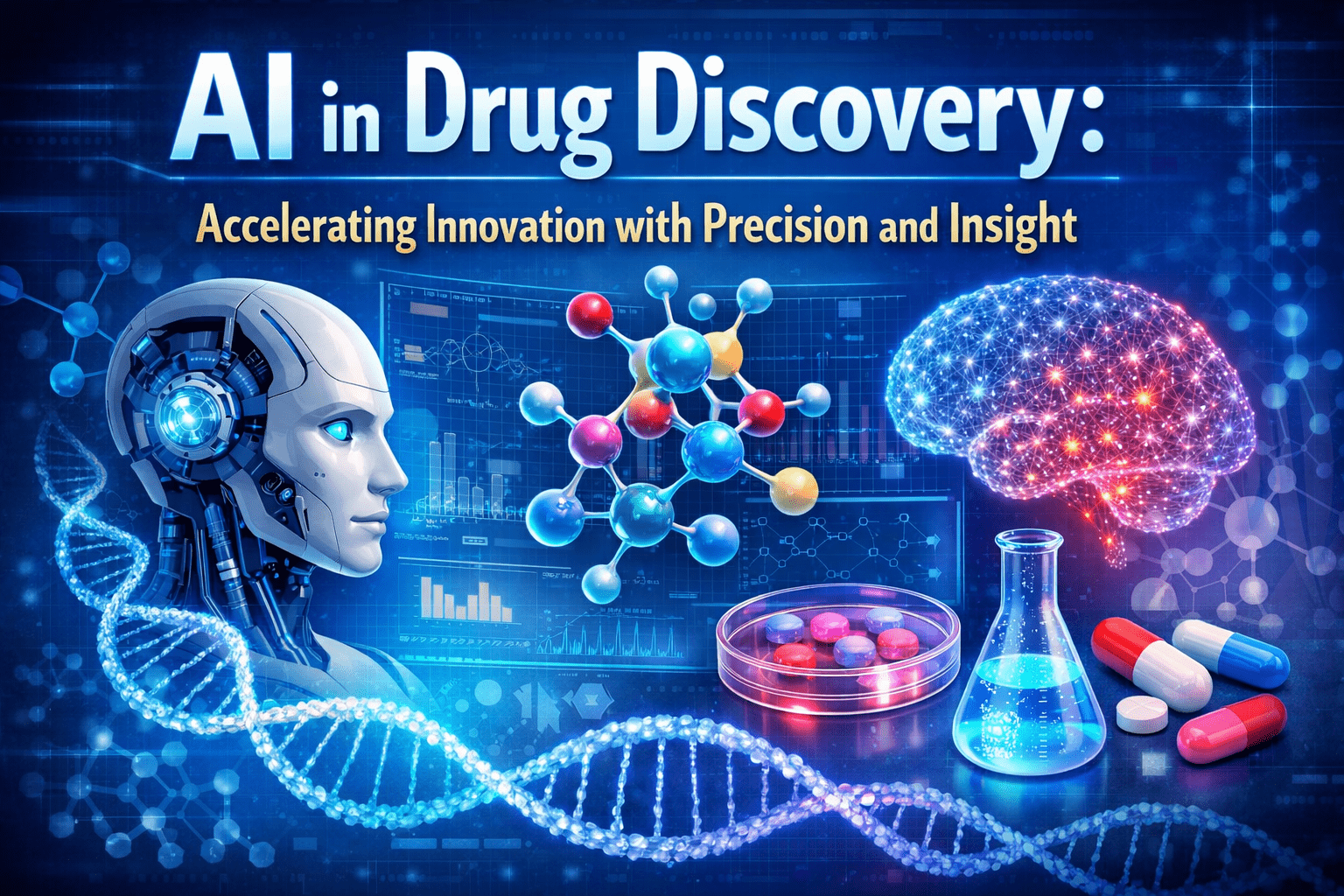
AI in Drug Discovery: Accelerating Innovation with Precision and Insight
Introduction
Artificial Intelligence (AI) in Drug Discovery refers to the use of advanced machine learning, deep learning, and computational algorithms to streamline the identification, design, and testing of new pharmaceutical compounds. AI in Drug Discovery enables researchers to analyze complex chemical and biological data at scale. As pharmaceutical R&D faces rising costs and high failure rates, AI in Drug Discovery has become essential for improving efficiency, reducing risk, and accelerating therapeutic development across the pipeline. Today, AI-driven approaches enhance accuracy and speed, profoundly reshaping how new medicines come to market.
At its core, AI in Drug Discovery is about leveraging massive datasets and predictive models to identify promising molecules and biological targets much faster than conventional methods. The main entities central to this domain include AI algorithms, molecular biology, bioinformatics, clinical trial design, pharmaceutical chemistry, and patient data analytics.
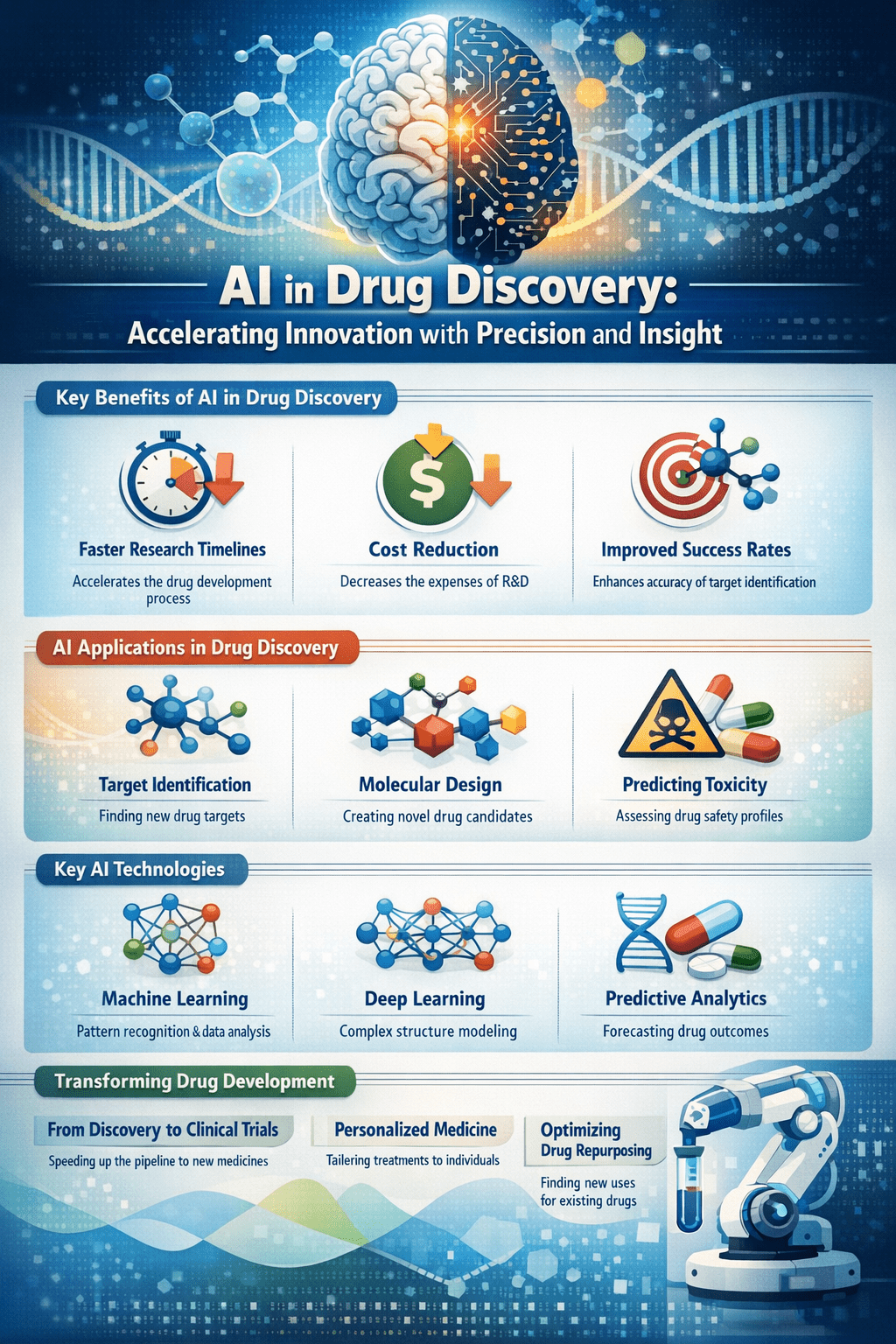
AI in Drug Discovery: Accelerating Innovation with Precision and Insight
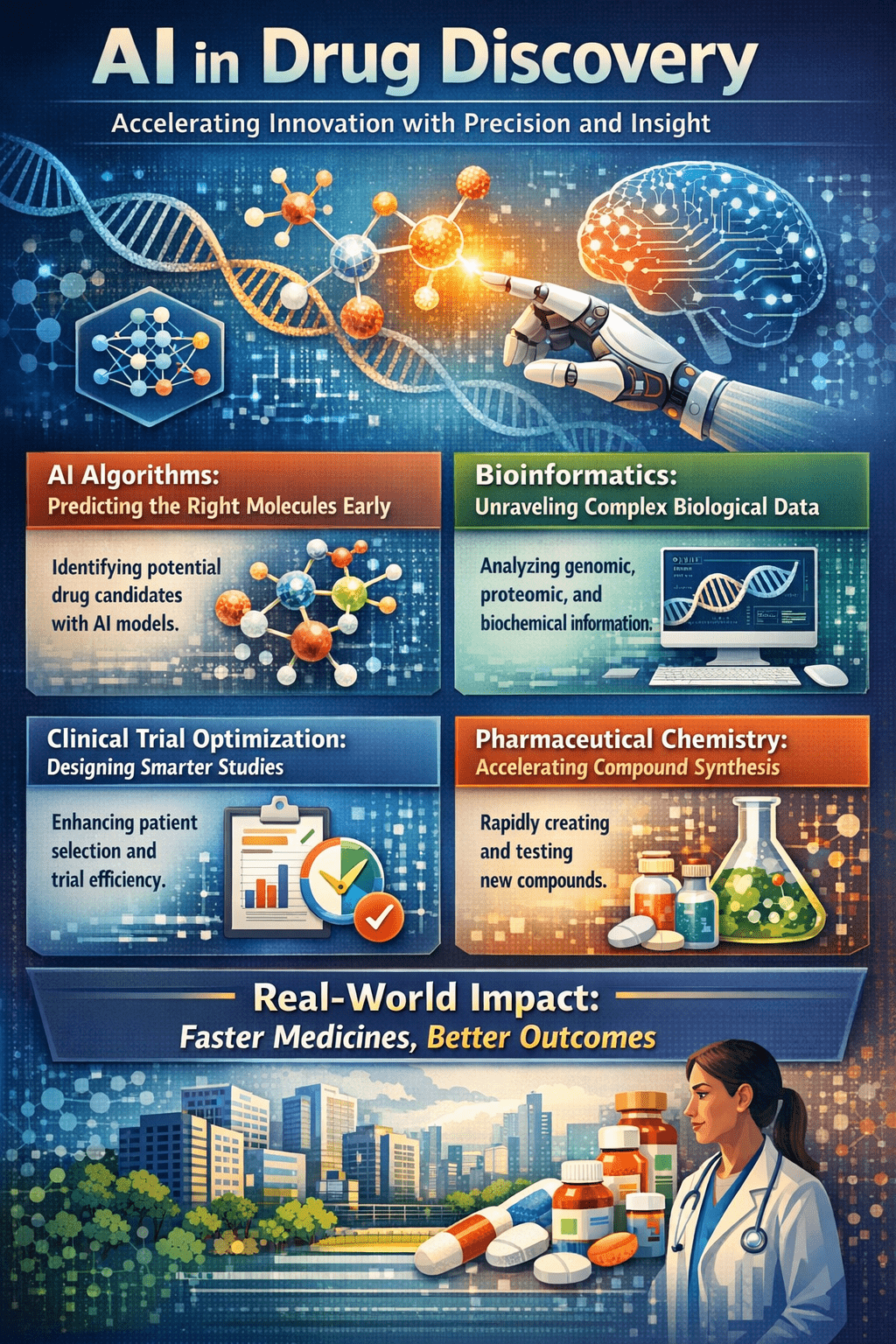
AI Algorithms: Predicting the Right Molecules Early
AI algorithms process vast chemical and biological data to predict which molecules will be effective drug candidates. These models analyze molecular structures and simulate their interaction with biological targets, such as proteins linked to disease pathways. This is crucial because identifying the right molecule early saves years of lab work and reduces costly trial failures.
For example, machine learning models rapidly narrow down vast chemical libraries by predicting molecular binding affinity, pharmacokinetics, and toxicity. This timely insight can expedite early-stage drug discovery dramatically, enabling pharmaceutical companies to focus resources on the most promising candidates. In real-world practice, a leading US-based innovator integrated AI-driven molecule prediction with automated lab workflows to accelerate early drug development phases by weeks, enhancing productivity without raising costs.
Bioinformatics: Unraveling Complex Biological Data
Bioinformatics combines AI with genomic and proteomic data to understand disease mechanisms at a molecular level. AI-powered bioinformatics platforms analyze patient genetic profiles and biological pathways to identify potential therapeutic targets.
This matters because modern drugs increasingly target specific molecular drivers of disease rather than symptoms. AI decodes complex biological signals invisible to human researchers, opening doors to precision medicine. For instance, multi-omics data analysis—covering genomics, proteomics, and transcriptomics—helps build comprehensive disease models. Companies like Blackthorn.ai harness these insights to discover new targets and mechanisms previously overlooked.
Clinical Trial Optimization: Designing Smarter Studies
AI also optimizes clinical trials by identifying suitable patient populations, predicting outcomes, and enhancing protocols. Traditionally, clinical trials are costly, slow, and often fail due to poor patient matching or inadequate trial design.
By analyzing past and ongoing trial data plus patient health records, AI helps recruiters find the right participants faster. This lowers costs and increases trial success rates, making drug development more efficient. UK-based platforms focused on better patient-trial matching illustrate this trend by enabling faster recruitment and more precise trial execution.
Pharmaceutical Chemistry: Accelerating Compound Synthesis
In pharmaceutical chemistry, AI predicts how chemical modifications affect a drug candidate’s efficacy and safety. Generative AI models can design novel compounds with desired properties, reducing trial-and-error synthesis.
This capability shortens the typical iterative design cycle, allowing chemists to virtually test and prioritize compounds before physical synthesis. The result is a tighter, cost-effective discovery pipeline that delivers potent candidates ready for preclinical testing sooner.
Real-World Impact: Faster Medicines, Better Outcomes
Taken together, AI-powered drug discovery cuts development timelines from years to months, reduces waste, and improves success rates across the pipeline. It is not a magic wand but a strategic tool complementing human expertise.
Readers might ask: How soon will AI-driven discoveries become the new standard? The answer depends on regulatory acceptance, data quality, and integration maturity. Nonetheless, widespread adoption is underway, with demonstrated successes in accelerating early-stage research and enhancing clinical trial design.
AI in Drug Discovery: Accelerating Innovation with Precision and Insight
Practical Next Steps for Stakeholders
To leverage AI effectively, pharmaceutical companies and research institutions should invest in integrated data infrastructure, collaborate with AI experts, and explore flexible AI tools adaptable to evolving discovery challenges.
Conclusion: The Future of AI in Drug Discovery
AI’s integration into drug discovery represents a shift towards smarter, data-driven pharmaceutical development. As datasets grow and algorithms improve, AI will increasingly pinpoint novel therapies with precision and speed.
This evolution does not replace skilled researchers but transforms their role, enabling deeper insights and more strategic decisions. As regulations evolve to support AI in medicine, the pace of innovation will likely accelerate, delivering new treatments to patients with unmet needs faster than ever.
For those involved in drug development today, exploring AI’s capabilities is not just a technical upgrade—it’s essential preparation for tomorrow’s pharmaceutical challenges and opportunities.
If you want, I can also create an infographic and image on the smart fridge topic you mentioned. Should I proceed with that next?
FAQs
What is AI drug discovery?
AI drug discovery uses machine learning and algorithms to identify potential new medicines faster and more accurately.
How does AI improve clinical trials?
By analyzing patient data and outcomes, AI helps design better trials and find suitable participants more quickly.
Are AI-designed drugs already approved?
Some AI-identified candidates are in late-stage trials, with approvals expected as integration grows in the industry.