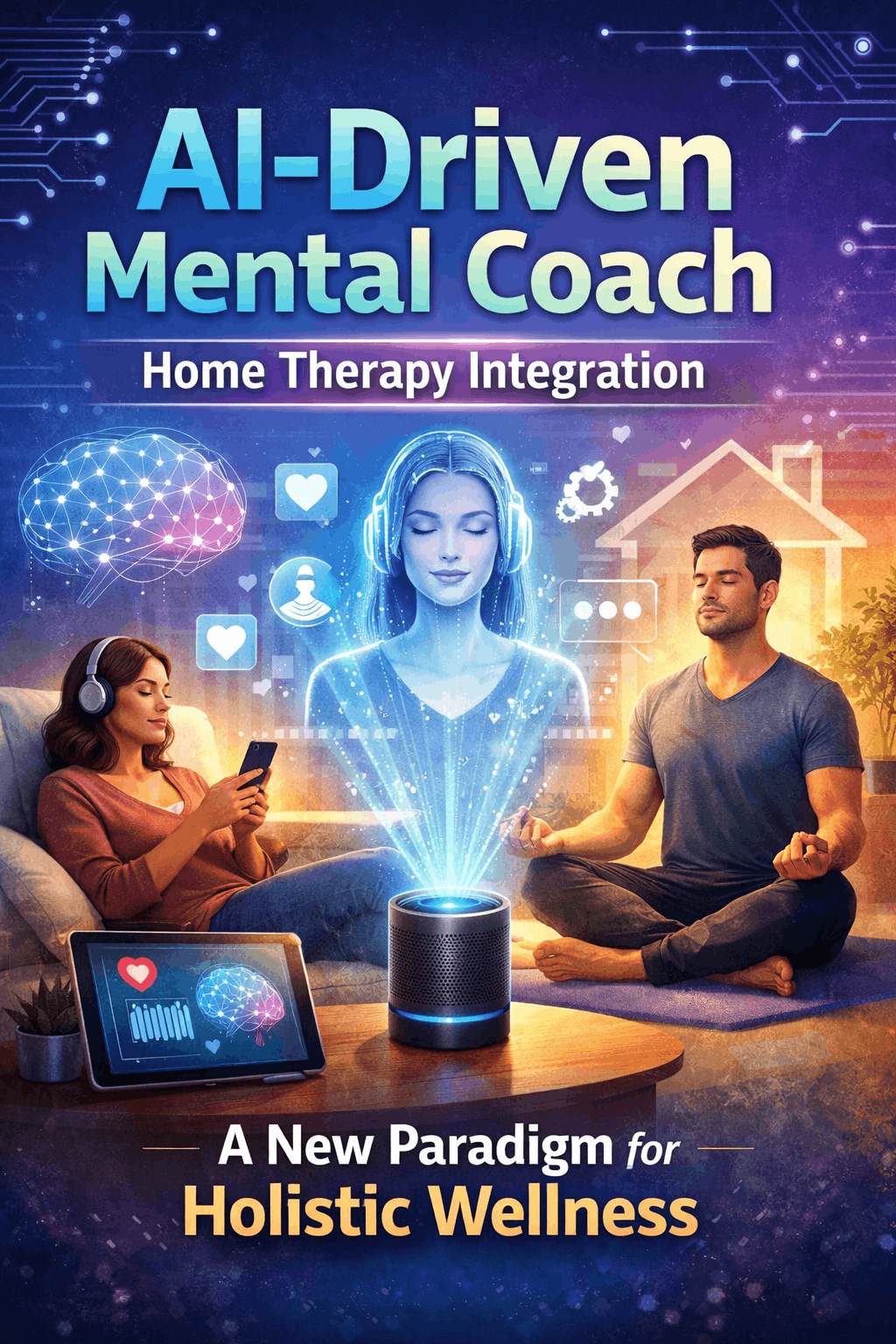
AI-Driven Mental Coach: A New Paradigm for Holistic Wellness
Introduction
The future of personal wellness is not just digital or physical—it is integrated. At the forefront of this convergence is the merging of AI-Driven Mental Coach technology with advanced somatic therapy systems like the Ceragem Home Therapy Booth 2.0. This synthesis, recognized as a 2026 CES Innovation Awards Honoree, moves beyond standalone gadgets to create a unified, multisensory health environment. It represents a significant shift toward AI-blended therapy, where an AI-Driven Mental Coach delivers conversational support while biometric-responsive environments work in tandem to address the interconnected needs of mind and body.
Within this ecosystem, the AI-Driven Mental Coach becomes a foundational element of personalized, adaptive wellness care.
Defining the Core Components: Beyond Hype to Mechanism
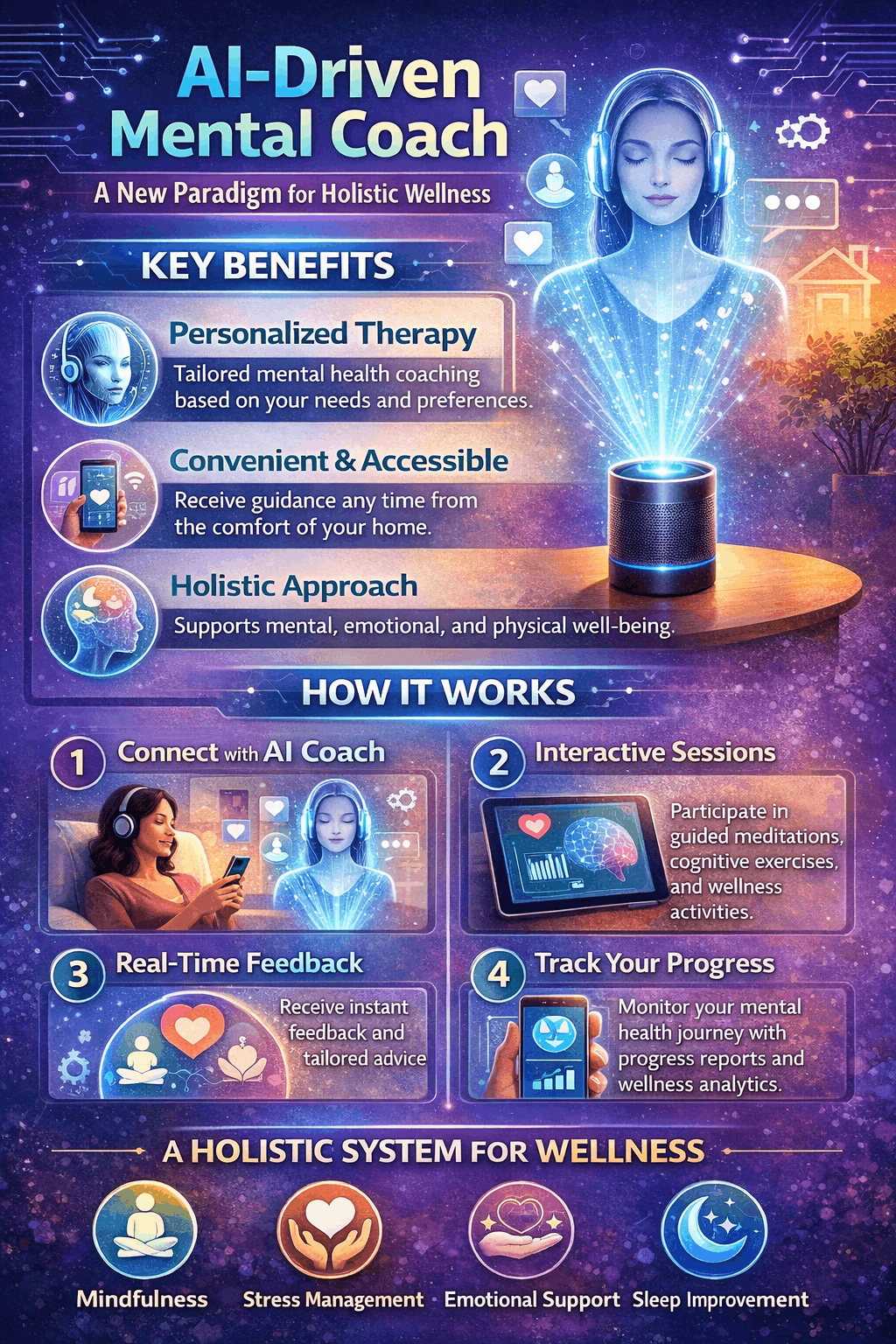
To understand the integration, one must first define its pillars. The AI mental coach in this context is not a simple chatbot. It is a sophisticated conversational agent built on large language models (LLMs) and explicitly aligned with evidence-based therapeutic frameworks like Cognitive Behavioral Therapy (CBT). Its function is to provide structured, therapeutic guidance, stress support, and psychoeducation through private, natural language conversation.
Conversely, the Ceragem Home Therapy Booth 2.0 is a smart home wellness pod. It utilizes multimodal sensing, including thermal imaging and biometric data collection, to assess a user’s physical state. It then personalizes a multisensory experience, adapting adaptive light, sound, and aroma alongside thermal and massage therapies to induce a restorative state. The integration occurs when the system’s biometric feedback informs the AI coach’s dialogue, creating a responsive, holistic care loop.
AI-Driven Mental Coach: A New Paradigm for Holistic Wellness
The Driving Need: Accessibility, Stigma, and Personalized Care
This technological fusion responds directly to critical, systemic gaps in global mental and physical healthcare. The primary drivers are limited access to clinicians, prohibitive costs for ongoing therapy, and the persistent stigma that prevents many from seeking help. An integrated home system offers a private, accessible entry point. Furthermore, generic wellness solutions fail to address individual variability. This integration promises personalized wellness by using real-time physiological data to tailor both the environmental intervention and the cognitive guidance, moving from a one-size-fits-all model to a user-centered design.
The Integrated Experience: A Synergistic Feedback Loop
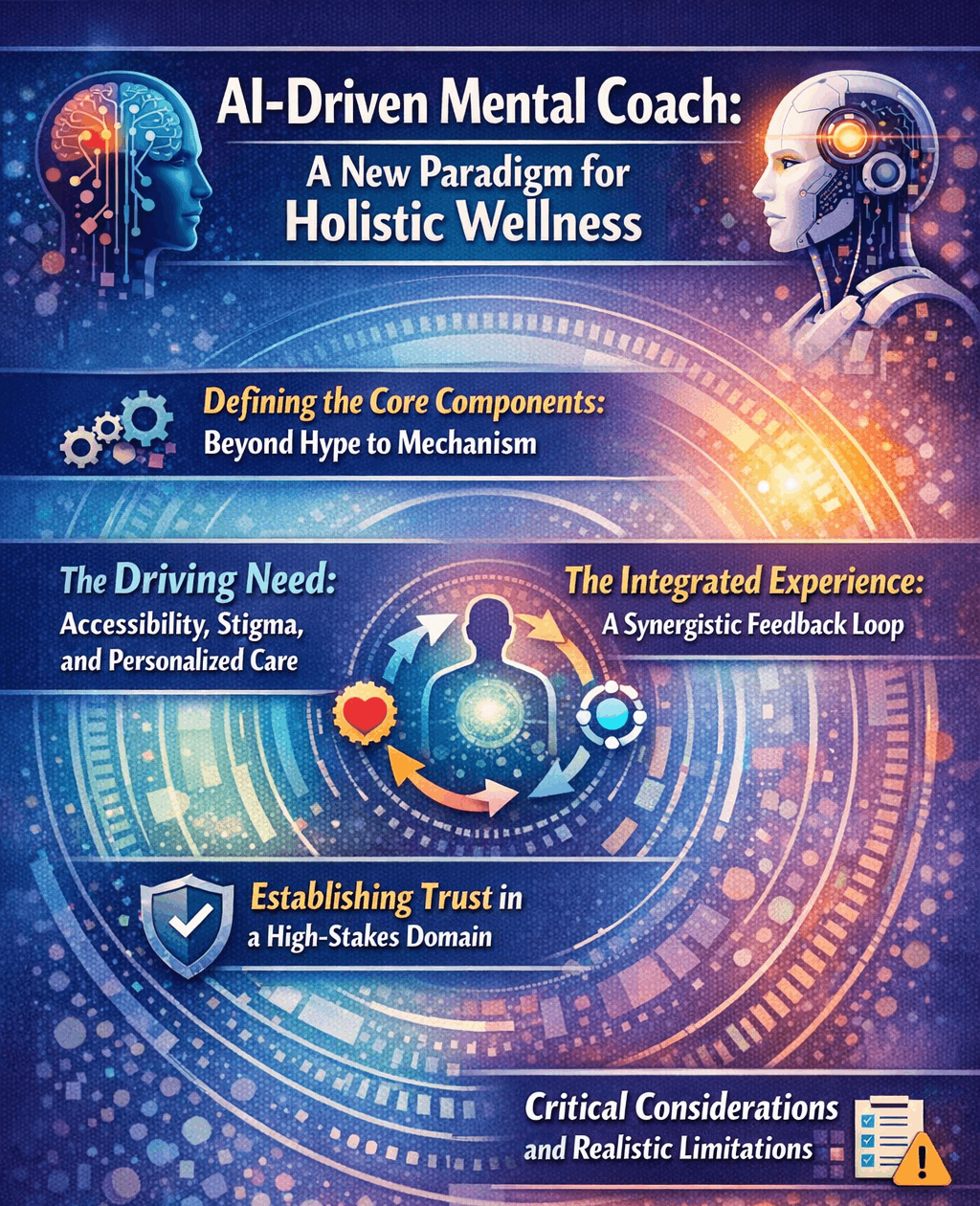
The true innovation lies in the closed-loop system. Imagine a scenario: the Therapy Booth’s sensors detect elevated physiological markers of stress. The environment automatically adjusts—softening light, introducing calming scents—to begin somatic calming. Simultaneously, the AI Mental Coach, informed by this data, initiates a supportive conversation, perhaps employing a CBT-based technique like the “downward arrow” to explore cognitive patterns. The coach doesn’t operate in a vacuum; it responds to the body’s signals. This real-time adaptation creates a synergy where physical relaxation facilitates mental openness, and cognitive reframing can deepen physical calm.
Establishing Trust in a High-Stakes Domain
In mental health—a “Your Money or Your Life” topic—trustworthiness is the non-negotiable foundation. Top-ranking clinical literature emphasizes that for AI to be credible here, it must demonstrate safety and know its limits. Effective systems are designed with robust privacy safeguards for sensitive biometric and conversational data. Crucially, they incorporate clear boundaries, acknowledging they are not a replacement for human clinicians and are equipped to escalate crisis situations. The authority of this integration hinges on transparency about its capabilities, its clinical foundations, and its operational constraints.
Critical Considerations and Realistic Limitations
A balanced analysis requires acknowledging present limitations. Key challenges include managing the risk of AI “hallucinations” or generating inappropriate therapeutic content, which necessitates rigorous oversight and alignment. The long-term clinical efficacy for specific conditions requires ongoing validation through peer-reviewed studies. Furthermore, the digital divide presents an ethical access issue. Ultimately, the most effective model is not AI instead of human care, but AI as an adjunct, augmenting professional treatment by providing consistent, between-session support and rich data insights for the clinician.
AI-Driven Mental Coach: A New Paradigm for Holistic Wellness
The Road Ahead: From Novelty to Mainstream Utility
The integration of an AI mental coach with the Ceragem Home Therapy Booth 2.0 is more than a technological showcase; it is a prototype for the future of preventive and supportive wellness. As these systems evolve, the focus must remain on user-centered design, clinical validity, and ethical deployment. The goal is to create seamless, effective tools that empower individuals in their daily health journey, bridging gaps in care and fostering a more proactive, holistic approach to well-being. The path forward will be paved by continued collaboration between technologists, clinical experts, and ethicists.
FAQs
What makes this AI different from a mental wellness chatbot?
This AI is integrated with a therapy booth’s biometric sensors, allowing its guidance to be informed by real-time physiological stress data, and is built on established therapeutic frameworks like CBT for clinically aware responses.
Is the Ceragem system a medical device?
While incorporating advanced sensing and therapy modalities, it is positioned as a wellness tool. It is designed to support relaxation and mental fitness, not to diagnose or treat medical diseases, and should complement, not replace, professional care.
How does this integration protect user privacy?
Trustworthy systems mandate enterprise-grade encryption for all biometric and conversational data, clear user consent protocols, and on-device processing where possible to ensure sensitive health information remains secure and private.