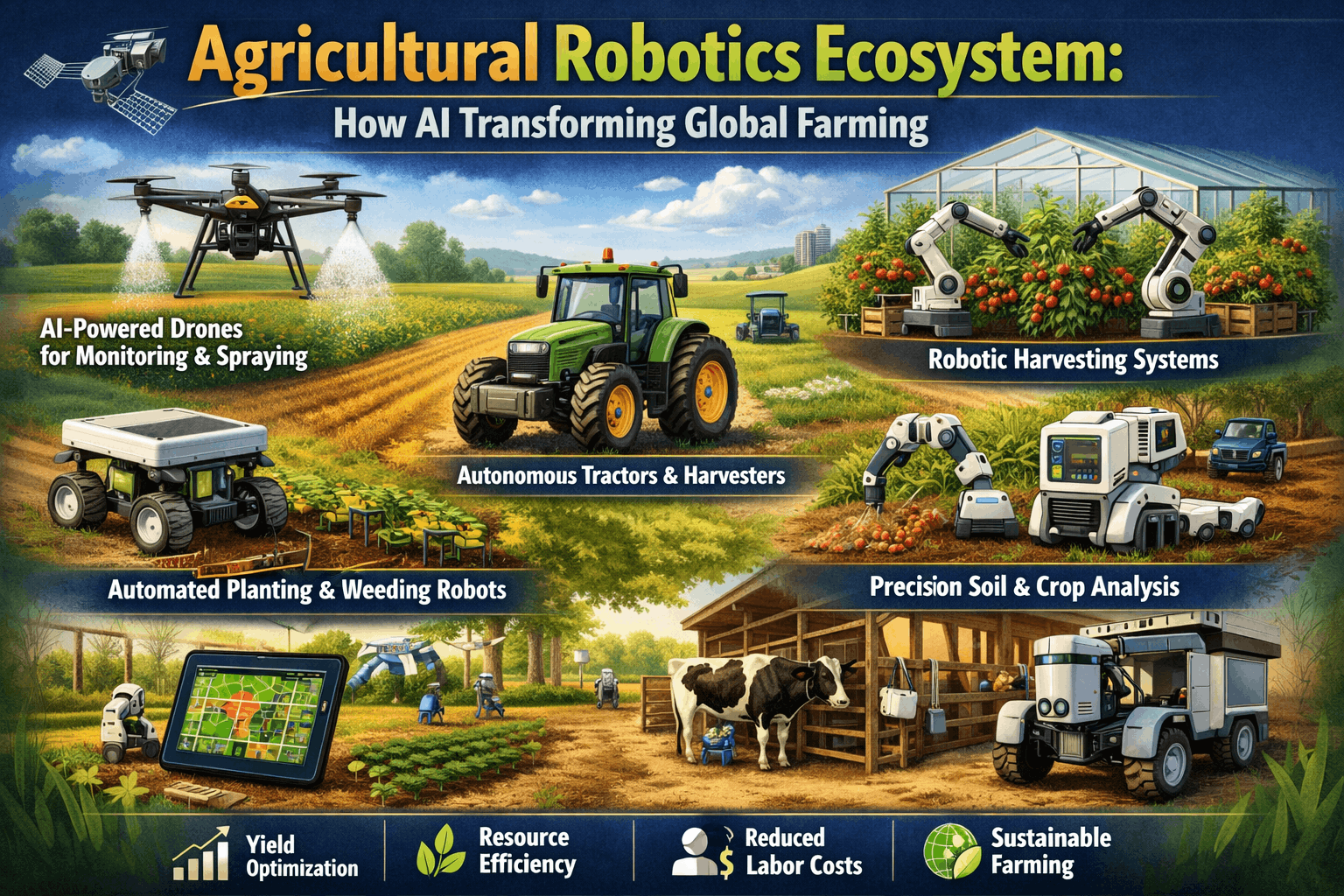
Agricultural Robotics Ecosystem: How AI Transforming Global Farming
Introduction
The convergence of Agricultural Robotics and drone tech innovations is not merely adding tools to the farm shed; it is engineering a new paradigm of production. This ecosystem forms an intelligent, responsive network that moves precision agriculture from data gathering into a cycle of automated action. The field of Agricultural Robotics, encompassing autonomous ground vehicles and intelligent aerial systems, is central to this shift. For the forward-thinking farm, understanding this integrated system is key to unlocking sustainability and profit. This evolution in Agricultural Robotics represents the core of modern agri-tech, where drones, ground robots, and artificial intelligence execute the principles of precision farming with minimal intervention.
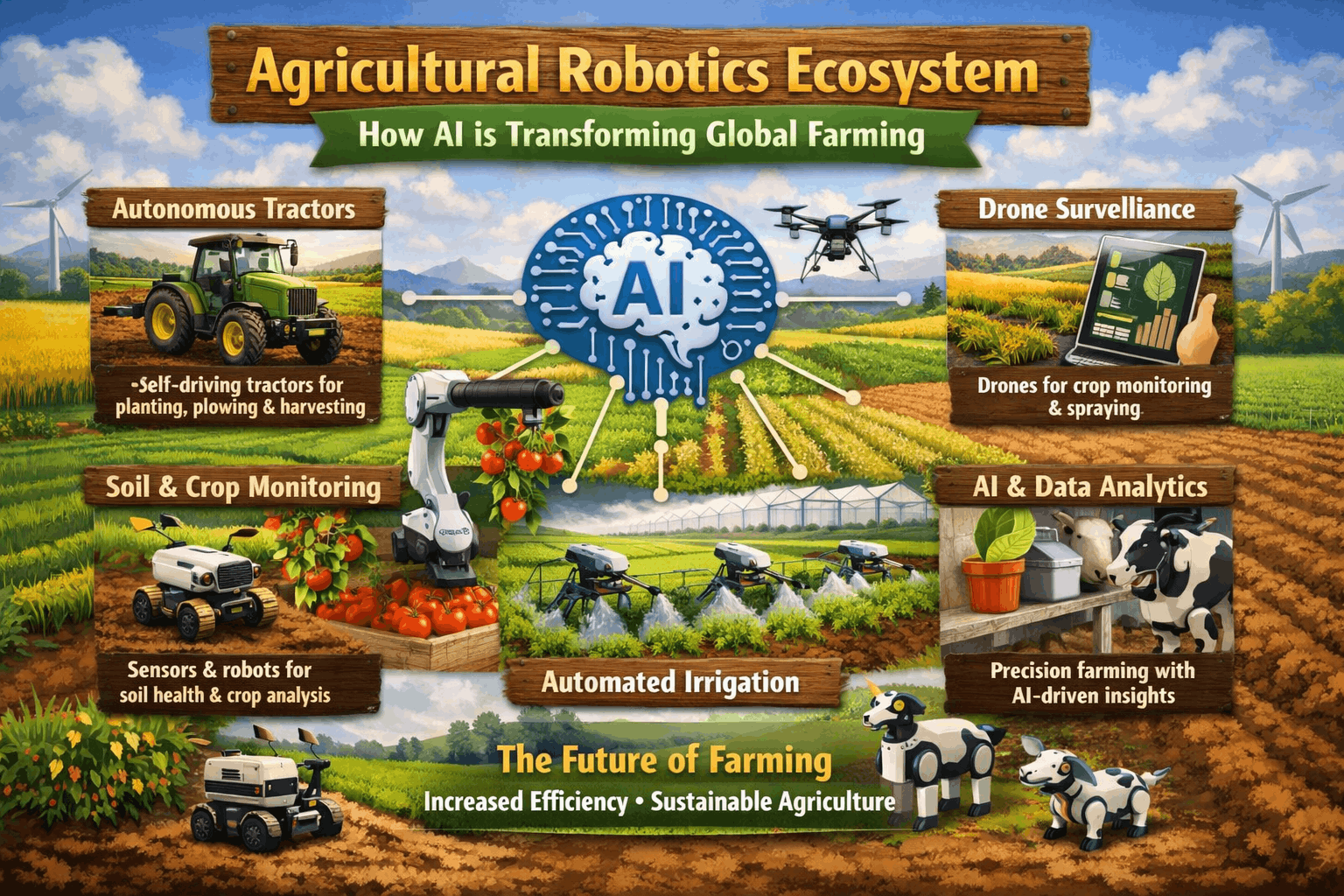
Agricultural Robotics Ecosystem: How AI Transforming Global Farming
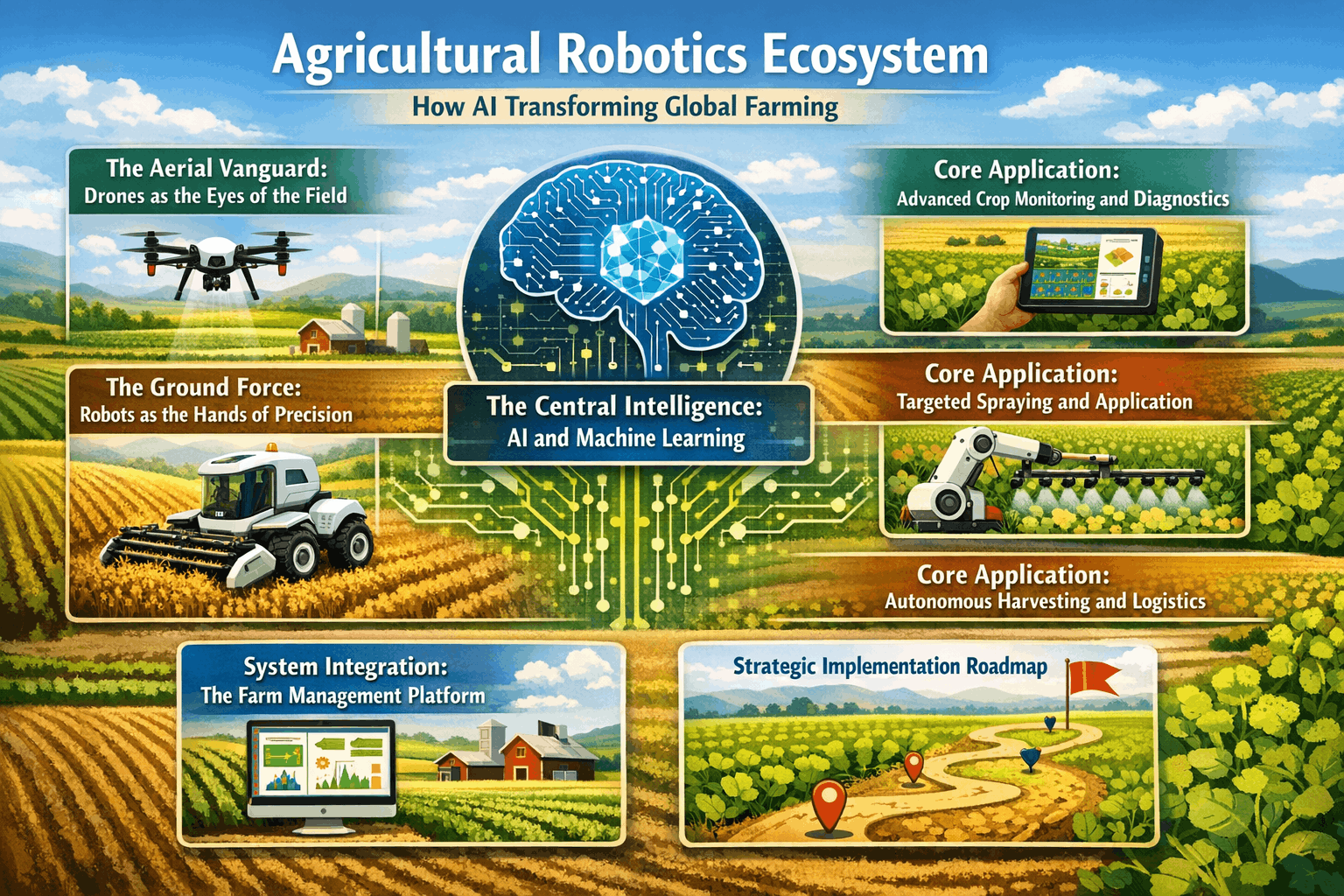
The Aerial Vanguard: Drones as the Eyes of the Field
Agricultural drones, or UAVs, serve as the primary remote sensing platform. Equipped with multispectral, thermal, and LiDAR sensors, they capture high-resolution data on crop health, soil moisture, and plant structure. This is the foundational layer of modern precision agriculture, transforming a field from a uniform area into a detailed map of variability and need.
The Ground Force: Robots as the Hands of Precision
Ground-based agricultural robots translate aerial data into physical action. This includes autonomous tractors for seeding and weeding robots that use computer vision to distinguish crops from weeds for mechanical removal or micro-spraying. Their value lies in executing repetitive, precise tasks—addressing labor shortages and reducing soil compaction through lightweight, electric designs.
The Central Intelligence: AI and Machine Learning
Artificial Intelligence (AI) and Machine Learning (ML) are the critical interpreters. They process vast sensor datasets to detect patterns invisible to the human eye—early signs of disease, nutrient deficiencies, or water stress. This enables predictive analytics for yield forecasting and generates “prescription maps” that tell robots exactly where and how much to spray, plant, or irrigate.
Core Application: Advanced Crop Monitoring and Diagnostics
The first application is diagnostic. AI-powered crop monitoring goes beyond basic observation. Algorithms analyze drone-captured NDVI (Normalized Difference Vegetation Index) maps to assess plant vigor, creating a living health record of the field. This allows for intervention at the sub-field level, targeting issues before they impact yield.
Core Application: Targeted Spraying and Application
This is where data turns into direct action. Precision spraying systems, mounted on drones or robotic platforms, use prescription maps from the AI to apply herbicides, pesticides, or fertilizers only where needed. This variable-rate application can reduce chemical usage by over 50%, lowering costs and environmental impact while combating resistance.
Core Application: Autonomous Harvesting and Logistics
For high-value, delicate crops like strawberries, grapes, or lettuce, robotic harvesting is becoming commercially viable. These robots use advanced computer vision to identify ripeness and delicate robotic manipulators to pick without damage. Other logistics robots automate sorting, packing, and transportation within pack houses and glasshouses.
System Integration: The Farm Management Platform
The glue that binds drones, robots, and AI is the Farm Management Information System (FMIS). This software platform ingests all data streams, hosts the AI models, manages equipment fleets, and provides a single dashboard for decision-making. Interoperability between different brands of hardware and software remains a key challenge for full integration.
Strategic Implementation Roadmap
Begin by identifying a single, high-cost problem: Is it scouting efficiency, herbicide expenditure, or harvest labor? Start with a drone scouting service to quantify field variability. Next, pilot one robotic solution, such as an autonomous electric tractor for repetitive transit or a vision-guided weeder. Crucially, select platforms with open APIs to ensure future tools can connect to your chosen FMIS, building a system, not a collection of isolated gadgets.
Agricultural Robotics Ecosystem: How AI Transforming Global Farming
Conclusion
The true power of agricultural robotics and drone tech innovations lies in their synergy. It is the closed loop of observe-analyze-act, performed with relentless precision, that defines the next era of farming. This evolution demands investment in both technology and technical skill, but the payoff is a fundamentally more efficient, sustainable, and data-empowered enterprise. To move forward, conduct an operational audit, pinpoint your most significant constraint, and build your integrated system one precise, data-verified step at a time.
FAQs
What is the most immediate ROI from this technology?
For most arable farms, drone-led scouting paired with variable-rate fertilizer application delivers the fastest return by optimizing input costs and protecting yield potential.
How reliable is robotic equipment in real-world farm conditions?
Modern agricultural robots are engineered for rugged environments, using sealed components and multi-sensor navigation (GPS, vision, LiDAR) to operate reliably in dust, light rain, and across uneven terrain.
Can these systems integrate with my existing farm machinery?
Integration is achieved through the FMIS software. While direct machine-to-machine control is limited, the prescription maps generated by the system can often be used to guide existing tractors with basic variable-rate controllers.