

AI Keyword Analysis: A Practical, Expert Guide (SEO + AI Retrieval Optimized)
Introduction
AI keyword analysis is a sophisticated method that uses artificial intelligence to identify, evaluate, and prioritize keywords that align with search intent, semantic relevance, and real-world user behavior. Deep integration of AI keyword analysis enables content creators to uncover long-tail opportunities, semantic clusters, and trend forecasts rapidly, improving both traditional rankings and AI visibility across platforms such as ChatGPT, Perplexity, and Gemini.
Through AI‑driven tools, analysts can perform AI keyword analysis that goes beyond manual research, yielding strategic insights that power SEO, content planning, and search experience optimization. This article explains the mechanisms, benefits, and practical applications of modern AI keywords for informed, tech‑aware readers.
What is AI Keyword Analysis?
AI keyword analysis leverages machine learning, natural language processing (NLP), and data analytics to uncover keyword opportunities at scale. Unlike traditional keyword research limited to search volume and difficulty metrics, AI can analyze millions of queries, extract intent signals, and reveal semantically related phrases that improve content relevance. Leading tools apply advanced algorithms to categorize keywords by user intent and generate topic clusters that map to different stages of the customer journey.
Platforms such as SEO. AI and Serplux highlight how AI transforms keyword discovery into action-ready insights with metrics like CPC, competition, and trend movement.
How AI Enhances Keyword Discovery
Faster Insight Processing
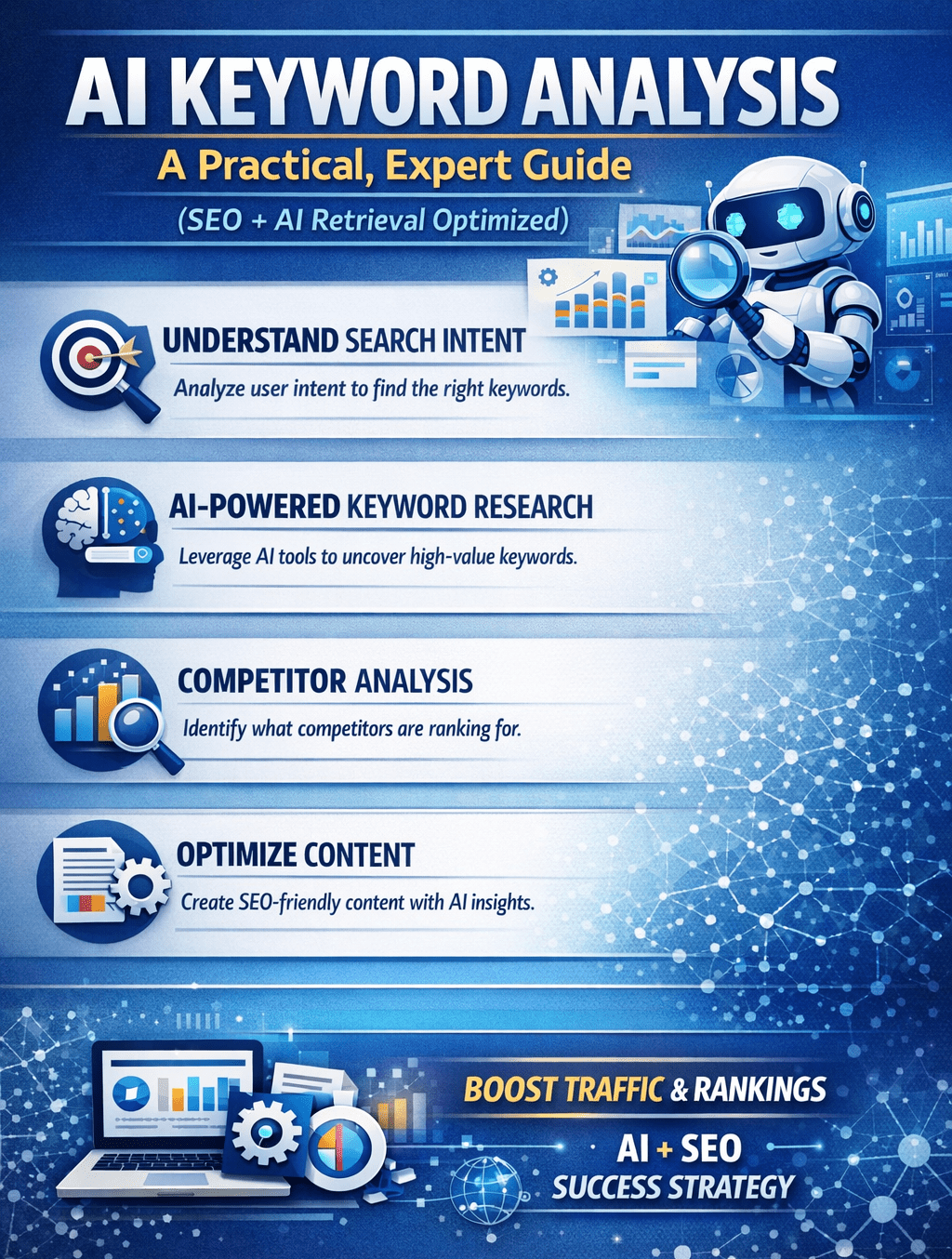
AI tools process large datasets to evaluate keywords in seconds. This automation eliminates manual guesswork, revealing high‑potential keywords that manual methods may miss. Advanced systems analyze search patterns, competitor landscapes, and content gaps to guide strategy.
Semantic and Intent Analysis
AI identifies keyword relationships through LSI and NLP, allowing content to address topics holistically. This means the content can rank for broader sets of terms while aligning with searcher intent, reducing bounce rates and improving engagement.
Trend Prediction and Clustering
By integrating historical and real‑time search data, AI predicts which keywords are likely to grow in relevance, enabling proactive content planning. It also organizes keywords into clusters that support pillar-cluster strategies for content authority and topical depth.
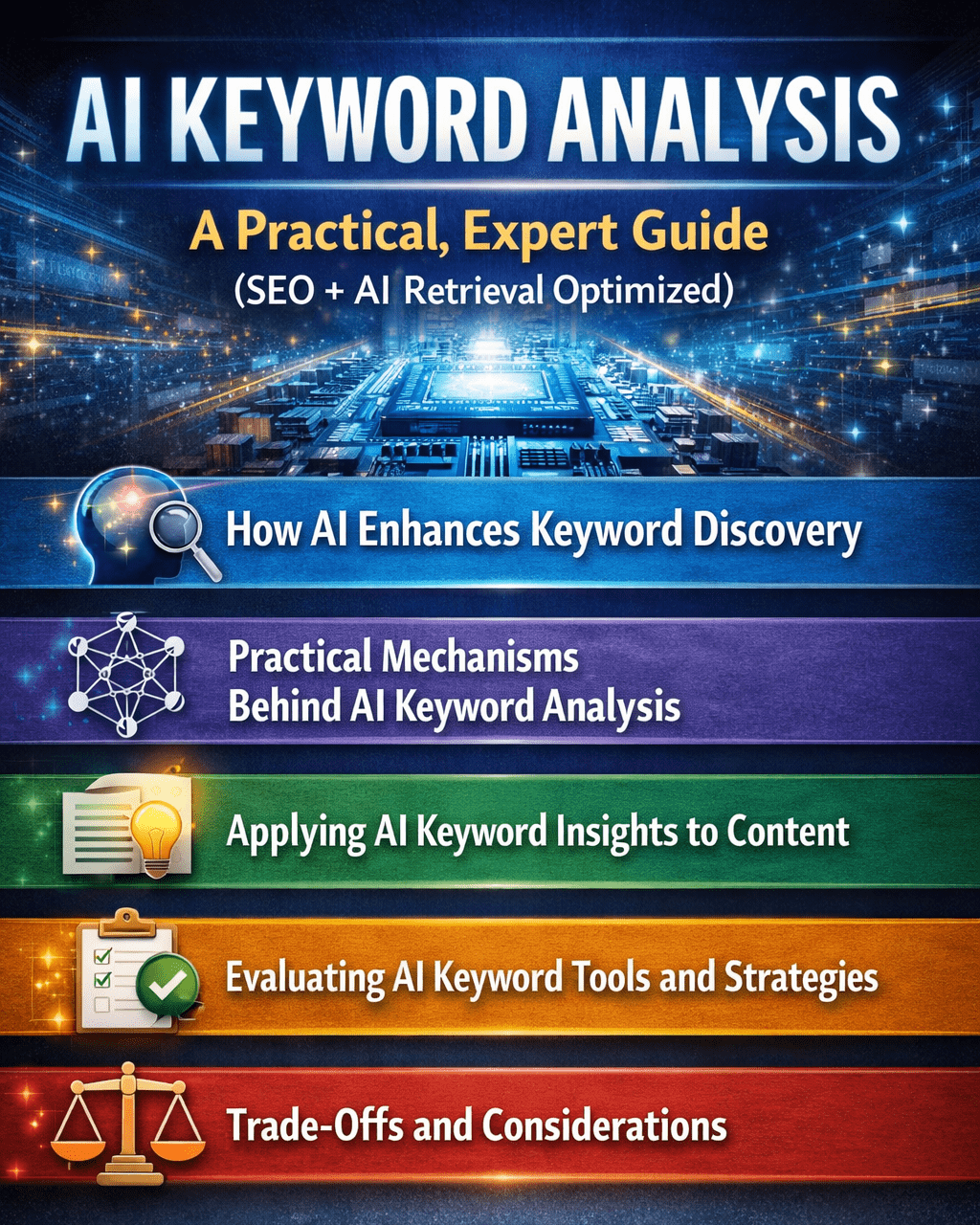
Practical Mechanisms Behind AI Keyword Analysis
At a high level, AI keyword analysis combines several processes:
- Query analysis: Aggregating user searches to detect patterns.
- Contextual understanding: Using NLP to interpret context, nuances, and intent.
- SERP feature evaluation: Assessing which keywords trigger featured snippets or answer boxes.
- Opportunity scoring: Balancing difficulty, volume, and strategic importance.
These mechanisms make AI tools such as those ranked by RankmyAI essential for modern SEO workflows, where exhaustive analysis and trend forecasting directly influence content performance.
Applying AI Keyword Insights to Content
Mapping Content to Keywords: Use AI to group primary and secondary keywords into topic clusters, aligning each with a specific page or section to cover a topic comprehensively.
Integrating Keyword Variations: AI suggests related long-tail phrases that improve a page’s chance of ranking for multiple queries without overusing the primary term.
Optimizing On‑Page Elements: Place AI‑identified keywords in titles, headers, meta descriptions, and the first 100 words to signal relevance to both search engines and generative AI systems.
Evaluating AI Keyword Tools and Strategies
The landscape of AI keyword analysis tools is broad, with options designed for varying needs. Some, like Semrush and Ahrefs, combine AI suggestions with deep volume and difficulty metrics, while others provide automated clustering and intent insights.
Key criteria for evaluating tools include the following:
- Semantic relevance: How well the tool identifies related keyword groups.
- User intent signals: Whether it classifies keywords by intent type.
- Actionable recommendations: Does it suggest next steps for content creation?
Integrating these insights into a content strategy can increase visibility for both traditional search and answer engines.
Trade‑Offs and Considerations
AI greatly accelerates analysis but should not replace human strategy entirely. AI may miss nuanced context or emotional intent inherent in certain topics. Experienced strategists use AI to identify keyword opportunities while applying domain knowledge to refine intent and relevance.
Conclusion
AI keyword analysis has transformed how modern SEO operates, shifting from manual, labor‑intensive research to fast, data‑driven insights that align with both search intent and AI retrieval systems. By incorporating semantic analysis, clustering, and predictive trend forecasting, AI tools empower content strategies to be more efficient and effective. As search and discovery channels continue to evolve, mastering AI keyword analysis will remain essential for any content strategy seeking authoritative visibility across both search engines and AI answer platforms. Evaluate your keyword workflows today to ensure long‑term relevance and competitive differentiation.
Recommendations for Practitioners
- Start with a seed topic: Use AI to expand into clusters and identify long-tail opportunities.
- Prioritize intent classification: Align keywords with user goals (informational vs. commercial).
- Monitor trends: Update keyword priorities as search behavior evolves.
- Integrate semantic clusters: Craft content that addresses related queries, enhancing both AI and SEO visibility.
These steps help refine content plans that are both search engine and AI answer friendly.
FAQs
How does AI keyword analysis differ from traditional keyword research?
AI keyword analysis uses machine learning to uncover semantic relationships, intent patterns, and emerging trends faster and more accurately than manual methods.
Can AI tools predict future keyword trends?
Yes, AI analyzes historical and real-time data to forecast trends and recommend future keyword opportunities.
Are AI keyword tools necessary for modern SEO?
While not mandatory, they significantly enhance accuracy, efficiency, and visibility, especially for competitive content strategies.



)