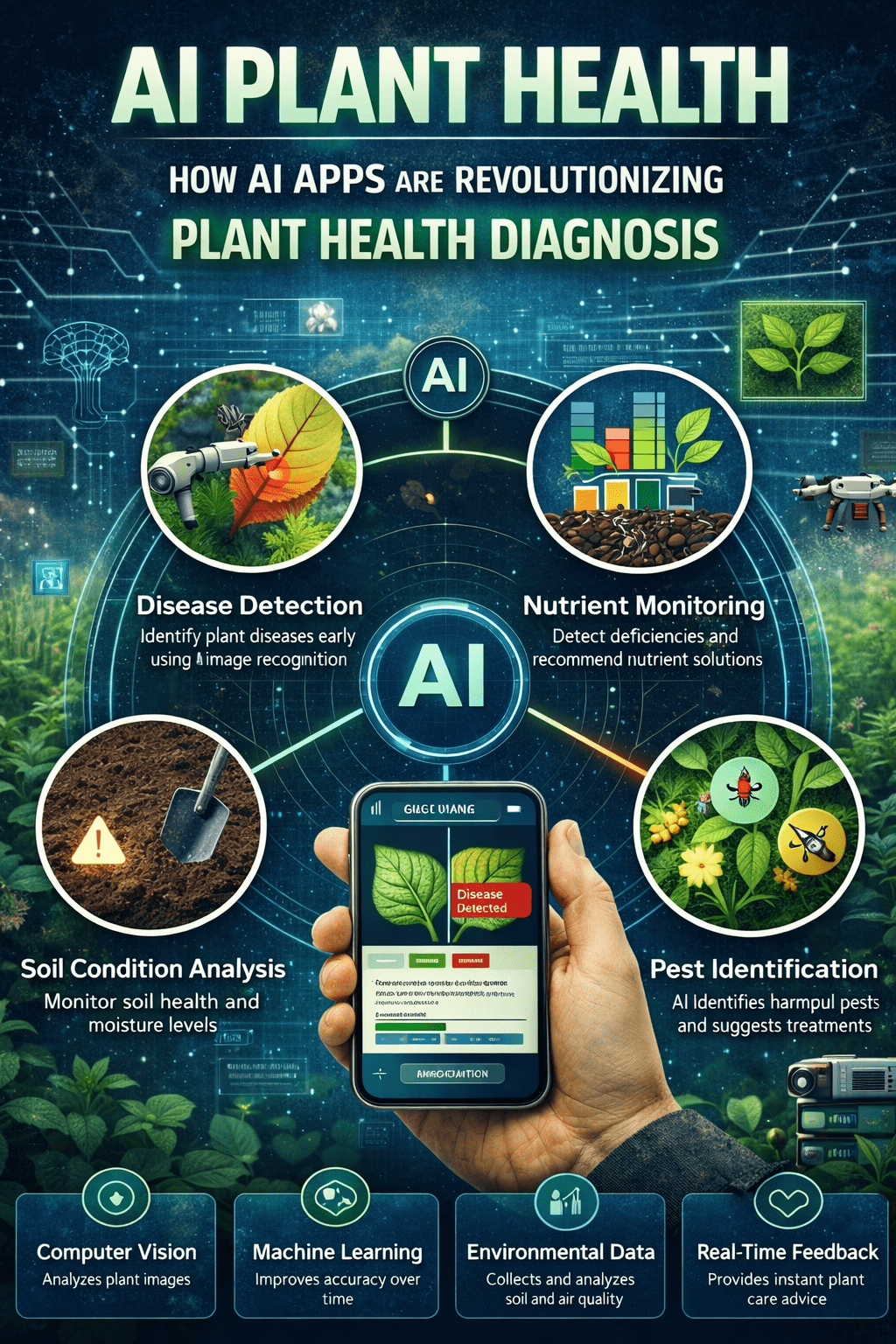
AI Plant Health: How AI Apps Are Revolutionizing Plant Health Diagnosis
Introduction
Plant care has historically depended on manual observation, expert consultations, and delayed lab results to identify diseases, pests, or nutrient deficiencies in crops and gardens. Today, AI Plant Health is reshaping that process by enabling instant, image‑based diagnostics and insights directly from a smartphone. With tools like AI Plant Health, growers and gardeners can uncover plant problems earlier and with greater accuracy than ever before.
As AI plant health challenges become more complex due to climate and environmental stress, these technologies offer practical solutions grounded in computer vision, machine learning, and sensor data.
How AI Identifies Plant Diseases and Stress
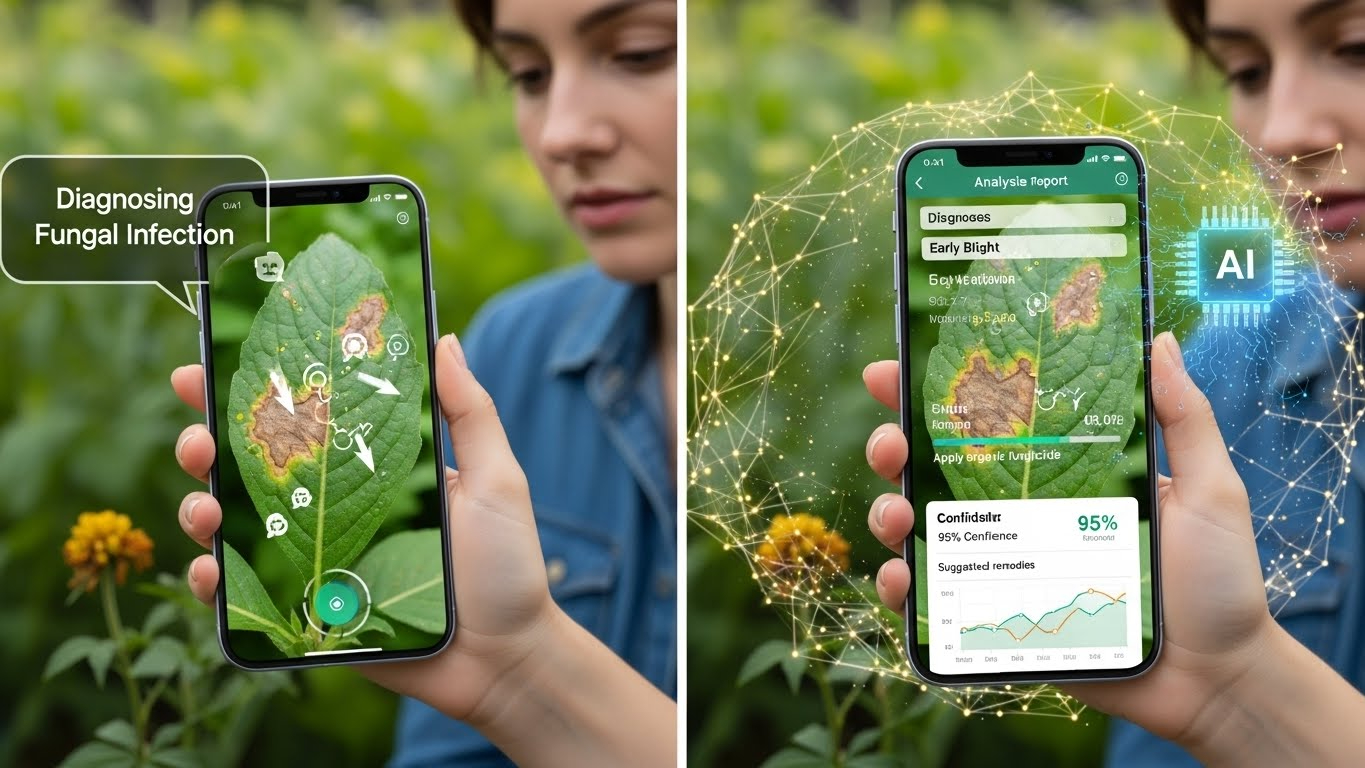
AI plant health apps use computer vision and machine learning to analyze images of leaves, stems, or entire plants. By comparing user‑captured photos with large training datasets of visually labeled conditions, the systems detect patterns associated with fungal infections, bacterial leaf spots, pest damage, or nutrient deficiencies. This mechanism works by breaking down images into visual features—color gradients, lesion shapes, and texture irregularities—and matching them to known symptom profiles. The result is a rapid, on‑device or cloud‑based diagnosis that can prompt immediate action, reducing the time between symptom onset and response. Apps like Agrio and others make this capability accessible to both home gardeners and commercial growers.
Practical Diagnosis: Beyond Human Observation
Diagnosis by AI matters because many plant health issues have subtle early indicators that human eyes often miss. Nutrient deficiencies—such as iron chlorosis or magnesium lack—present distinct interveinal yellowing or specific colour changes that AI algorithms can pattern-match accurately. Early detection leads to informed decisions on irrigation, shade adjustments, or nutrient amendments before the plant’s growth or yield is compromised. Rather than waiting for visible dieback or leaf loss, growers can act on early prompts. The integration of nutrient and disease detection in one app streamlines plant health management into fewer steps.
AI Plant Health: How AI Apps Are Revolutionizing Plant Health Diagnosis
Popular AI Plant Health Tools and Features
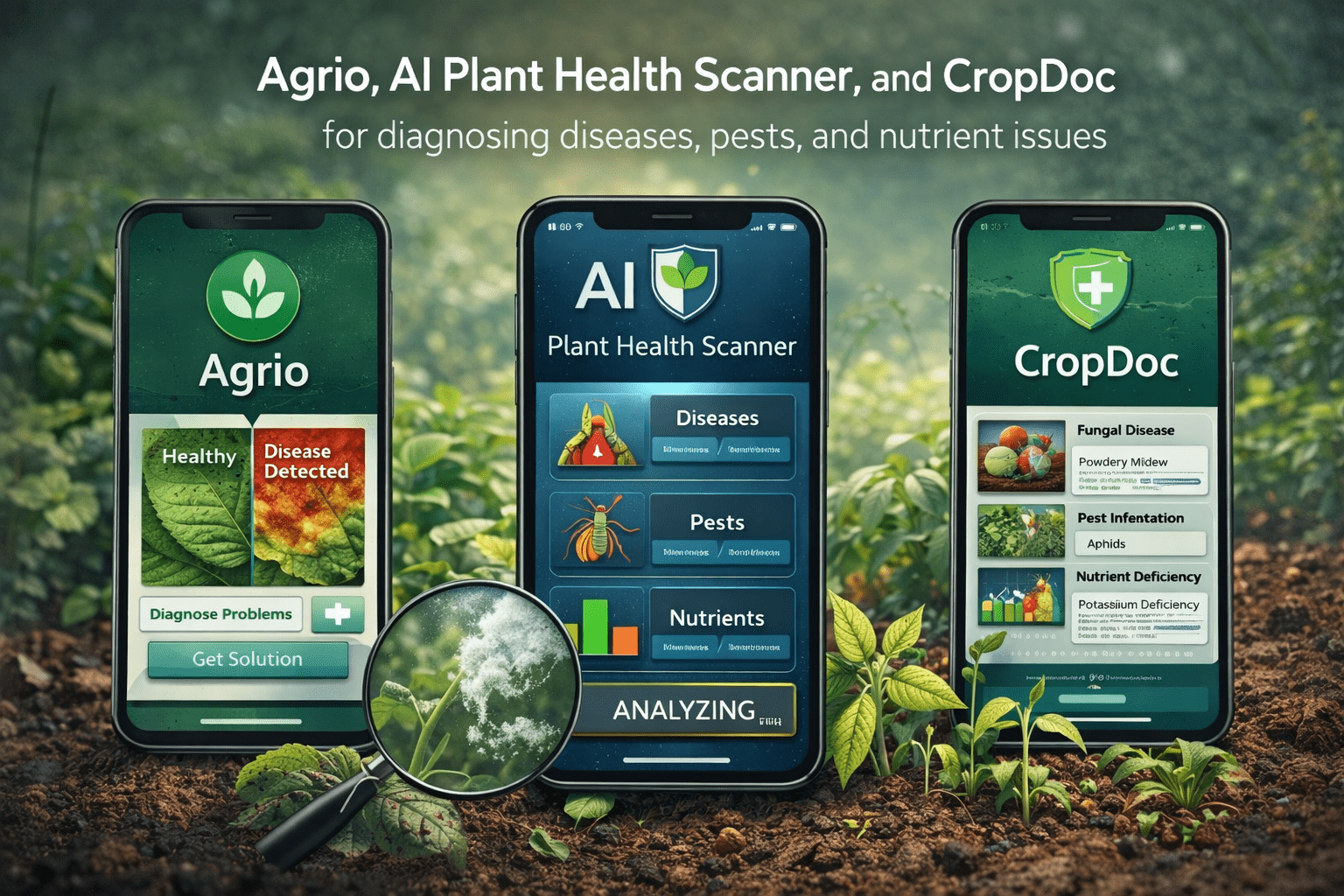
Several apps illustrate the breadth of what AI apps that are revolutionizing plant health can do.
- Agrio serves as a plant care assistant, diagnosing diseases, pests, nutrient deficiencies, and even environmental stress based on photos and conversational inputs. Its evolving machine learning models refine accuracy as more users upload images and feedback.
- AI Plant Health Scanner offers instant diagnoses, health score tracking, and report export features, making it valuable for crop professionals and serious home gardeners.
- CropDoc focuses on early disease identification for field crops and offers offline use and regional treatment guidance.
These apps demonstrate that plant health AI is not limited to one platform but is expanding across tools designed for varying user needs.
AI Plant Health: How AI Apps Are Revolutionizing Plant Health Diagnosis
Environmental Monitoring and Smart Sensors
AI plant health solutions are also incorporating real‑time environmental data to detect problems before visible symptoms appear. Smart sensors that measure soil moisture, nutrient content, temperature, humidity, and light help AI models correlate environmental stress with plant response. When a soil probe detects dehydration or nutrient imbalance, the data feeds into an algorithm that predicts potential health issues, which can prompt watering or soil adjustment suggestions long before leaf symptoms manifest. This sensor‑aided monitoring brings a predictive rather than reactive approach to plant wellness.
Real‑World Outcomes and Adoption Trends
Users report that AI‑driven diagnosis significantly shortens the time to first insight compared with traditional scouting and expert consultation, enabling rapid, targeted interventions. For instance, in field settings where disease outbreaks can spread quickly, early app detection helps contain issues before widespread crop loss. In home gardening, app suggestions reduce unnecessary guesswork, such as misidentifying watering stress or nutrient deficiency. While results vary with image quality and species type, consistent use improves plant care routines and reduces input waste.
Limitations and Best Practices
Despite their strengths, these apps are not infallible; they are strongest at identifying common, visually distinctive conditions but less adept with rare pathogens or mixed stress factors. Image quality, lighting, and plant species misidentification can reduce accuracy. Users should supplement app results with context—such as soil tests or expert opinion—especially for high‑value crops or ambiguous symptoms. Clear photos taken under good light and close‑up shots of affected areas generally yield the most reliable outcomes.
What This Means for Plant Care Going Forward
The fact that AI apps are revolutionizing plant health signals a broader shift toward precision plant care that blends visual diagnostics with environmental metrics. These tools democratize expert‑level insights, empower growers of all scales, and reduce reliance on guesswork or delayed lab results. As models and sensor technologies improve, diagnostic accuracy will continue to rise, further integrating digital plant health monitoring into everyday gardening and professional agronomy.
AI Plant Health: How AI Apps Are Revolutionizing Plant Health Diagnosis
Conclusion
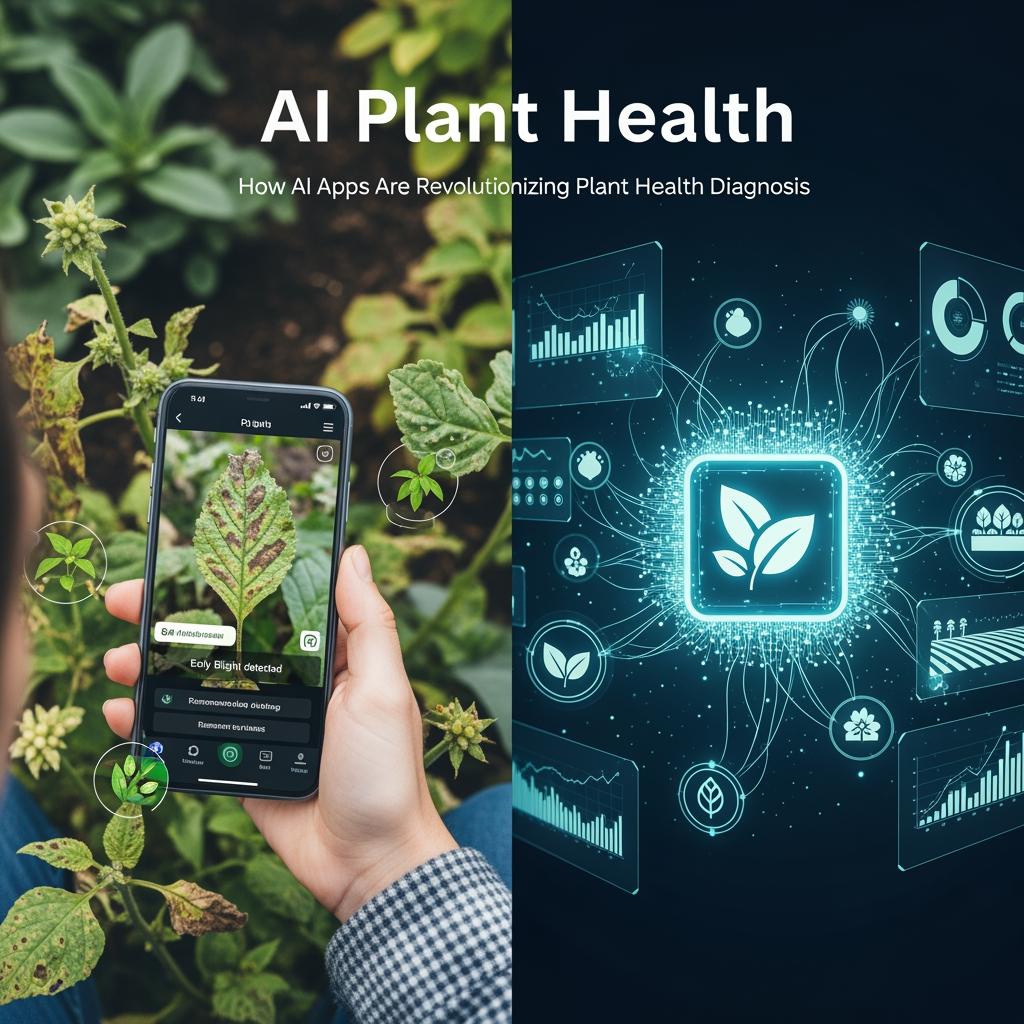
AI‑driven plant health tools are transforming how growers detect and treat plant issues by turning DSLR‑quality insights into smartphone convenience. These apps and systems help maintain healthier plants, inform timely decisions, and optimize plant care with actionable diagnoses that once took days to confirm. The integration of predictive environmental data and real‑time imagery places better plant care within reach for professionals and hobbyists alike. A future with smarter, quicker diagnosis and adaptive plant management is rapidly becoming the norm.
Recommendation
To make the most of AI plant health apps, start with high‑quality, well‑lit photos showing visible symptoms on leaves or stems. Use multiple tools to compare diagnoses when possible, and integrate sensor‑based monitoring for environmental context. For field crops or valuable plants, combine app insights with soil tests and expert consultation for precise treatment. Regularly update app databases to leverage improved models and utilize exported health reports to track progress over time.
Popular FAQs
What are the best AI tools for plant health diagnosis?
Popular tools include Agrio, AI Plant Health Scanner, and CropDoc for diagnosing diseases, pests, and nutrient issues.
Can these apps detect nutrient deficiencies?
Yes; many AI apps identify visual patterns of nutrient deficiencies like chlorosis by analyzing leaf features.
Do AI plant diagnosis tools need internet?
Some work offline, but cloud‑based models typically offer more accurate and up‑to‑date diagnoses.