AI Marketing Tools: The Real Game-Changers
Introduction
In the digital age, AI Marketing Tools are transforming the way businesses reach and engage audiences. From automation to data-driven insights, AI Marketing Tools streamline campaigns and boost results. Understanding AI Marketing Tools helps brands stay competitive, save time, and achieve smarter, more personalized marketing strategies. As technology evolves, these tools empower marketers to analyze customer behavior, optimize ads, and create content that drives conversions. With the right tools, companies can improve efficiency, reduce costs, and gain a significant edge in today’s fast-paced digital landscape.
I’ll start by outlining my testing methodology, then break down tool performance across content creation, customer engagement, and data-driven marketing. Finally, I’ll share ROI analysis and my top recommendations by business size and budget.
Essential AI Marketing Tools
-
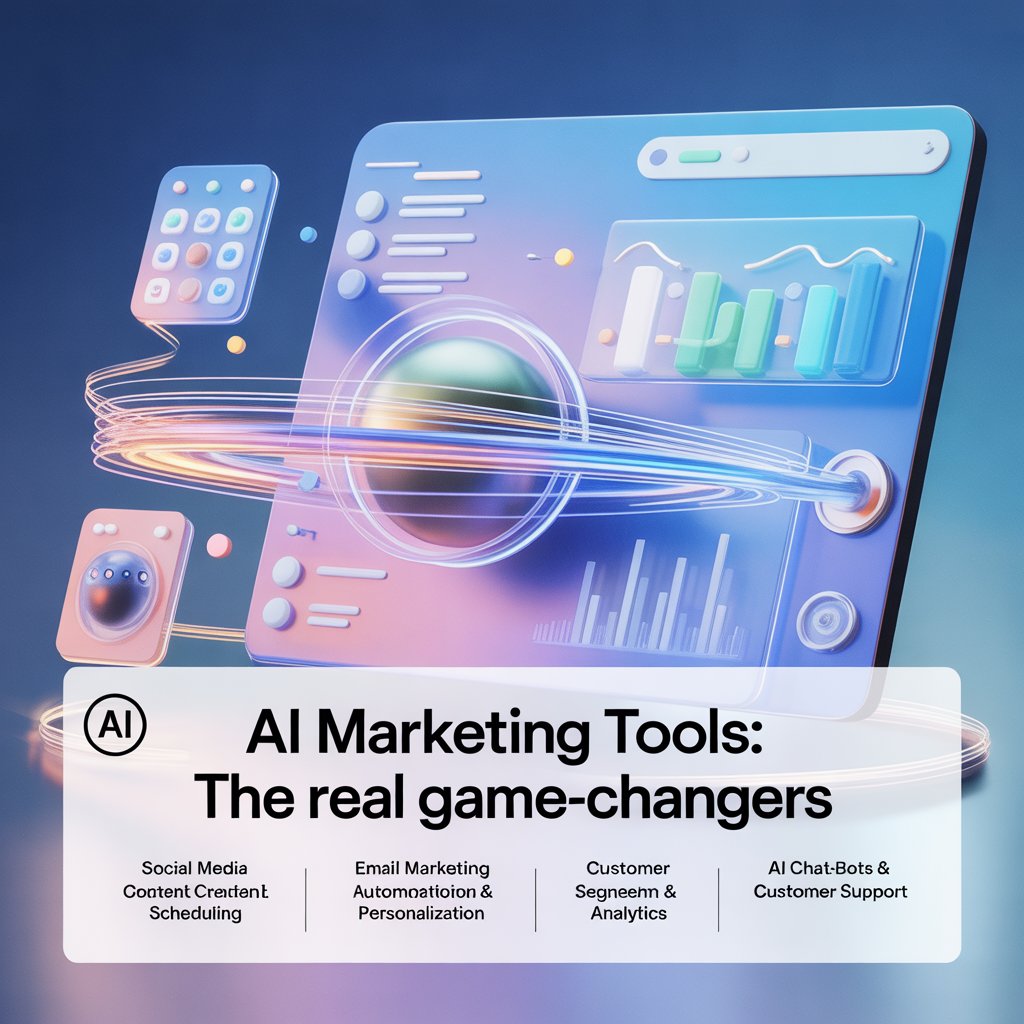
Social Media Content Creation & Scheduling
Maintaining a strong social presence is exhausting. AI-powered tools now combine content generation with smart scheduling to ease that load.
- Jasper AI—Creates platform-specific content, from Instagram captions to LinkedIn posts, while matching brand voice. Its integration with Buffer makes scheduling seamless.
- Copy.ai – Perfect for A/B testing, generating multiple content variations fast.
- Hootsuite Insights (AI-powered) – Analyzes competitor content, suggests trending topics, and recommends the exact times your audience engages most.
👉 Best for: Teams that want consistent output without burning out.
-
Email Marketing Automation & Personalization
Email has gone beyond mass newsletters—AI makes personalization feel like one-on-one conversations.
- Mailchimp Smart Recommendations – Suggests products/content based on clicks, purchases, and browsing patterns.
- Klaviyo – Triggers real-time, context-rich emails (e.g., cart abandonment, product views).
- ConvertKit – Visual automation builder to design branching email journeys.
💡 Result: AI-driven subject line testing boosts open rates by 15–25% compared to static subject lines.
-
Customer Segmentation & Analytics
AI segmentation dives deeper than demographics, grouping customers by actions and predicting future behavior.
- Segment – Builds real-time customer profiles across web, app, and purchase data.
- Mixpanel – Predicts which users will convert, churn, or upgrade.
- Google Analytics Intelligence – Surfaces unusual patterns automatically, no digging required.
📈 Impact: More accurate targeting and smarter spend allocation.
-
AI Chatbots & Customer Support
Modern chatbots do more than answer FAQs—they handle lead qualification, troubleshooting, and multilingual support.
- Intercom Resolution Bot – Understands context and handles complex conversations.
- Drift AI – Focuses on lead qualification, booking calls, and recommending products.
- Zendesk Answer Bot – Pulls from your knowledge base and improves continuously.
💬 Result: Advanced bots resolve 70–90% of inquiries instantly, cutting wait times to seconds.
AI Marketing Tools: The Real Game-Changers
How I Tested These Tools
To keep evaluations objective, I used five lenses:
- Performance Metrics – Conversion rates, engagement, lead gen, ROAS.
- Cost-Effectiveness – Full cost of ownership vs. labor/time saved.
- User Experience – Ease of onboarding, learning curve, and adoption.
- Integration – CRM, email, and ad platform compatibility.
- Security & Compliance – GDPR/CCPA readiness and transparent data policies.
This ensured I wasn’t swayed by flashy features but by actual business results.
ROI: Do AI Tools Actually Pay Off?
Yes—if you choose the right ones. Here’s how costs and savings stacked up:
Category |
Traditional Cost |
AI-Powered Cost |
Savings |
| Content Creation | $2,000/month | $500 + $200 tool | $1,300/month |
| Email Campaigns | $800/month | $300 + $150 tool | $350/month |
| Social Media Management | $1,500/month | $400 + $300 tool | $800/month |
⏳ Payback period: Most businesses see positive ROI in 3–6 months.
Best AI Marketing Tools by Business Size
-
Small Businesses (1–10 employees)
- Mailchimp (email)
- Canva Pro (visuals)
- Buffer Free (scheduling)
- Jasper AI (content copy)
-
Medium Businesses (11–100 employees)
- Salesforce Marketing Cloud + Pardot (automation)
- Jasper AI + Loom (content/video)
- SEMrush + GA4 (analytics)
-
Enterprise (100+ employees)
- Marketo (complex automation)
- Adobe Experience Manager (content ops)
- IBM Watson (custom AI solutions)
Best Practices for Adopting AI Tools
✅ Start with one core pain point (email, social, or customer support).
✅ Ensure integration with your CRM and analytics.
✅ Keep human oversight—don’t over-automate.
✅ Audit privacy compliance quarterly.
✅ Consolidate—avoid stacking too many overlapping tools.
AI Marketing Tools: The Real Game-Changers
Final Recommendations
After months of testing, the clear winners emerge:
- Jasper AI & Copy.ai → Best for content creation.
- Drift & Intercom → Best for customer engagement.
- HubSpot AI & Klaviyo → Best for data-driven targeting.
The ROI numbers don’t lie: companies using the right mix of tools see 20–40% higher engagement and 15–25% better conversions—all while reducing time spent on repetitive tasks.
👉 Tip: Start with the tool that solves your biggest bottleneck, master it, then expand your AI stack strategically.