What is e-bike technology? A Complete Guide
Introduction
How e-Bike Technology is transforming modern transportation by combining traditional cycling with electric-powered systems for efficient and eco-friendly travel. This innovative solution uses rechargeable batteries, electric motors, and smart sensors to enhance rider comfort, speed, and energy efficiency. As cities move toward sustainable mobility, e-Bike Technology plays a crucial role in reducing carbon emissions, lowering fuel dependence, and improving urban commuting.
With continuous advancements in battery life, AI integration, and smart connectivity, e-Bike Technology is shaping the future of cost-effective, intelligent, and green transportation.
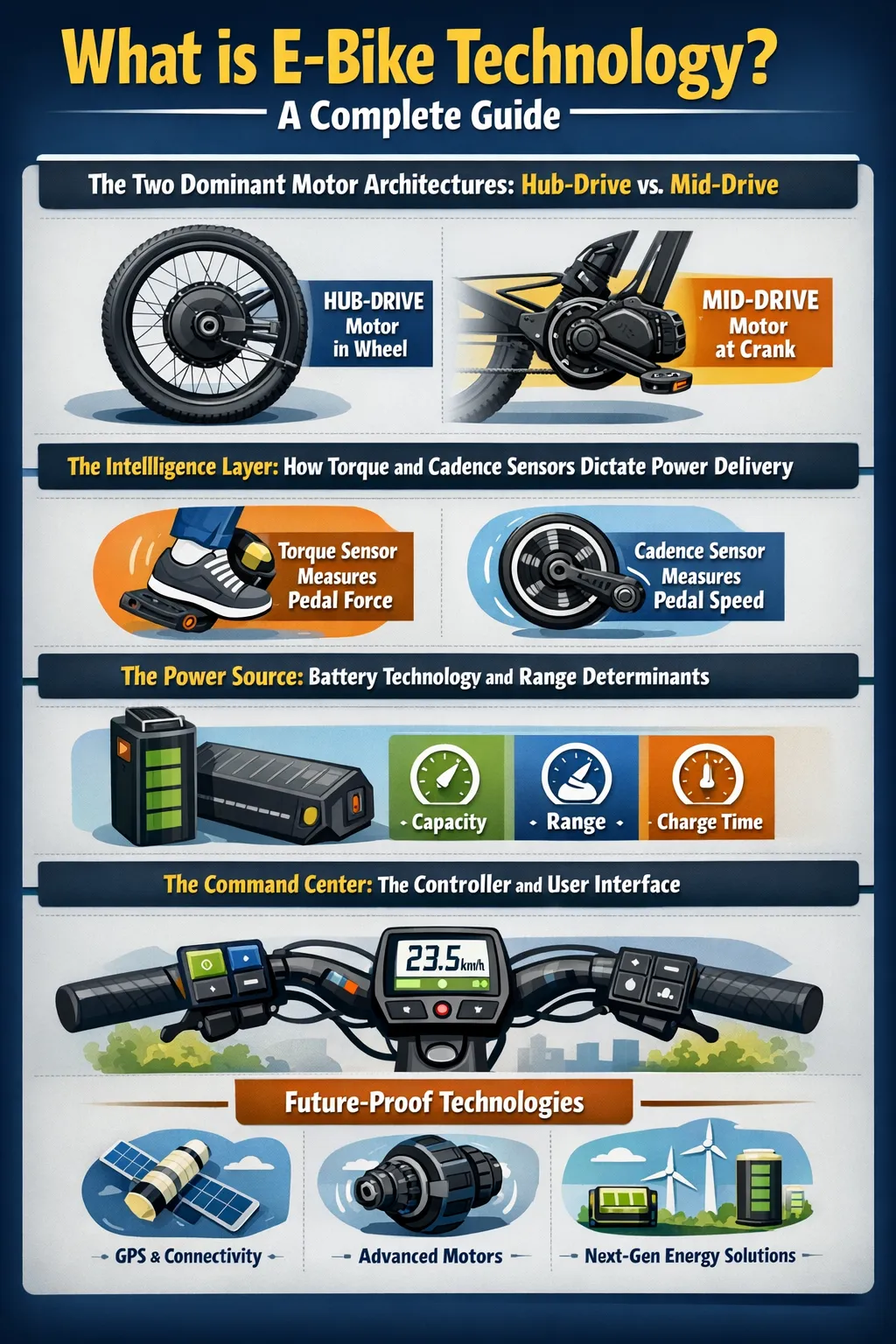
The Two Dominant Motor Architectures: Hub-Drive vs. Mid-Drive
The motor’s placement critically shapes the riding experience. The two primary systems are hub-drive and mid-drive, each with distinct engineering philosophies.
- Hub-Drive Motors: Integrated directly into the center of the front or rear wheel, these motors apply power directly to that wheel. They are known for their simplicity, affordability, and low maintenance, offering a sensation of being “pushed” from behind. However, because they don’t leverage the bike’s gears, they can struggle on sustained, steep inclines.
- Mid-Drive Motors: Positioned at the bike’s bottom bracket (between the pedals), these motors drive the crank. This centralizes weight for superior balance and allows the motor to work through the bike’s chain and gears. The result is a more natural, bicycle-like feel with exceptional efficiency, torque for climbing, and better handling, especially on technical terrain like mountain trails.
How Torque and Cadence Sensors Dictate Power Delivery
The “feel” of an e-bike’s assistance is governed by its sensor system, which acts as the critical link between rider effort and motor output.
- Cadence Sensors: These are basic movement detectors. They use magnets on the crank arm to determine if the pedals are turning and at what speed, then deliver a preset level of power. This can create an “on/off” sensation, where power surges once pedaling starts, which may feel less intuitive, especially on variable terrain.
- Torque Sensors: Acting as a precision force gauge, these sensors measure the actual pressure you apply to the pedals. The motor instantly responds with proportional assistance—push harder, get more help. This creates a seamless, natural extension of your own power, offering superior control and a smoother, more responsive ride that intuitively handles hills and acceleration.
The Power Source: Battery Technology and Range Determinants
The battery is the fuel tank, with its capacity measured in Watt-hours (Wh). A higher Wh rating generally indicates a longer potential range. Modern e-bikes exclusively use rechargeable lithium-ion batteries due to their favorable balance of energy density, weight, and lifespan. Range is not a fixed number; it is dynamically influenced by several key factors:
- Battery Capacity: The total energy stored (Wh).
- Rider Input: More pedal effort extends range.
- Assistance Level: Higher power modes drain the battery faster.
- Terrain and Load: Hills, headwinds, and heavy cargo increase energy demand.
- Riding Speed: Aerodynamic drag rises exponentially with speed.
Understanding these variables is crucial for real-world trip planning.
What is e-bike technology? A Complete Guide
The Command Center: The Controller and User Interface
Every signal from the rider and sensors is processed by the controller, the central processing unit of the e-bike. It regulates power flow from the battery to the motor based on inputs from the pedal sensors, throttle, and brake cut-off switches. The rider interacts with this system through a handlebar-mounted display. This interface allows you to select assistance levels, monitor speed and battery status, and activate features like integrated lights. On advanced models, displays connect to smartphone apps for GPS navigation, system updates, and performance tracking.
Future-Proof Technologies
E-bike technology is rapidly evolving. Key trends for focus on integration and intelligence:
- Motor & Battery Evolution: The market is bifurcating into ultra-powerful systems for cargo and mountain bikes and exceptionally compact, lightweight drives that hide seamlessly within frames for a minimalist look.
- Automatic Gear Shifting: Systems like the Pinion MGU and Enviolo Automatiq combine the motor with a transmission that shifts gears automatically based on cadence, speed, and load, removing a layer of complexity for the rider.
- Advanced Connectivity & AI: Smart features are becoming standard. These include app-based range prediction that adjusts assistance to ensure you reach your destination, over-the-air software updates, and integrated security with GPS tracking and alarm systems.
What is e-bike technology? A Complete Guide
Conclusion: A Sophisticated Synergy of Human and Machine
The core triad of the motor, battery, and controller, refined by intelligent sensor systems, amplifies human effort with remarkable efficiency. As the industry advances toward more integrated designs and AI-enhanced functionality, the fundamental goal remains: to extend the joy, range, and utility of cycling. Understanding these core mechanisms empowers you to select a machine that best complements your strength, ambition, and terrain, transforming every journey.
Frequently Asked Questions
What is the key difference between a 250W and a 750W motor?
A 750W motor delivers more power and better hill climbing than a 250W motor, but legal limits vary by region.
Can I upgrade my e-bike’s battery for more range?
It’s possible if the new battery matches your bike’s voltage and system—check with the manufacturer or a technician first.
How does a throttle differ from pedal assist?
A throttle provides power without pedaling, while pedal assist activates the motor only when you pedal.